
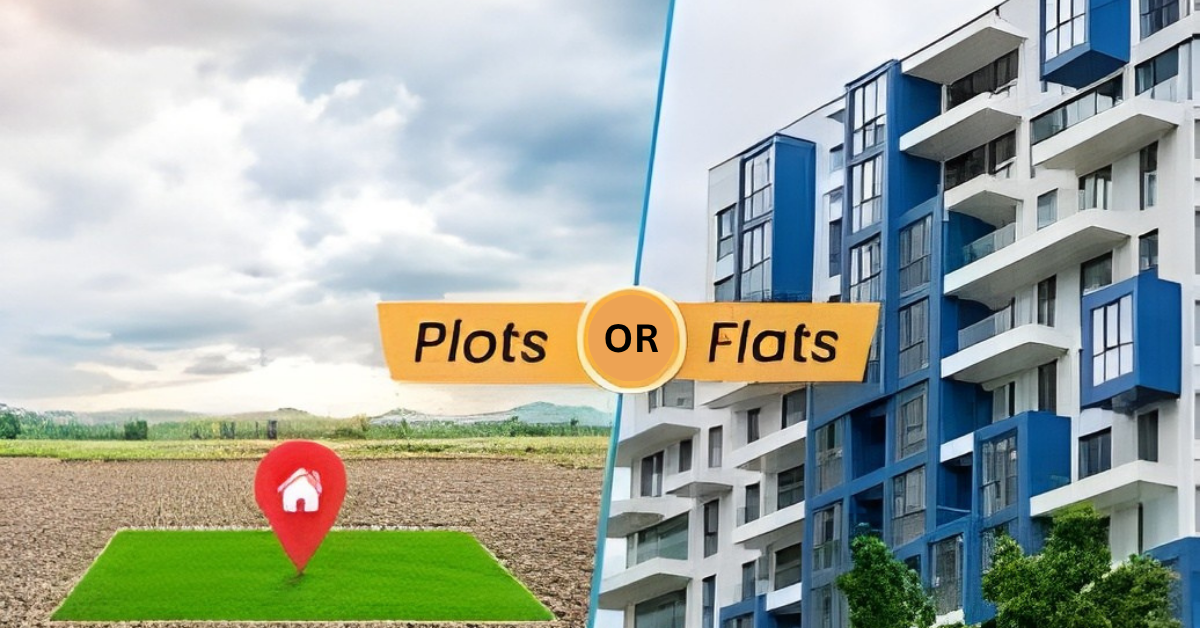
Investing in real estate is often seen as one of the safer, tangible ways to build wealth. But within real estate, one of the most hotly debated questions is: Should you invest in land (plots) or flats (apartments)? Each has its advantages, drawbacks, and ideal use cases. The “better” option depends largely on your goals, time horizon, capital, risk appetite, and local market dynamics.
In this article, we will explore every angle — from returns and cash flow to risks, real examples, and a recommended framework to decide what might be best for you. By the end, you’ll understand clearly when land is a smarter pick, when flat (apartment) might suit better, and how to make your own data‑driven decision.
Why This Debate Matters
Real estate is capital‑intensive. Committing a large sum requires choosing wisely.
Many investors think “real estate = good investment,” but between land vs flat, the outcomes can diverge greatly.
Flats are more popular among average homebuyers for convenience, but land has unique advantages in terms of appreciation.
By comparing the two comprehensively, you avoid regrets and align the investment to your financial goals.
Key Factors to Consider Before Investing
Before you pick one over the other, you should evaluate some key dimensions that define whether an investment will succeed or fail.
Capital Appreciation & Depreciation
Land, being finite and scarce, often has strong appreciation potential — especially in growth corridors.
Flats (the building portion) face depreciation: as the structure ages, repair costs rise, and value may flatten or decline.
In many markets, appreciation of the underlying land value offsets the structural depreciation.
The net capital growth depends heavily on location, development plans, and demand.
Income Generation (Rental Yield)
Flats can give you monthly rental income from day one (if in desirable location).
Land (raw plots) usually cannot earn rent unless developed (built house, rented property, or leased land).
So for investors prioritizing cash flow, flats may have an edge.
Liquidity & Resale Potential
Flats, especially in established areas, tend to have better liquidity — more buyers, standardized units.
Land in remote or undeveloped areas may be harder to sell quickly.
But in fast-developing zones, plots can sometimes even outpace flats in resale appreciation.
Maintenance, Upkeep & Costs
Flats incur maintenance costs, society fees, repairs, periodic renovations, common area costs.
Land (before construction) has minimal costs — occasional boundary maintenance, property tax, fencing.
Once constructed, the running cost depends on how one builds and maintains the structure.
Legal Risks, Approvals & Documentation
Flats (in planned projects) often come under regulatory oversight (e.g. RERA in India) which offers some protection.
Land deals often carry risk: unclear titles, encumbrances, disputes, lack of proper approvals, boundary issues.
Rigorous due diligence is more critical when buying land.
Financing & Loan Availability
Banks are more willing to finance flats / apartments (or construction projects) under known schemes.
Loans for raw land are harder to get, and interest rates may be higher if available.
This factor can influence your ability to leverage and your investment returns.
Time Horizon & Holding Period
Land is more of a long‑term play; it may take several years for infrastructure and demand to build up.
Flats can start generating returns earlier, and their value may be less volatile over mid-term.
Your investment horizon (5 years, 10 years, 20 years) is a critical input.
Flexibility, Customization & Control
With land, you control what you build, when you build, how much you spend, modifications, etc.
With flats, you’re bound by the builder’s plan, society rules, common area policies, etc.
If customization matters to you, land is preferable.
Deep Dive: Pros & Cons of Investing in Land
Let’s meticulously explore the advantages and challenges of investing in land.
Advantages of Land Investment
Scarcity and Appreciation
Land is a finite resource. As urban sprawl extends, previously outlying areas get absorbed into the city, boosting land value. Demand for plots in growth corridors often shoots up, giving exponential gains.
No Depreciation & Minimal Maintenance
Unlike constructed buildings which age, the land itself does not “wear out.” You don’t face structural decay or frequent repair costs. Upkeep before construction is minimal.
Ownership Flexibility & Future Use
You can keep the land vacant, build later, lease it, sell in parts, or develop partially. You choose the time and the use.
Low Running Costs
Before development, your main cost is property tax, boundary maintenance, fencing. No society charges, no plumbing, no elevators, no shared utility maintenance.
Disadvantages & Risks of Land
Lack of Immediate Income
Until you build something rentable, land remains “idle” — no cash flow generation immediately.
Legal/Title Risks & Encroachment
Poor documentation, disputes in past ownership, fraudulent sellers, missing approvals — all are risks. Encroachment is also a real threat.
Zoning, Approvals & Infrastructure Delays
Plots may come with restrictions (agricultural land, development pause, permissions). Delays in roads, utilities, or governmental approvals can hamper growth.
Liquidity Challenges
Selling large plots or land in remote zones may take time. Potential buyers are fewer compared to flats. Market fluctuations might deter quick sale.
Deep Dive: Pros & Cons of Investing in Flats (Apartments)
Now, let’s see the flip side — what makes flats attractive and what drawbacks they carry.
Advantages of Flat Investment
Ready Possession & Immediate Rental Income
A built and ready flat can fetch rent immediately (if in a demand area). This cash flow is attractive especially for income-oriented investors.
Amenities, Security & Infrastructure
Flats in complexes often come with facilities — security, lifts, clubhouses, gardens. For many buyers or tenants, these plus point heavily.
Predictability & Ease of Management
Many things are taken care of by the builder or society (maintenance, waste management, communal services). Less direct effort, fewer surprises.
Better Financing / Loan Options
Banks are comfortable financing flats and apartments. Often lower interest and more structured repayment options exist.
Disadvantages & Risks of Flats
Depreciation, Ageing & Repairs
As the building ages, wear and tear, mechanical systems, plumbing, roofs, common areas all degrade. Value may plateau or require refurbishment.
High Maintenance & Society Costs
You’ll pay society charges, repair funds, cleaning, utilities, shared costs. These erode your net yield over time.
Limited Control & Renovation Constraints
You can’t freely change structural elements, external façade, or major modifications without society permission. You’re bound by rules.
Builder Risk & Delays
Many flat projects are delayed. Builder quality, compliance issues, frauds happen. Such delays reduce returns or even stall possession.
Comparative Analysis: Land vs Flat — When Each Makes Sense
Weighing all factors, let’s map where each option shines.
For Long-Term Wealth & Legacy
If your goal is generational wealth or to pass down an asset that appreciates over decades, land often has the edge.
For Regular Income / Cash Flow
If your priority is monthly rental yield, flats may suit better, especially in urban demand centers.
For Low-Risk / Hands-Off Investors
Flats with reliable builders in stable markets reduce risk from legal title, development delays, and you depend less on managing infrastructure.
For Speculative / High Growth Zones
In emerging corridors, high-growth zones, land has potential upside. Buying an early plot near upcoming infrastructure may outperform flats built later.
Role of Location & Infrastructure
Even a great flat in a remote zone may fail; a decent plot near new infrastructure might explode. Location is arguably the single biggest variable.
Real‑Life Case Studies & Data
Examples of Land Appreciation
Consider a plot bought 10 years ago on the outskirts of a growing city. Over time, new roads, metro, commercial hubs emerged, pushing the plot’s value many folds. (This pattern is often cited in real estate analyses.)
Examples of Flat Investments & Yields
In many cities, flats in prime areas fetch decent rentals, but the net yield after tax, maintenance, and vacancy may hover around 2–4 % annually. Some flats struggle to maintain value after 15–20 years due to aging and newer competition.
Opportunity Cost & Alternative Investments
When capital is locked into a flat or land, one must consider: could the same capital have earned more in equities, mutual funds, or business? Some investors report that high-ticket real estate sometimes yields lower returns net of costs than diversified financial portfolios. (A caution worth noting.)
Practical Tips & Checklist Before You Invest
Here’s a step‑by‑step checklist to reduce risk and maximize your chances of success.
Due Diligence & Title Search
Verify chain of ownership, encumbrance certificate, mutation records, tax receipts, lien checks.
Check Zoning, Approvals & Master Plan
Ensure land can be converted / developed (if needed). For flats, check RERA number, building approvals, plan permissions.
Evaluate Future Infrastructure Plans
Look at government plans: roads, metros, industrial zones, transit hubs. These often trigger appreciation.
Estimate Total Cost (Stamp Duty, Registration, etc.)
Don’t just consider base price. Factor in all transactional costs, taxes, registration, transfer fees.
Run Financial Models (IRR, ROI, Cash Flow)
Simulate best case / worst case scenarios. Include vacancy, maintenance escalations, exit time, etc.
Exit Strategy & Holding Period Plan
Decide early: at what price or after how many years will you exit? Flexibility in exit is crucial.
Verdict & Recommendations
So, which is “better”? There’s no one-size-fits-all answer. But here’s a rough guideline:
If your priority is long-term capital appreciation and you can wait 7–10+ years, land (plots) often offers the higher upside.
If you want immediate income, lower risk, and convenience, flats (apartments) can be more suitable.
In many cases, a balanced portfolio with both land and flats (or diversified real estate + financial assets) is prudent.
But if you must pick one: in fast-growing suburbs or upcoming zones, land tends to beat flats over the long run (after careful due diligence).
If you are in a mature city center with stable rental demand, flats might give steadier returns.
Frequently Asked Questions (FAQs)
Can I get a home loan for land?
Yes, but with stricter conditions. Many banks only offer land loans if the plot is in an approved layout, with clear title and infrastructure. Interest rates might be higher, and the loan-to-value ratio lower.
Which is easier to resale, land or flat?
Flats typically have more buyers (especially those ready to move), making resale easier. But plots in prime corridors can also sell fast once infrastructure is developed.
How much rental yield can a flat fetch?
In many Indian cities, net rental yields (after expenses) tend to range between 2 % to 4 % annually. High end properties might go higher but costs rise too.
What size of land is practical to buy?
Depends on your budget, intended use, and location. In urban peripheries, smaller plots (200–500 sq yd or equivalent) are common. For agriculture or large development, bigger parcels may be considered.
Nature’s Paradise by Rupbasuda Developers — “Ready to Move” Plots

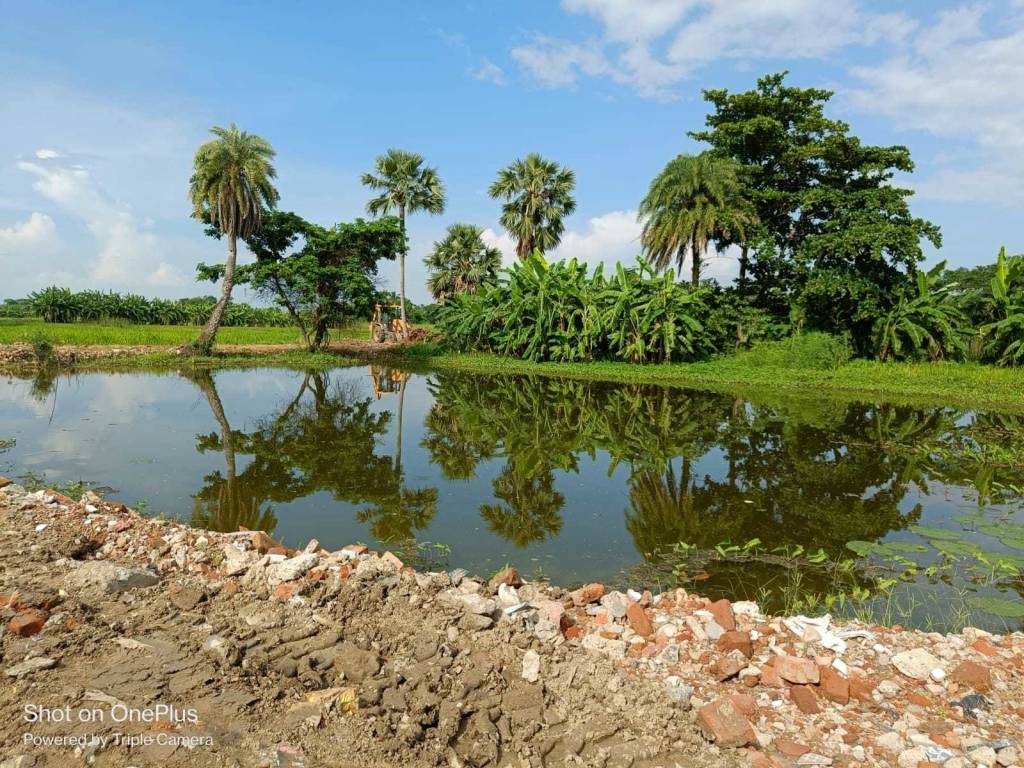

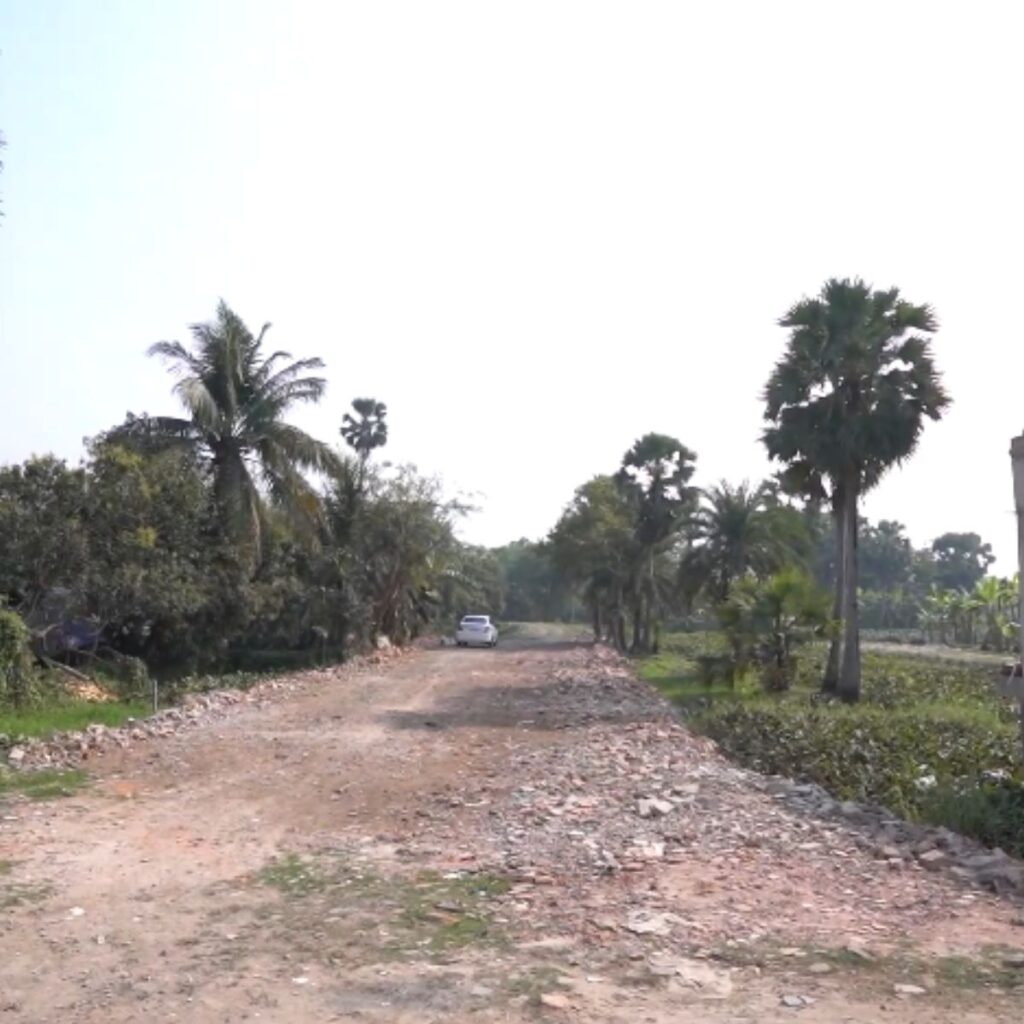
After covering what to check, here is detailed, well‑organized information about Nature’s Paradise, a township project by Rupbasuda Developers, to help you evaluate whether it meets those criteria and whether it might be a good option for you or others.
Project Overview
| Feature | Details |
| Project Name | Nature’s Paradise |
| Developer | Rupbasuda Developers |
| Location | Khariberia, Bhasa, Joka, Kolkata |
| Highway / Road | Along Diamond Harbour Road, National Highway 117 |
| Distance from Joka Metro | Approx 2.6 km |
| Time from Swaminarayan Temple | About 7 minutes |
| Nearby Landmark | Beside Palm Village Resort |
Plot Size, Type & Pricing
| Parameter | Details |
| Spread of Project | ~ 350 bighas of land area |
| Minimum Plot Size | 2 katha minimum purchase |
| Other Sizes Available | 3 katha, 5 katha, and more; no fixed maximum limit specified |
| Types of Plots | Premium & non‑premium; Residential & Commercial |
| Price Range | ₹1,30,000 (1 lakh 30 thousand rupees) up to ₹4,00,000 (4 lakh rupees) depending on plot size, location, type etc. |
Amenities & Infrastructure
| Amenity / Infrastructure | Present or Planned |
| Plot Status | Ready to move plots – so basic land preparation is done |
| Roads | Internal by‑roads of 25 ft & 20 ft; the approach roads being/will be four‑lane |
| Water supply | 24×7 water supply planned / provided |
| Electricity | Electricity connection available / planned |
| Drainage / Sewage | Proper drainage system in place or planned |
| Community & Recreational Facilities | Gymnasium, Clubhouse, Lake, Kindergarten School, Saraswati Temple |
| Transport | 24×7 transportation; metro station planned by end of 2028; nearby railway station etc. |
| Nearby Essential Facilities | Hospitals, Vegetable Market, Shopping Malls, Schools, Colleges just minutes away |
Location Advantages & Growth Potential
- Close proximity (2.6 km) to Joka Metro adds value and future ease of commute.
- Diamond Harbour Road (NH‑117) is a major route; improved highways/roads often lead to value appreciation.
- Many well‑known apartment projects in the vicinity (Emami Astha, Godrej Seven Elevate, Gems Bouganvilla, DTC Sojan, Eden Amantran, Solaris, Rajat by Avante etc.), often priced in crores, which suggests the area is already drawing premium development.
Payment & Booking Terms
| Parameter | Details |
| Booking Token Amount | ₹11,000 required as token booking amount |
| Payment Options | 36 months 0% interest EMI available |
| Developer / Agent | Dedicated Real Estate, with office near Thakurpukur 3A Bus Stand, Kolkata |
Potential Pros & Things to Check
Pros:
- Affordable entry point for middle class — both residential and commercial plots in the stated price range.
- Ready to move status reduces waiting time; some infrastructure already in place.
- Strong potential for appreciation because of upcoming metro, highway road works, location.
- Amenities are planned; community features suggest a self‑contained township rather than isolated plots.
Things you should still verify (using the checklist above):
- Confirm zoning status and whether NA conversion (if needed) has been done.
- Check encumbrance certificate to ensure clear title.
- Ensure all NOCs, permissions, layout plan approvals are legal and in order.
- Physical ground check: slope, drainage, whether land is flood‑prone.
- Exact road access: condition of roads, whether approach to your plot is via public road.
- Surrounding environment: whether neighbouring plots are being developed, quality, types of constructions.
- Utility access and readiness: water, electricity, sewage.
- Confirm any government notifications/plans that may require surrendering land or affect use.
Why This Might Be The Best Time to Buy
- With metro station planned by end of 2028, road improvements, and area being developed, plots may gain significant capital appreciation.
- Since many high‑end projects in the area are already valued in crores, a plot bought now at a few lakh rupees can deliver large value growth in coming years.
- Entry‑level price and flexible payment (0% EMI over 36 months) reduces the financial burden and risk.
How to Proceed (if Interested)
- Arrange a site visit to Nature’s Paradise. Survey multiple plots; compare premium vs non‑premium.
- Bring along a legal expert to verify documents.
- Ask developer / Dedicated Real Estate for copies of title deed, NA conversion (if applicable), EC, layout plan, approved plan, NOCs etc.
- Check the condition of internal roads, availability of utilities.
- Discuss payment schedule, any additional charges.
Contact Details
Dedicated Real Estate
- Phone: +91 6291422636
- Email: info@dedicatedrealestate.in
- Website: www.dedicatedrealestate.in
Office Location: Near Thakurpukur 3A Bus Stand, Kolkata