
Purchasing a property is a big investment—not just financially but also in future comfort. One of the often‑overlooked but crucial aspects is utility availability. Before you sign the papers, inspect carefully whether electricity, water, and gas services are properly connected (or can be connected), and whether all approvals and documents are in place. Failure to do so can lead to delays, extra costs, or even legal headaches. In this comprehensive guide, we go through everything to verify, questions to ask, red flags to watch for, associated costs, and how to ensure you don’t end up stuck without basic services.
1. Why Verifying Utilities Is Essential
Basic Livability: Electricity, water, gas are fundamental. If any of these aren’t properly connected, living becomes difficult or impossible.
Legal & Regulatory Compliance: Certain authorities require certificates like the Occupancy Certificate (OC) or Completion Certificate (CC) before issuing permanent utility connections. For example, in Bangalore (BESCOM & BWSSB), an OC is now mandatory for electricity & water connections.
Resale Value & Loan Approval: Missing or improper utility connections may affect bank loans, resale, or legal transfer. Lenders often look for clear utility provisioning as part of due diligence.
Avoiding Hidden Expenses & Delays: Unforeseen delays or extra charges can strain budgets. Knowing upfront saves time, money and avoids disputes.
2. Electricity Connection: What to Check Today
Electricity is usually top priority—check that everything is in place or is reasonably possible.
2.1 Approved Plan, Sanctioned Load & Wiring Standards
Ensure the building plan has the sanctioned electricity load (in kilowatts / amps) approved by the local electricity distribution company.
Wiring should follow local / national safety codes (e.g., in India, rules about wiring standards, insulation, earthing, protective devices).
Quality of wiring materials and grounding (earthing) are critical for safety.
2.2 Metering, Billing & Ownership of Connections
Is there a main meter already installed? Is it in the name of the developer or previous owner? You may need to transfer it.
Are there individual meters for each apartment / unit? Shared/shared meters can lead to odd billing and responsibility issues.
Location & condition of the meter: accessible, safe from weather/water exposure, locked/enclosed.
2.3 Required Documents & Permits
Proof of property ownership (sale deed/title deed).
Approved building plan / sanctioned blueprint.
Valid identity and address proof.
Sometimes, occupancy certificate (OC) or completion certificate (CC) may be required for permanent connections.
Application forms / NOC from municipal or local authority.
2.4 Potential Hidden Costs & Delays
Deposit or security amount required by electricity provider may vary depending on load, capacity, location.
Cost of meter installation, wiring from main line to building / unit.
Possible infrastructure cost if the locality needs line extension OR transformer substation.
Delay in approvals or clearances may stall utility provisioning.
3. Water Supply & Sanitation: Questions You Must Ask
Water supply and drainage are essential for daily life; sanitation affects hygiene and health.
3.1 Source & Reliability of Water
Is water supplied by municipal/corporation water board, or via borewell / tanker / private source?
How many hours per day? Is supply continuous or intermittent?
Are there backup measures (water tanks, reservoirs) in case municipal supply fails?
3.2 Water Treatment, Quality & Pressure
Is the supplied water treated (chlorinated, filtered)? Get water quality test reports if possible.
Check water pressure—both during peak hours and otherwise. Low pressure can be a major inconvenience, esp. in higher floor units.
Plumbing design inside and outside the building should prevent leakages, contamination.
3.3 Sewer / Drainage / Storm‑water Facilities
Connection to municipal sewer lines, or whether septic tanks / STPs (sewage treatment plant) are provided.
Proper rainwater drainage / stormwater channels around building & society.
Avoid water logging / flooding risk during heavy rains; check slope of land, drainage design.
3.4 Documents & Local Authority Approvals
NOC or approval from water board / sanitation department.
Approved building plan showing water supply & drainage layout.
Occupancy / completion certificates where applicable required for water connection in many cities.
3.5 Backup Water Arrangements
Storage capacity: overhead tanks, sump, booster pumps etc.
Backup in case of power failures (if water pumps need electricity).
Alternative sources (borewell, rainwater harvesting) and water purification if needed.
4. Gas Connection: Ensuring Safety & Continuity
Gas is often overlooked, but cooking or other gas‑powered appliances need safe, reliable connection.
4.1 Type of Gas Connection: PNG, LPG or Other
Piped Natural Gas (PNG) vs LPG (cylinder supply) vs other local sources. Each has different installation, regulation, safety norms.
If PNG, check pipeline connectivity, provider, pressure, subscription terms.
4.2 Gas Pipeline Layout & Proximity
Is the gas pipeline already laid up to or near your property? If not, what is the distance? Cost to extend pipeline matters.
Layout inside apartment: routing of pipelines to kitchen, proper installation of regulators, shut‑off valves etc.
4.3 Safety Measures & Leak Detection
Gas leak detectors, auto shut‐off valves; pressure regulators.
Adequate ventilation in kitchen / areas with gas appliances. Exhaust hoods.
Proper installation by certified agency / provider.
4.4 Liability, Ownership & Gas Provider Terms
Who is responsible for pipeline maintenance—builder, society, gas supplier?
Terms of gas provider contract; fees, subscription, safety audits.
Clear demarcation of responsibilities in the sale/possession agreement.
4.5 Required NOCs / Permits for Gas
Depending on city / country, gas connection may require NOC / approval from gas authority / local municipal body.
Check whether previous approvals / inspections are done.
5. Regulatory Documents & Legal Permissions You Must Verify
Even if utilities seem physically present, legal compliance is essential to ensure they stay connected without risk.
5.1 Occupancy Certificate (OC) / Completion Certificate (CC)
An OC or CC certifies the building was constructed as per approved plan and is fit for occupancy. Many urban utility providers require OC for permanent connections. Example: in Bengaluru, electricity & water connections without OC are being denied.
For under‑construction / new buildings, ensure the completion certificate matches delivered structure.
5.2 Approved Building Plan & Sanctioned Layout
Check if the building plan was approved by local municipal or town & country planning authorities. This plan should include layout for electricity, water, gas infrastructure.
If there are deviations from approved plan (e.g., changes in layout, roads, utility routing), those may cause denial of utility provisioning.
5.3 No Objection Certificates (NOCs)
Builders / developers often must get NOCs from multiple departments (electricity, water, fire safety, pollution control).
For utilities, specific NOCs: from water board, sewage department, electricity distribution company, gas authority.
5.4 Property Tax / Utility Bill Clearances
Verify that property taxes are paid up to date; outstanding dues can block approval or transfer of ownership.
Also ensure previous utility bills (electricity, water, gas) are cleared. If meter is common or developer’s bills, check whether any dues are pending.
5.5 Local Municipality / Utility Provider Norms
Each city / region has its own rules, fees, required documents. For example, in Tamil Nadu, electricity provider is TANGEDCO; water board is CMWSSB in Chennai etc. Each has specific filing requirements, forms, NOC norms.
Be aware of recent legal changes. For example, recent mandates in some cities requiring OC for utilities.
6. Inspection Checklist: On‑Site Utility Verification
Having done paperwork due diligence, a physical inspection helps uncover issues that don’t show in documents.
6.1 Physical Connection Presence & Condition
Check whether electricity cables, poles or underground feeders reach the property boundary.
Water pipelines, main inlet valves visible and connected.
Gas pipelines or meter box present.
6.2 Meter Locations & Accessibility
Are electricity/water/gas meters installed and accessible? Do they appear tampered or old?
Meter rooms: well ventilated, protected, not prone to flooding or dust.
6.3 Inspect for Hidden Dues / Open Connections
Sometimes the meter is disconnected because dues are pending. Check if this has happened.
Bills in seller’s name, current consumption, whether accounts are active.
6.4 Talk to Neighbours & Local Utility Offices
Neighbours can tell you whether electricity / water supply is stable, any frequent outages, pressure issues, gas interruptions etc.
Local utility office / provider can tell you about load availability / pipeline connectivity / pending infrastructure work in area.
7. Cost Considerations & Hidden Charges
Even if utilities are available, costs may differ widely.
7.1 Connection Charges & Security Deposits
Most providers charge one‑time connection fee, security deposit. E.g. for electricity, deposit depends on sanctioned load; for water, a fixed fee + meter cost etc.
Gas providers may charge installation of pipeline, regulator, meter etc.
7.2 Ongoing Usage Charges & Tariffs
Rate per unit of electricity, water, gas varies by provider / consumption slab. Check current tariffs.
Additional charges: minimum charges, fixed charges, meter reading fees etc.
7.3 Future Upgrades & Expansion Costs
If your usage increases (e.g., want to add air conditioning units, electric vehicle charging, etc.), can you increase load? What is cost / process?
If locality development demands expansion of pipelines or grid, cost may fall partially on residents / society.
7.4 Delays or Penalties if Regulatory Requirements Not Met
If OC / CC / NOCs are missing, utility companies may refuse permanent connection or charge penalty/demands modifications.
Delays may require temporary solutions (generators, tankers), which add cost and inconvenience.
8. Red Flags & Risk Mitigation
Property where OC / CC not yet issued.
Builder or seller claims utilities will be provided “soon” but no documents to prove this.
Utility connection clause missing in sales agreement or unclear terms about responsibility / costs.
Properties in remote or newly developing areas with no existing utility infrastructure—often cost to extend services is very high.
Bills or meters are in someone else’s name, or there are unpaid dues.
Risk Mitigation Strategies:
Insist on seeing relevant documents (OC, NOCs, approvals).
Include utility provisions in agreement or contract: who pays, by when.
Get everything in writing.
Speak to local utility provider and municipal authority to confirm connectivity.
If possible, delay possession until utilities are fully operational.
9. Conclusion & Utility‑Verification Summary Checklist
Ensuring utility availability—electricity, water, gas—before buying property isn’t just a good idea; it’s essential to avoid surprises, legal issues, or added costs. Below is a summary checklist to help you through the final decision making.
Utility Verification Summary Checklist
| Utility | What to Verify | Key Documents / Actions |
|---|---|---|
| Electricity | Sanctioned load, wiring standards, meter(s), bills, earthing, ownership | Sanctioned plan, OC/CC, approved wiring drawings, proof of cleared dues |
| Water Supply & Sanitation | Source, quality, supply hours, drainage, sewer connectivity, backup | Water board approvals, drainage layout, water quality tests, quality certificate |
| Gas | Type of connection, safety features, pipeline proximity, provider contract | Gas authority NOC, provider terms, installation specs & safety certificate |
| Regulatory Approvals | Occupancy / Completion Certificate, approved plan, NOC(s), clear title, tax & bill dues | Original/verified documents, municipal clearance, title deed, sale agreement clauses |
| Inspection | Physical presence, meter functionality, connectivity, neighbor feedback | On‑site visit, photographs, checks, neighbour & utility office inquiry |
| Cost | Connection fees, deposits, tariffs, future upgrade costs | Quotations, provider fee schedules, written cost estimates |
Verifying these items will give you confidence that your new property won’t come with avoidable utility headaches. Always be diligent, document everything, and don’t settle for vague promises. Your future comfort, safety, and finances depend on these checks.
Nature’s Paradise by Rupbasuda Developers — “Ready to Move” Plots

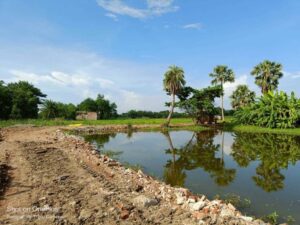

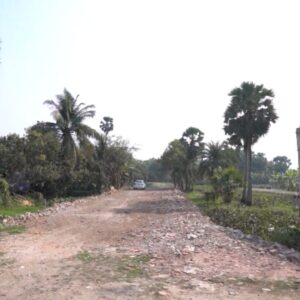
After covering what to check, here is detailed, well‑organized information about Nature’s Paradise, a township project by Rupbasuda Developers, to help you evaluate whether it meets those criteria and whether it might be a good option for you or others.
Project Overview
| Feature | Details |
| Project Name | Nature’s Paradise |
| Developer | Rupbasuda Developers |
| Location | Khariberia, Bhasa, Joka, Kolkata |
| Highway / Road | Along Diamond Harbour Road, National Highway 117 |
| Distance from Joka Metro | Approx 2.6 km |
| Time from Swaminarayan Temple | About 7 minutes |
| Nearby Landmark | Beside Palm Village Resort |
Plot Size, Type & Pricing
| Parameter | Details |
| Spread of Project | ~ 350 bighas of land area |
| Minimum Plot Size | 2 katha minimum purchase |
| Other Sizes Available | 3 katha, 5 katha, and more; no fixed maximum limit specified |
| Types of Plots | Premium & non‑premium; Residential & Commercial |
| Price Range | ₹1,30,000 (1 lakh 30 thousand rupees) up to ₹4,00,000 (4 lakh rupees) depending on plot size, location, type etc. |
Amenities & Infrastructure
| Amenity / Infrastructure | Present or Planned |
| Plot Status | Ready to move plots – so basic land preparation is done |
| Roads | Internal by‑roads of 25 ft & 20 ft; the approach roads being/will be four‑lane |
| Water supply | 24×7 water supply planned / provided |
| Electricity | Electricity connection available / planned |
| Drainage / Sewage | Proper drainage system in place or planned |
| Community & Recreational Facilities | Gymnasium, Clubhouse, Lake, Kindergarten School, Saraswati Temple |
| Transport | 24×7 transportation; metro station planned by end of 2028; nearby railway station etc. |
| Nearby Essential Facilities | Hospitals, Vegetable Market, Shopping Malls, Schools, Colleges just minutes away |
Location Advantages & Growth Potential
- Close proximity (2.6 km) to Joka Metro adds value and future ease of commute.
- Diamond Harbour Road (NH‑117) is a major route; improved highways/roads often lead to value appreciation.
- Many well‑known apartment projects in the vicinity (Emami Astha, Godrej Seven Elevate, Gems Bouganvilla, DTC Sojan, Eden Amantran, Solaris, Rajat by Avante etc.), often priced in crores, which suggests the area is already drawing premium development.
Payment & Booking Terms
| Parameter | Details |
| Booking Token Amount | ₹11,000 required as token booking amount |
| Payment Options | 36 months 0% interest EMI available |
| Developer / Agent | Dedicated Real Estate, with office near Thakurpukur 3A Bus Stand, Kolkata |
Potential Pros & Things to Check
Pros:
- Affordable entry point for middle class — both residential and commercial plots in the stated price range.
- Ready to move status reduces waiting time; some infrastructure already in place.
- Strong potential for appreciation because of upcoming metro, highway road works, location.
- Amenities are planned; community features suggest a self‑contained township rather than isolated plots.
Things you should still verify (using the checklist above):
- Confirm zoning status and whether NA conversion (if needed) has been done.
- Check encumbrance certificate to ensure clear title.
- Ensure all NOCs, permissions, layout plan approvals are legal and in order.
- Physical ground check: slope, drainage, whether land is flood‑prone.
- Exact road access: condition of roads, whether approach to your plot is via public road.
- Surrounding environment: whether neighbouring plots are being developed, quality, types of constructions.
- Utility access and readiness: water, electricity, sewage.
- Confirm any government notifications/plans that may require surrendering land or affect use.
Why This Might Be The Best Time to Buy
- With metro station planned by end of 2028, road improvements, and area being developed, plots may gain significant capital appreciation.
- Since many high‑end projects in the area are already valued in crores, a plot bought now at a few lakh rupees can deliver large value growth in coming years.
- Entry‑level price and flexible payment (0% EMI over 36 months) reduces the financial burden and risk.
How to Proceed (if Interested)
- Arrange a site visit to Nature’s Paradise. Survey multiple plots; compare premium vs non‑premium.
- Bring along a legal expert to verify documents.
- Ask developer / Dedicated Real Estate for copies of title deed, NA conversion (if applicable), EC, layout plan, approved plan, NOCs etc.
- Check the condition of internal roads, availability of utilities.
- Discuss payment schedule, any additional charges.
Contact Details
Dedicated Real Estate
- Phone: +91 6291422636
- Email: info@dedicatedrealestate.in
- Website: www.dedicatedrealestate.in
Office Location: Near Thakurpukur 3A Bus Stand, Kolkata