
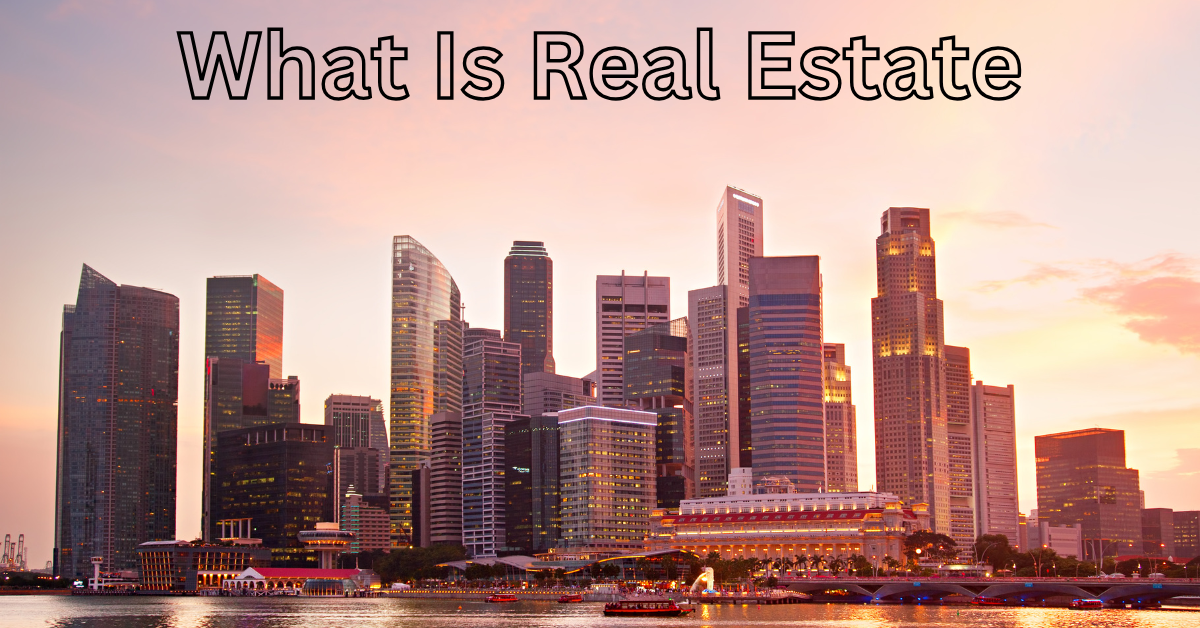
If you’ve ever wondered, “What does real estate mean?”, you’re not alone. Real estate is a term that gets thrown around a lot — in everyday conversation, in investment discussions, in news articles, and in legal documents. Yet, beneath the surface it’s a rich concept that blends land, structures, rights, investment, legal frameworks and personal goals. In this guide, we’ll peel back all the layers, clarify the meaning of real estate, explore its types and workings, and show why it matters to you whether you’re a homeowner, an investor, or simply curious.
Defining Real Estate: The Basics
Literal definition of real estate
At its core, real estate refers to property that consists of land plus anything permanently attached to it—such as buildings, structures, trees, crops, minerals, water rights or other natural resources.
For example, when you buy a piece of land with a house on it, you’re acquiring both the land and the permanent structure.
Legal meaning and property rights
Legally speaking, real estate encompasses not just the physical land and structures, but also the rights and interests one has in that property. These rights can include the right to use the property, the right to exclude others, the right to transfer or sell, and the right to benefit from resources on or under the land (like minerals or water).
In common law systems, the term “real property” is used for immovable property (land and buildings).
Why is it called “real” estate?
You might ask: why “real” estate? The “real” in real estate comes from Latin “res” meaning “thing” (as in a tangible thing) and over time has come to mean physical, immovable property. The term “estate” refers to one’s interest or rights in that property. So together, “real estate” essentially means tangible land and the rights that go with it.
Distinguishing from personal property
It’s helpful to differentiate real estate from personal property. Real estate (or real property) is immovable – land plus anything permanently attached. Personal property (or “chattels”) is movable – furniture, vehicles, jewellery, etc.
This distinction matters legally and financially: the rules for property tax, ownership, mortgage, transfer can differ markedly between real estate vs. personal property.
The Components of Real Estate
Land
Land is the most basic element of real estate: the surface of the earth, the space above (air rights) and the space below (sub‐surface rights) in many legal systems. It includes natural resources (minerals, oil, water) and environmental features.
Improvements to the land
Improvements refer to any permanent additions that enhance the land’s value or use: buildings, houses, fences, roads, utilities, landscaping. These become part of the real estate.
Bundle of rights
When you own real estate you don’t just own the physical thing — you own a bundle of rights. These may include: the right to occupy, the right to lease or sell, the right to marry the property (i.e., add value), the right to exclude others, etc. This concept is fundamental in property law.
Natural resources & attachments
Real estate may include natural resources like timber, minerals, crops, water rights or whatever is affixed to the land. That means the value of real estate isn’t just the physical building – the land, its resources, and attachments matter too.
Types of Real Estate You Should Know
Understanding that there are different categories of real estate helps clarify what “real estate” can mean in various contexts: residential, commercial, industrial, land, special purpose. Let’s break them down.
Residential real estate
These are properties used primarily for human habitation: single‐family homes, condos, apartments, townhouses, vacation homes, multi‐family housing units. Buyers, renters or owners live in them rather than operate a business from them.
Commercial real estate
These properties are used for business or investment purposes: office buildings, retail stores, shopping malls, hotels, restaurants, medical buildings, etc. The primary goal often is income generation (rent) or capital appreciation.
Industrial real estate
Large‐scale buildings such as factories, warehouses, distribution centers, manufacturing facilities fall here. These properties often have special zoning and utility requirements.
Land / undeveloped property
Raw land, agricultural land, plots for future development, vacant lots. While they may not have buildings yet, they are real estate because of the land component, and they often represent opportunity for development or investment.
Mixed‐use and special purpose real estate
Sometimes properties blend uses (residential + commercial) or are uniquely purposed (schools, churches, hospitals, government buildings). These special types may behave differently in the real estate market due to zoning, regulations, and usage constraints.
Why Real Estate Matters – The Importance and Value
Real estate as a physical asset and wealth-store
Owning real estate is often seen as a safe way to store wealth. Unlike many assets which can vanish, real estate is tangible, immovable and historically appreciated over time. This gives it a special position in investment portfolios.
Economic significance
The real estate industry has a massive impact on the economy — from construction jobs, real glass, building materials, architecture, brokers and agents, mortgage markets, to local tax revenues. When real estate markets boom or bust, the effects ripple across the economy.
Personal and societal impact
On a personal level, real estate gives you a home, a place to live, raise a family. On a societal level, it shapes cities and communities — how neighborhoods develop, how infrastructure is placed, how land is used.
Investment and income generation potential
Beyond living in it, real estate can:
Generate rental income
Provide appreciation (increase in value)
Offer tax benefits (depending on jurisdiction)
Serve as collateral for loans
It becomes a versatile asset class for individuals and institutions alike.
How Real Estate Works: The Mechanics
Acquisition and ownership
Buying real estate involves several steps: identifying property, evaluating condition and price, checking legal title, securing financing, closing the deal, registering transfer of ownership. These steps can vary significantly by country, region and local regulation.
Valuation and market factors
What determines the value of real estate? Many factors: location (often the most critical), condition, size, amenities, zoning, infrastructure, interest rates, supply and demand dynamics, and economic outlook.
A property in a high‐demand location with good amenities will typically command a higher price than a similar property in a less desirable area.
Financing and mortgage
Most real estate purchases are financed via loans (mortgages) because the costs are high. The real estate market is heavily influenced by interest rates, lending policies, credit availability, and macroeconomic conditions.
Legal, zoning and regulatory issues
Real estate is bound by local laws: zoning dictates land use; building codes determine what you can build; environmental regulations may apply; tax laws govern property taxes, capital gains, transfers. Failure to adhere can hamper ownership rights or create liability.
Leasing, renting and property management
If you don’t live in the property yourself, you may lease it to tenants. That turns real estate into an income‐producing asset. Property management becomes important — upkeep, tenant relations, rental agreements, maintenance all factor in.
Resale, transfer and investment exit
Eventually, you may want to sell (exit) the asset. Timing, market conditions, property condition, marketing, legal clearance all affect how smoothly this occurs. Real estate tends to be less liquid than stocks, meaning selling can take time.
Real Estate Investment: Opportunities & Risks
Why invest in real estate
Potential for long-term appreciation
Income generation (rent)
Inflation hedge (property values and rents often rise with inflation)
Diversification (real estate behaves differently than stocks/bonds)
Leverage (you can borrow to acquire real estate)
Key risks to be aware of
Illiquidity: it can take time to sell
Market downturns: value can decline, e.g., real-estate bubbles.
High upfront costs and ongoing maintenance/management costs
Regulatory risks: zoning changes, tax policy, environmental liabilities
Location risk: “wrong” location can kill value or rental prospects
Leverage risk: when loans are used, rising interest rates or falling rental income can stress finances
Strategies for real estate investing
Buy, hold and rent residential properties
Invest in commercial real estate
Flip properties (buy low, renovate, sell high)
Real estate development (build new or redevelop existing)
Real estate investment trusts (REITs) or real estate funds – for those who prefer indirect investing
Real estate in the Indian context (or emerging markets)
In markets like India (and other emerging economies), real estate also involves factors such as land title clarity, regulatory frameworks (e.g., the Real Estate (Regulation and Development) Act, 2016 in India), growth of infrastructure projects, rapid urbanisation, and changing consumer aspirations. These add both opportunity and complexity.
Real Estate for Homebuyers: What It Means to You
What to consider when buying a home
Location and neighbourhood amenities
Legal title and clear ownership
Construction quality and structural condition
Financing and affordability (monthly payments, down payment, interest)
Future resale value
Maintenance costs, property tax, association fees (if any)
Personal goals: living, renting out later, resale, inheritance
Renting vs buying – real estate decision
Owning your own property gives stability, potential appreciation, and control over your home. Renting gives flexibility, lower upfront cost, and less maintenance responsibility. The “right” choice depends on your personal situation, finances, and goals.
Homeownership and wealth-building
For many families, owning real estate is a key step in building long‐term wealth. Equity builds as you pay off the mortgage, property value may rise, and you gain a sense of security. Real estate often becomes a legacy asset for future generations.
Real Estate Market Trends & Future Outlook
Technology and real estate
Real estate is evolving through technology: virtual tours, online listings, data analytics, AI for price prediction, even blockchain for property title. These innovations are changing how people buy, sell and manage property.
Urbanisation, sustainability & changing demographics
Cities are growing, and with that comes high demand for housing, infrastructure, mixed‐use properties. Sustainability is more important — green buildings, energy efficiency, walkable neighbourhoods, social amenities are influencing value.
Impact of macro‐economics and regulation
Interest rates, inflation, employment levels, government policy (tax, housing subsidies, land use) all impact real estate. For example, when interest rates rise, borrowing costs increase, which can cool property markets.
Real estate in India & emerging economies
Emerging economies like India have long-term growth potential in real estate due to urban migration, rising incomes, infrastructure development, and government focus on housing. But challenges include land-title issues, regulatory delays, and financing access.
Real Estate Glossary: Key Terms You Should Know
Here are some common terms in the real estate world:
Property title
A legal document that shows ownership of a property. Clear title means no outstanding claims or liens on the property.
Freehold vs leasehold
Freehold: you own the land and the building indefinitely. Leasehold: you own the building/land for a fixed term (e.g., 99 years) under a lease.
Zoning & land‐use
Zoning laws dictate what you can build on a piece of land (residential, commercial, industrial, mixed). Land‐use regulation affects value and flexibility of a property.
Capital appreciation
The increase in the value of a property over time.
Rental yield
The annual income (rent) as a percentage of the property’s value.
Real‐estate bubble
A period when property prices inflate rapidly beyond sustainable levels and then collapse.
Real estate investment trust (REIT)
An investment vehicle that owns, operates or finances income-producing real estate and allows investors to participate without directly owning property.
Common Misconceptions & Myths About Real Estate
Myth: Property always goes up in value
While it has historically been true in many markets, there are no guarantees. Real estate can decline in value, especially if market conditions turn negative or property is mismanaged.
Myth: Real estate is entirely passive income
Owning property may provide rent, but it often comes with management responsibilities – maintenance, tenant issues, legal compliance, vacancy risk.
Myth: Location doesn’t matter much
On the contrary — location remains one of the most important determinants of value and future potential. A great property in a weak location may underperform.
Myth: You must buy lots of properties to succeed
Quality trumps quantity. A single well-chosen, well-managed property may outperform multiple mediocre ones. Understand your capacity, budget, and strategy.
The Indian Real Estate Perspective (for Readers in India & similar markets)
Market size and importance
In India, the real estate sector is one of the largest sectors in terms of employment, economic impact, and wealth creation. It includes residential, commercial, industrial, and infrastructure‐linked real estate.
Regulatory frameworks
The introduction of the Real Estate (Regulation and Development) Act, 2016 (RERA) has been a major step in regulating the market and protecting homebuyers. Precise zoning, clear titles and transparency are improving, but challenges remain.
Unique challenges & opportunities
Land ownership and title clarity
Infrastructure lag or delays
Regional variation (metros vs tier-2/3 cities)
Rising demand from urbanisation and housing shortage
Affordability pressures
Financing constraints (interest rates, loan availability)
Tips for Indian real estate buyers/investors
Verify legal title and RERA compliance
Research the neighbourhood, infrastructure roadmap, future civic plans
Align purchase with your holding period and exit strategy
Understand the total cost (taxes, maintenance, home‐loan interest)
Think long‐term: real estate is typically a long‐term investment
Summary & Final Thoughts
Real estate is far more than just “a house” or “a plot of land”. It’s a complex combination of land, improvements, legal rights, market dynamics, investment potential and personal goals. Whether you’re buying your first home, exploring real estate investing, or simply seeking to understand the world of property, recognising what real estate truly means gives you the foundation to make smarter decisions.
From the literal definition – land plus anything permanently attached – to the legal dimension of property rights, the types of real estate, how value is created and manipulated, the risks and opportunities, and the market context (especially in India) – you now have a comprehensive view of “what real estate means”.
Closely examine your goals, your financial capacity, your local market’s realities, and the specific real estate asset you’re looking at. With that, you’ll be in a better position to navigate the wide world of real estate.
Call to Action
If you found this guide helpful, consider subscribing to our blog for more insights on property investment, housing trends, real estate market strategy and home-buying tips. Feel free to leave a comment with your questions about real estate — I’d be happy to help!
Premium Commercial & Residential Land Plots for Investment and Sale
Discover exceptional land plots available for investment and purchase in prime locations — Newtown, Joka, Baruipur, and Rashpunja. These plots are ideal for both residential and commercial development, offering excellent growth potential and long-term value.
Each site is equipped with modern infrastructure, world-class facilities, and essential amenities to ensure a comfortable and convenient lifestyle. Flexible installment and EMI options are also available, making ownership easier and more affordable.
Whether you’re planning to build your dream home, launch a commercial project, or expand your investment portfolio, these plots offer the perfect opportunity in some of Kolkata’s most promising areas.
Contact Details
Dedicated Real Estate
- Phone: +91 6291422636
- Email: info@dedicatedrealestate.in
- Website: www.dedicatedrealestate.in
Office Location: Near Thakurpukur 3A Bus Stand, Kolkata