
Land is the foundation of real estate. Whether you are buying a plot, converting agricultural land, registering a deed, or transferring ownership, one term you’ll frequently hear in West Bengal is “Khajna” — the local land revenue or land tax. But what exactly is Khajna? Who is liable to pay it, for what kinds of land, when does payment happen, what exemptions exist, and what to watch out for if you’re buying or selling property?
In this blog, we unpack everything about Khajna: its legal basis, current norms under the BanglarBhumi system, scenarios of payment, who owes what, how to avoid surprises, and how to ensure compliance. This is your go‑to guide for real estate transactions in West Bengal with respect to land revenue.
What Is Khajna? The Legal & Practical Basis
Definition & Purpose
Khajna refers to the land revenue tax levied by the Government of West Bengal on landowners. It is collected by the Department of Land & Land Reforms & Refugee Relief & Rehabilitation (L & LR & RRR).
Its purpose: upkeep & administration of land records, supporting local governance, funding services tied to land administration, and ensuring legal recognition (mutation, conversion etc.). It functions somewhat like a property tax or land use tax but is specific to land ownership or usage rights.
Historical Context & Regulatory Framework
West Bengal’s land revenue system has its roots in historical land administration, land reform acts, and earlier revenue settlements, but in recent years, frameworks have been modernized: digital land records (BanglarBhumi), mutation/conversion norms, e‑payments etc.
Key laws and policies include land revenue acts, land use classification (agricultural, homestead, commercial, industrial), rules for mutation, conversion, and the role of Khajna in property registration / deed formalities.
Key Terms: Khatian, Mouza, Plot, Record of Rights (RoR)
Khatian: A land record document which lists the owner(s), area, classification of land, etc. It’s a unique number associated with the land record.
Mouza: The revenue circle or unit; a small area (village / neighborhood) in which lands are grouped.
Plot Number: Specific parcel in a Khatian / Mouza.
RoR (Record of Rights): A document that shows ownership and rights over the land—important for mutation, inheritance etc.
These determine how Khajna is assessed, who is the party responsible, and how payments / records are maintained.
Who Pays Khajna & When
Liability: Who’s Responsible
| Situation | Who Pays Khajna |
|---|---|
| Current owner of land (non‑agricultural, homestead etc.) | Landowner / Raiyat / Patta holder |
| After sale or transfer of ownership | New owner, once mutation is completed (provided records updated) |
| Agricultural land | Wuht case‑by‑case: many classes of agricultural land are exempt (more below) |
| Plots under conversion (agricultural to non‑agricultural) | After conversion, when classification changes, Khajna becomes payable by the landowner under new category |
Note: If seller has pending Khajna for prior years, often buyer demands “no‑due certificate” to avoid inheriting liability.
When Does One Need to Pay
Annually: Khajna is payable every year (for eligible land).
On registration / mutation: Before mutation or registration of deed (or sale deed) or transfer, proof of Khajna payment (up to date) is often required by authorities.
During conversion: If land is being converted from agricultural to non‑agricultural / commercial, Khajna category may change, new liability starts from conversion date.
Upon demand / notice: If there are arrears (past Khajna unpaid), government may issue demand notices; interest / penalty may apply.
Exemptions & Relief
Agricultural lands: Since 2017, West Bengal government has waived Khajna on agricultural land.
Homestead / residential homestead lands sometimes have preferential rates.
For certain classes of persons (small landowners, marginalized groups) there may be relief / minimal rates as per government policy.
Early payment rebates or timely‑payment discounts may sometimes be offered or lesser penalty for delay (depending on local rules).
How Khajna Is Calculated & Paid
Basis of Calculation
Determined by land classification / use: agricultural, non‑agricultural, residential/homestead, commercial, industrial etc. Each category has different rates.
Based on location: whether rural area, urban municipality, municipal corporation etc. Urban lands typically attract higher rates.
Area of the land: measured in decimals, bighas, acres etc. More area → higher revenue.
Road frontage, amenities, access may affect classification or category designations.
Any arrears + interest, or cess / surcharge if applicable.
Using BanglarBhumi Portal & Online System
BanglarBhumi is the official digital land record & land revenue portal in West Bengal. It provides services including Khatian / plot information, mutation, land conversion, and online Khajna payment.
Steps for payment: login → citizen services → select Khajna (Land Revenue) payment online → enter District, Block, Mouza, Khatian no., Plot no. → verify amount due → pay via netbanking / card / UPI etc. → download receipt.
Late Payment, Arrears & Interest
If Khajna is not paid when due, arrears accumulate. Government may levy interest / penalty on arrears.
Before sale / deed registration / mutation, clearance of arrears is often required.
Who Pays What: Scenarios in Real Estate Transactions
Buying a Plot from a Private Party
Seller’s responsibility: Clear past Khajna dues (get “Khajna no due certificate”) up to the date of sale.
Buyer’s responsibility: Ensure mutation is done in their name; pay Khajna for remaining part of the year; keep paying annually thereafter.
Buying from a Builder / Developer
Builder should have already paid Khajna up to date for the portion of land he controls.
As buyer, ensure that receipt shows “Khajna paid till date” before purchase. Also check whether conversion (if required) is done and classification updated.
Mutation, Conversion & Change of Use
If land is converted (e.g. agricultural → residential / commercial), then new Khajna rate applies. The owner must pay the revised revenue from the date of conversion.
Mutation to update ownership also involves Khajna payment: many services / registrations are blocked if Khajna is not cleared.
Agricultural Land vs Non‑Agricultural Land Usage
Agricultural lands: exempt from Khajna (post 2017).
If agricultural land is being used for non‑agricultural / commercial purpose without official conversion, owner may not get legal protections; may be liable for retrospective Khajna or penalties.
Practical Situations & Common Questions
What When Plot / Land Has Mixed Use or Partial Agricultural
Sometimes a land parcel may be partially agricultural / partially non‑agricultural. In such cases, portion used non‑agriculturally may incur Khajna; agricultural portion may be exempt. But classification / usage must be formally recognized.
Transfer without Mutation
If you buy land but mutation in your name is not done, the seller’s name may still appear in records for Khajna and other liabilities. For legal security, buyer must ensure mutation is completed.
No‑Due Certificates
Before buying, ask seller for no‑due Khajna certificate. This shows that all past dues are cleared. Always keep receipts.
If Khajna Was Not Paid by Previous Owner
Buyer might inherit the liability in some cases unless explicitly cleared. Legal advice: check with revenue office, examine plot history via RoR / Khatian.
Using Tools, Portals & Govt Facilities
BanglarBhumi Portal Features & Advantages
Access land records (Khatian, Plot info, RoR) online.
Apply and pay Khajna online; options for mutation, conversion fees etc.
Government has simplified Khajna payment: no requirement of email OTP in some cases; homestead etc simplified.
Khajna Rate Calculator Tools
Some third‑party / government‑linked tools allow you to calculate approximate Khajna based on area type, land use type, location (rural, municipal etc.). Useful for estimating costs in advance.
Payment via Mobile App / e‑Khajna Facilities
The government has introduced online / e‑Khajna facilities: paying from home, mobile, downloading receipts.
More than 9 lakh non‑agricultural land holders have used e‑Khajna, bringing state revenue via BanglarBhumi.
Risks, Penalties & What Buyers Must Be Careful About
Legal / Classification Issues
Land recorded as agricultural but used commercially without conversion → risk of penalties or future reclassification leading to higher tax liabilities.
Improper or incomplete plot / Khatian information → wrong Khajna assessment complaints.
Hidden Liabilities
Seller may not disclose past Khajna arrears; buyer may be forced to pay later.
Obligations like conversion fees, mutation charges etc. may come later if land use changes.
Delay or Irregular Payment Consequences
Interest on arrears.
Difficulty in registration / mutation / transfer without up‑to‑date Khajna.
Legal litigation in worst cases.
Misuse of Land or Non‑compliance
If land is used differently than declared (e.g. from homestead to commercial without necessary change), the revenue department may reassess, impose penalties.
Checklist: What to Do Before Buying Property with Respect to Khajna
This section gives you a practical checklist to make sure Khajna / land revenue issues don’t bite you later.
Verify Land Records & Classification
Check Khatian, Plot, Mouza, RoR to see how land is classified.
Confirm usage & classification: is it agricultural, homestead, non‑agricultural, commercial etc.
Ask for Khajna Receipts & No‑Due Certificate
Get receipts showing Khajna paid by seller up to date.
Request a no‑due certificate from revenue office / via BanglarBhumi portal if available.
Mutation & Conversion Status
Is mutation properly done in seller’s name? Will it need conversion of land use? If so, whether conversion fees / revenue are already paid or not.
Use BanglarBhumi Tools
Login to the portal, check plot details, Khatian, calculation of Khajna, any arrears.
Use calculators / online estimation tools to budget correctly.
Legal Advice & Documentation
Engage a good property lawyer to verify title, classification, existing liabilities.
Have proper sale deed, mutation deed, conversion orders (if needed), and ensure revenue records reflect ownership.
Recent Developments & Policy Changes in Khajna / Land Revenue WB
Agricultural Land Exemption
From 2017, full waiver of Khajna for agricultural land. Banglar Bhumi
Digitization & Online Payments
BanglarBhumi portal simplifies many processes: online payment of Khajna, no need to physically go to offices. Banglarbhumi+2MillenniumPost+2
Removal of some earlier requirements (such as email OTP in some situations) to make process smoother. Banglar Bhumi
Increased Government Revenue & Usage
With more people paying via e‑Khajna, the government revenue from land revenue has increased. For example, in the 2022‑23 fiscal, over 9 lakh non‑agricultural landholders used e‑Khajna, resulting in collection of crores of rupees. MillenniumPost
Role in Property Registration & Sale Transactions
Khajna‑payment status has become more important for property registration, mutation, and sale deeds. Without clear Khajna status, some legal offices / municipal offices may refuse to proceed.
Conclusion
Understanding Khajna (land revenue) in West Bengal is essential for both buyers and sellers in the real estate market. It’s not just a yearly tax—it ties into land classification, usage, mutation, conversion, and legal standing. Failing to verify Khajna liabilities can lead to surprises: arrears, legal obstacles, or unexpected cost burdens.
If you are in the market for a plot, house, or real estate transaction in West Bengal, ensure you:
verify classification (agricultural vs non‑agricultural),
check land records (Khatian, RoR) via BanglarBhumi,
demand no‑due certificates,
ensure mutation / ownership records are updated,
budget for potential conversion / late payment costs.
With proper diligence, legal verification, and use of portals & tools available today, Khajna can become a minor issue rather than a major risk. It pays—literally and figuratively—to know who pays what and when.
Nature’s Paradise by Rupbasuda Developers — “Ready to Move” Plots

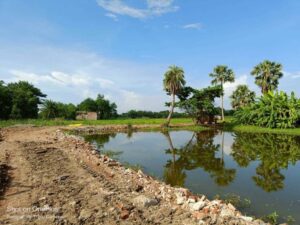

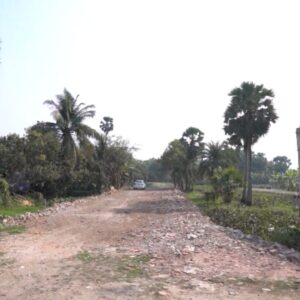
After covering what to check, here is detailed, well‑organized information about Nature’s Paradise, a township project by Rupbasuda Developers, to help you evaluate whether it meets those criteria and whether it might be a good option for you or others.
Project Overview
| Feature | Details |
| Project Name | Nature’s Paradise |
| Developer | Rupbasuda Developers |
| Location | Khariberia, Bhasa, Joka, Kolkata |
| Highway / Road | Along Diamond Harbour Road, National Highway 117 |
| Distance from Joka Metro | Approx 2.6 km |
| Time from Swaminarayan Temple | About 7 minutes |
| Nearby Landmark | Beside Palm Village Resort |
Plot Size, Type & Pricing
| Parameter | Details |
| Spread of Project | ~ 350 bighas of land area |
| Minimum Plot Size | 2 katha minimum purchase |
| Other Sizes Available | 3 katha, 5 katha, and more; no fixed maximum limit specified |
| Types of Plots | Premium & non‑premium; Residential & Commercial |
| Price Range | ₹1,30,000 (1 lakh 30 thousand rupees) up to ₹4,00,000 (4 lakh rupees) depending on plot size, location, type etc. |
Amenities & Infrastructure
| Amenity / Infrastructure | Present or Planned |
| Plot Status | Ready to move plots – so basic land preparation is done |
| Roads | Internal by‑roads of 25 ft & 20 ft; the approach roads being/will be four‑lane |
| Water supply | 24×7 water supply planned / provided |
| Electricity | Electricity connection available / planned |
| Drainage / Sewage | Proper drainage system in place or planned |
| Community & Recreational Facilities | Gymnasium, Clubhouse, Lake, Kindergarten School, Saraswati Temple |
| Transport | 24×7 transportation; metro station planned by end of 2028; nearby railway station etc. |
| Nearby Essential Facilities | Hospitals, Vegetable Market, Shopping Malls, Schools, Colleges just minutes away |
Location Advantages & Growth Potential
- Close proximity (2.6 km) to Joka Metro adds value and future ease of commute.
- Diamond Harbour Road (NH‑117) is a major route; improved highways/roads often lead to value appreciation.
- Many well‑known apartment projects in the vicinity (Emami Astha, Godrej Seven Elevate, Gems Bouganvilla, DTC Sojan, Eden Amantran, Solaris, Rajat by Avante etc.), often priced in crores, which suggests the area is already drawing premium development.
Payment & Booking Terms
| Parameter | Details |
| Booking Token Amount | ₹11,000 required as token booking amount |
| Payment Options | 36 months 0% interest EMI available |
| Developer / Agent | Dedicated Real Estate, with office near Thakurpukur 3A Bus Stand, Kolkata |
Potential Pros & Things to Check
Pros:
- Affordable entry point for middle class — both residential and commercial plots in the stated price range.
- Ready to move status reduces waiting time; some infrastructure already in place.
- Strong potential for appreciation because of upcoming metro, highway road works, location.
- Amenities are planned; community features suggest a self‑contained township rather than isolated plots.
Things you should still verify (using the checklist above):
- Confirm zoning status and whether NA conversion (if needed) has been done.
- Check encumbrance certificate to ensure clear title.
- Ensure all NOCs, permissions, layout plan approvals are legal and in order.
- Physical ground check: slope, drainage, whether land is flood‑prone.
- Exact road access: condition of roads, whether approach to your plot is via public road.
- Surrounding environment: whether neighbouring plots are being developed, quality, types of constructions.
- Utility access and readiness: water, electricity, sewage.
- Confirm any government notifications/plans that may require surrendering land or affect use.
Why This Might Be The Best Time to Buy
- With metro station planned by end of 2028, road improvements, and area being developed, plots may gain significant capital appreciation.
- Since many high‑end projects in the area are already valued in crores, a plot bought now at a few lakh rupees can deliver large value growth in coming years.
- Entry‑level price and flexible payment (0% EMI over 36 months) reduces the financial burden and risk.
How to Proceed (if Interested)
- Arrange a site visit to Nature’s Paradise. Survey multiple plots; compare premium vs non‑premium.
- Bring along a legal expert to verify documents.
- Ask developer / Dedicated Real Estate for copies of title deed, NA conversion (if applicable), EC, layout plan, approved plan, NOCs etc.
- Check the condition of internal roads, availability of utilities.
- Discuss payment schedule, any additional charges.
Contact Details
Dedicated Real Estate
- Phone: +91 6291422636
- Email: info@dedicatedrealestate.in
- Website: www.dedicatedrealestate.in
Office Location: Near Thakurpukur 3A Bus Stand, Kolkata