
When you start shopping for a flat or apartment, one of the biggest confusions arises from area measurements. You may see carpet area, built‑up area, super built‑up area, saleable area—each seems similar, but they matter a lot for pricing, usable space, and long‑term satisfaction. Many homebuyers end up paying for space they can’t fully use—or being misled by big numbers. This guide dives deep into what carpet area vs built‑up area really mean, how they are measured, what regulations apply (especially in places with laws like RERA), and what questions you must ask so that when you buy, you know exactly what you’re getting.
What Do These Terms Mean? Key Definitions
Carpet Area: What You Actually Live In
“Carpet area” refers to the net usable floor space within your apartment—the actual area over which you can spread a carpet. It includes:
Bedrooms, living rooms, kitchen, bathrooms
Internal partition walls (in many jurisdictions / under certain regulations, e.g. RERA in India)
Internal staircases (if they are part of your flat)
It excludes:
External walls, service shafts or ducts, verandahs, terraces or exclusive balcony areas (in many rules)
Common/shared areas: lobbies, staircases outside your flat, lifts, clubhouses, corridors outside your unit
Under RERA (India), carpet area is legally defined and must be disclosed by developers in all advertisements and agreements.
H3: Built‑Up Area: What’s Included & Excluded
“Built‑up area” is larger than carpet area. It includes the carpet area plus:
Area of external and internal walls (thickness)
Balconies, verandahs or terraces that are exclusive to your flat (depending on definition)
It still typically excludes common/shared areas like lifts, staircases outside the flat, lobbies, amenities, gardens, etc.
Built‑up area is often 10‑20% larger than carpet area, though this depends on building design, wall thickness, balcony/terrace, etc.
Super Built‑Up Area & Other Related Measures
“Super built‑up area” (or “saleable area”) is even bigger. It includes:
Built‑up area of the unit (carpet + walls + balconies etc.)
A share of the common areas: lobbies, corridors, lifts, staircases, gardens, clubhouse, amenities in the building/complex
Why developers often use super built‑up area: because it makes the number look big (in sq ft or sq m), so the “rate per unit area” sounds lower—at least in marketing brochures. But the downside is you get less usable space inside your apartment.
Other measures sometimes used:
Floor area / plinth area (varies by country)
Usable area
Exclusive area (in condominiums)
Each term may differ legally in different countries or states, so always check local definitions.
Why These Distinctions Matter: Price, Value & Rights
Understanding these differences is not just academic—it has real financial, practical, and legal consequences.
Impact on Price Per Square Foot
Because developers often quote price per sq ft or sq m based on built‑up or super built‑up area rather than carpet area, buyers can misjudge what they are truly getting. A flat advertised as “1200 sq ft” may sound cheaper per sq ft, but if the carpet area is only 700‑800 sq ft, then your usable space is much less. The true cost per usable sq ft becomes much higher.
For example:
1200 sq ft built‑up area, price ₹5,000/sq ft → total ₹60,00,000
If carpet area is 800 sq ft, then cost per usable sq ft you’re paying for = ₹60,00,000 ÷ 800 = ₹7,500/sq ft
So comparing flats on carpet area basis gives you a fair sense of what you’re paying for.
Legal and Regulatory Requirements (e.g. RERA & Equivalent)
In many places (India among them), laws have been introduced to protect buyers by making certain disclosures mandatory. For instance:
RERA (Real Estate Regulatory Authority) Act requires that developers disclose carpet area in brochures, advertisements, and sale agreements.
RERA also defines exactly what must be included or excluded in carpet area (e.g. internal partition walls included, external walls excluded).
These regulations aim to stop misleading practices such as quoting only super built‑up area to make numbers look large. However, in practice, many buyers and sellers still clash over what counts, how much is being added, etc.
How Misunderstanding Leads to Buyer Disadvantage
Misunderstanding or lack of clarity about area terms can lead to:
Paying more for less usable space
Surprises on maintenance charges, because sometimes charges are computed on built‑up or super built‑up area rather than carpet area (or some mixture)
Disappointment: layout might feel more cramped than expected because you assumed smaller walls, or big balconies, etc.
Difficulties in resale: if marketed with inflated super built‑up but small carpet area, future buyers may be aware, reducing demand.
How to Calculate & Compare Areas Accurately
To avoid confusion and to make smart decisions, these are steps and practices you should follow.
Typical Ratios & Loading Factors
“Loading factor” is a term used to denote how much extra area (walls, balconies, common areas etc.) is being added over your usable carpet area. For example:
Built‑up area might be ~10‑20% above carpet area depending on wall thickness, balconies, etc.
Super built‑up area might add another 20‑40% depending on amenities, corridors, common space etc.
Understanding what loading factor is applied helps you compare flats properly. For instance, if two flats have similar super built‑up area but one has a much higher loading, its carpet area will be much smaller. So its value might actually be worse even if advertised price looks lower.
Step‑by‑Step Calculation of Carpet vs Built‑Up vs Super Built‑Up Areas
Here’s a general method:
Get the carpet area: either from developer’s approved documents or floor plan. Check what walls are included, whether balconies/terraces are included, etc.
Measure or estimate wall thickness: internal & external. Add these to carpet area to get built‑up area. For example, if inner walls are thick or many columns/studs, that adds up.
Add exclusive balcony/terrace area if the flat has any, to built‑up area.
Get built‑up area + share of common areas (lobby, stairs, lifts, etc.) to arrive at super built‑up / saleable area.
Here’s a numeric example:
| Description | Value |
|---|---|
| Carpet Area | 700 sq ft |
| Internal & External Walls + Balcony/Terrace | 150 sq ft |
| Built‑up Area | ~850 sq ft |
| Share of Common Areas (e.g. 30%) | ~255 sq ft |
| Super Built‑Up Area | ~1,105 sq ft |
You can also invert calculation: if a flat is being sold at ₹4,500 per sq ft built‑up area, you can deduce what you’re paying per usable carpet area.
What to Ask Developers & What Documents to Check
To ensure you are clear, homebuyers should request:
Floor plan with carpet area marked
Sale agreement or brochure showing breakdown: carpet vs built‑up vs super built‑up area
RERA or equivalent regulatory-body approved plan (or certificate) that defines the carpet area measurement standard
Verification of area during site visit—measure rooms, walls, balcony etc.
Clarity in maintenance charge basis: whether it is levied on super built‑up area, built‑up area, or carpet area
Keep all area measures in writing; ensure the agreement spells out which area is being quoted in which rate.
Common Misconceptions & Myths Debunked
“Bigger numbers mean bigger flats” ‒ not always
It’s tempting when you see big sq ft numbers that include super built‑up area. But bigger doesn’t always mean more usable space. Two flats with same super built‑up area might have quite different carpet area depending on how much common area is factored in, and how thick the walls are.
Builders use “super built‑up” to make price look lower per sq ft
Yes, one common marketing tactic is quoting a large super built‑up area so that the rate per sq ft seems attractive. Buyers sometimes get drawn in by “₹X per sq ft” and only later realize that the carpet area is much smaller.
All areas are measured the same way – false!
Measurement standards vary. Some developers include balconies as carpet or built‑up, some exclude. Internal partition walls may or may not be included depending on regulation. Some jurisdictions may have different definitions under law. Unless you check the standard that applies locally (for example, under RERA in India), you won’t know exactly what you’re paying for. Also, there may be variance in how “common areas” are defined or shared.
How Homebuyers Can Protect Themselves
You don’t have to get trapped by tricky area measurements. There are ways to stay informed and ensure fairness.
Due Diligence: Floor plans, certified measurements, RERA/Authority approvals
Always insist on seeing the approved floor plan and carpet area declaration in the official documents.
Check whether the project is registered with the regulatory authority if applicable (e.g. RERA in India).
In some places, if the delivered carpet area is less than what was promised, buyer may have legal recourse including refunds or compensation.
Negotiation based on carpet area vs built‑up area
Use inspection to spot if walls seem thick, if lots of unusable balcony or terrace space, etc.—these can be negotiation points.
Ask for the rate per sq ft of carpet area—not just built‑up or super built‑up. If developer is quoting on super built‑up, ask what % of that is common area.
Try to negotiate based on value: if you’re paying more per usable space, argue for concessions.
Check what maintenance & charges are computed on which area basis
Sometimes monthly maintenance / society charges are computed based on super built‑up area or built‑up area rather than actual usable (carpet) area. Understanding this will help you forecast ongoing costs. If possible, compare with existing societies in the same locality to see what others pay.
Real‑World Examples & Case Studies
Comparison of two flats advertised with different area types
Let’s imagine:
Flat A: 2 BHK advertised as 1,200 sq ft super built‑up at ₹6,000/sq ft
Flat B: 2 BHK advertised as 950 sq ft built‑up at ₹6,800/sq ft
Without knowing carpet area, you can’t really compare. If Flat A’s loading factor is very high (say super built‑up is 35% common area), its usable carpet area may be significantly less than Flat B’s.
How much difference it makes in cost & usability
Suppose:
Flat A: super built‑up 1,200 sq ft; built‑up 1,000 sq ft; carpet ~750 sq ft
Flat B: built‑up 950 sq ft; carpet ~800 sq ft
Even though Flat A has a larger number in listing, you may actually get more usable living space (carpet area) in Flat B. Plus, price per carpet sq ft for Flat A likely higher once you do the math.
Also, if maintenance, property taxes, parking etc. are tied to built‑up or super built‑up area, costs for Flat A may be higher even for same quality of living.
Regional variation: regulation & practice differ across cities/countries
In India, RERA has standardized many definitions, requiring carpet area disclosure. But implementation and awareness vary by city.
In some countries or jurisdictions, “plinth area”, “floor area” or “usable area” definitions differ, so what counts as wall thickness or shared common area might be handled differently.
Local practices: some builders inflate super built‑up area, others are more transparent. Increasing consumer awareness is pushing for transparency.
Final Thoughts & Checklist Before Signing
Here is a quick checklist/homebuyer’s action plan to avoid misunderstandings about carpet vs built‑up vs super built‑up area:
| Item | Action |
|---|---|
| Confirm definitions | Ask for precise definition of carpet area, built‑up area, and whether balcony, terraces, wall‐thickness are included. |
| Verify documentation | Approved floor plan, area break‑up sheet, regulatory approvals (e.g. RERA certificate) |
| Measure physically | Visit site, measure rooms, walls, window openings; compare with developer’s plan. |
| Request rate basis | What is the cost/sq ft being quoted on – carpet, built‑up, or super built‑up? |
| Compare similar units | Look at competing projects in same locality/region to see loading factors. |
| Check maintenance cost basis | How are monthly / annual maintenance / property taxes computed? On what area base? |
| Negotiate | Use discrepancies or high loading factors as negotiation points. |
| Read the agreement carefully | Ensure sale agreement spells out area definitions and promises. |
| Plan for resale | Because future buyers will also examine carpet area; properties with better usable space tend to sell better. |
Conclusion
Developers and marketers may quote built‑up or super built‑up areas because they boost perceived size, but what truly matters is how much usable space (carpet area) you will live in every day. Understanding the differences, knowing legal/regulatory definitions (where applicable), asking the right questions, and doing your calculations can protect you from overpaying—or being disappointed in what you thought you were buying.
Before you finalize your purchase, don’t let big square footage numbers dazzle you. Go deep. Compare carpet area, check all the inclusions and exclusions, make sure your sale agreement reflects the truth, and negotiate smartly. Let your home feel spacious because it truly is—not just on paper.
Nature’s Paradise by Rupbasuda Developers — “Ready to Move” Plots



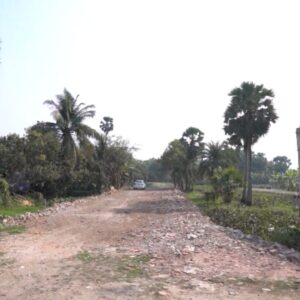
After covering what to check, here is detailed, well‑organized information about Nature’s Paradise, a township project by Rupbasuda Developers, to help you evaluate whether it meets those criteria and whether it might be a good option for you or others.
Project Overview
| Feature | Details |
| Project Name | Nature’s Paradise |
| Developer | Rupbasuda Developers |
| Location | Khariberia, Bhasa, Joka, Kolkata |
| Highway / Road | Along Diamond Harbour Road, National Highway 117 |
| Distance from Joka Metro | Approx 2.6 km |
| Time from Swaminarayan Temple | About 7 minutes |
| Nearby Landmark | Beside Palm Village Resort |
Plot Size, Type & Pricing
| Parameter | Details |
| Spread of Project | ~ 350 bighas of land area |
| Minimum Plot Size | 2 katha minimum purchase |
| Other Sizes Available | 3 katha, 5 katha, and more; no fixed maximum limit specified |
| Types of Plots | Premium & non‑premium; Residential & Commercial |
| Price Range | ₹1,30,000 (1 lakh 30 thousand rupees) up to ₹4,00,000 (4 lakh rupees) depending on plot size, location, type etc. |
Amenities & Infrastructure
| Amenity / Infrastructure | Present or Planned |
| Plot Status | Ready to move plots – so basic land preparation is done |
| Roads | Internal by‑roads of 25 ft & 20 ft; the approach roads being/will be four‑lane |
| Water supply | 24×7 water supply planned / provided |
| Electricity | Electricity connection available / planned |
| Drainage / Sewage | Proper drainage system in place or planned |
| Community & Recreational Facilities | Gymnasium, Clubhouse, Lake, Kindergarten School, Saraswati Temple |
| Transport | 24×7 transportation; metro station planned by end of 2028; nearby railway station etc. |
| Nearby Essential Facilities | Hospitals, Vegetable Market, Shopping Malls, Schools, Colleges just minutes away |
Location Advantages & Growth Potential
- Close proximity (2.6 km) to Joka Metro adds value and future ease of commute.
- Diamond Harbour Road (NH‑117) is a major route; improved highways/roads often lead to value appreciation.
- Many well‑known apartment projects in the vicinity (Emami Astha, Godrej Seven Elevate, Gems Bouganvilla, DTC Sojan, Eden Amantran, Solaris, Rajat by Avante etc.), often priced in crores, which suggests the area is already drawing premium development.
Payment & Booking Terms
| Parameter | Details |
| Booking Token Amount | ₹11,000 required as token booking amount |
| Payment Options | 36 months 0% interest EMI available |
| Developer / Agent | Dedicated Real Estate, with office near Thakurpukur 3A Bus Stand, Kolkata |
Potential Pros & Things to Check
Pros:
- Affordable entry point for middle class — both residential and commercial plots in the stated price range.
- Ready to move status reduces waiting time; some infrastructure already in place.
- Strong potential for appreciation because of upcoming metro, highway road works, location.
- Amenities are planned; community features suggest a self‑contained township rather than isolated plots.
Things you should still verify (using the checklist above):
- Confirm zoning status and whether NA conversion (if needed) has been done.
- Check encumbrance certificate to ensure clear title.
- Ensure all NOCs, permissions, layout plan approvals are legal and in order.
- Physical ground check: slope, drainage, whether land is flood‑prone.
- Exact road access: condition of roads, whether approach to your plot is via public road.
- Surrounding environment: whether neighbouring plots are being developed, quality, types of constructions.
- Utility access and readiness: water, electricity, sewage.
- Confirm any government notifications/plans that may require surrendering land or affect use.
Why This Might Be The Best Time to Buy
- With metro station planned by end of 2028, road improvements, and area being developed, plots may gain significant capital appreciation.
- Since many high‑end projects in the area are already valued in crores, a plot bought now at a few lakh rupees can deliver large value growth in coming years.
- Entry‑level price and flexible payment (0% EMI over 36 months) reduces the financial burden and risk.
How to Proceed (if Interested)
- Arrange a site visit to Nature’s Paradise. Survey multiple plots; compare premium vs non‑premium.
- Bring along a legal expert to verify documents.
- Ask developer / Dedicated Real Estate for copies of title deed, NA conversion (if applicable), EC, layout plan, approved plan, NOCs etc.
- Check the condition of internal roads, availability of utilities.
- Discuss payment schedule, any additional charges.
Contact Details
Dedicated Real Estate
- Phone: +91 6291422636
- Email: info@dedicatedrealestate.in
- Website: www.dedicatedrealestate.in
Office Location: Near Thakurpukur 3A Bus Stand, Kolkata