Investing in plots in rural areas just before urbanisation can offer huge rewards. As cities expand, what once was countryside becomes suburbs, then full‑urban communities. Early buyers can benefit from lower prices, greater choice of location, and large upside potential. But, buying land is always risky — more so in rural areas where regulations, infrastructure, and market forces are in flux. This guide will walk you through what to look for, what to beware of, and how to make the best investment when selecting rural plots likely to transform.
Understanding Urbanisation & Growth Potential
Before buying a plot, you need to understand what causes rural areas to become urbanised, and how to spot early signals of growth.
What Drives Urbanisation in Rural Regions
Urbanisation doesn’t happen randomly. Several forces usually align:
Infrastructure investment: New highways, expressways, ring roads, rail lines, airports foster growth. When governments announce or build major transport infrastructure, land around it rises in value.
Economic zones & industrial hubs: If there are plans for an industrial corridor, SEZ (Special Economic Zone), or business park nearby, this can drive demand for housing, services, retail.
Migration & population expansion: As cities get crowded, people move outward. Rural areas close to city peripheries often absorb this outward expansion.
Government policy / master plans: Zoning changes, urban development authority notifications, planned expansion of municipal boundaries, and local authority plans matter greatly.
Understanding what’s planned (officially) and what is likely (based on land/market pressure) gives you an edge.
Indicators to Spot Early Growth Corridors
To predict urbanisation, watch out for:
Land price movements in neighboring rural plots or townships.
Announcements of infrastructure projects (roads, utilities, public transport) in governmental or planning documents.
Increase in amenities (shops, clinics, schools) creeping outward.
Migration patterns (in-migration of people/workers) or spillover from urban centres.
Developers filing launch of plotted communities or gated layouts.
Satellite imagery or maps showing new roads, construction in fringe areas.
If you see several of these indicators together, the plot you’re eyeing may have strong appreciation potential.
Legal, Regulatory & Ownership Considerations
Even if a plot looks perfect location‑wise, legal/regulatory issues can make or break its value, particularly when urbanization begins.
Land Classification, Zoning & Land Use Change
Check whether the land is classified as agricultural, rural non‑agricultural, forest land, or residential. If it’s agricultural, using for housing or commercial purposes likely requires land‑use conversion (change from agri to non‑agri use).
Know local zoning regulations: floor space index (FSI), setback norms, height restrictions, density norms. These can restrict what you may build once urbanisation kicks in.
Identify whether there’s a master plan that envisages expansion of city limits, or incorporation of rural lands into municipal corporation or urban local body. If so, what are the zoning change policies, what timeline, etc.
Clear Title, Encumbrances, & Government Notifications
Title verification: Ensure that the land has clear sale deed history, mutation records, revenue records, and no disputes (legal or ownership).
Encumbrance certificate: A certificate to show if there are any mortgages, liens, or legal dues. Buyers should ensure the plot is free from such burdens.
Government acquisition & notification risk: Sometimes land is under threat of acquisition for public projects (roads, rail, utilities). If a plot is under such notification, value might go up or down depending on compensation and eminent domain laws. Know the risk.
Approvals required: If you plan residential or commercial building in future, check what approvals are needed (planning permission, layout approval, building permit). Some rural areas may have more restrictive norms or require multiple permissions which take time and cost.
Permissions & Conversion Processes
Process and cost for converting land use (from agricultural to residential / urban)
Timeline: how long does local authority take, what are hurdles, what documents are required
Cost: conversion fees, taxes/duties, possible premium if land is in a notified zone
Compliance requirements: Does the land need to meet certain minimum road width, drainage, infrastructure before being eligible for conversion
Infrastructure & Connectivity Assessments
A plot’s value and utility once urbanisation begins depend heavily on infrastructure and connectivity.
Roads, Transport Links & Accessibility
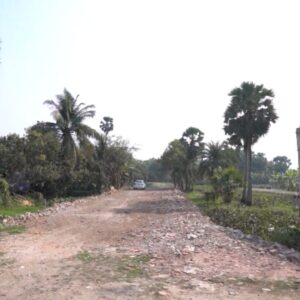
Check whether the plot has legal, all‑weather road access. A dirt track may be okay now, but for urban scale value, proper road connectivity is essential.
Proximity to major roads / highways or planned expressways matters: travel time to city centre, employment hubs etc.
Public transport availability or likelihood thereof (bus routes, train stations) will add value significantly.
Utilities & Amenities (Water, Electricity, Sewage, Internet)
Electricity: Is grid power available? If not, what is the cost of bringing lines? Solar alternatives?
Water supply: Is there municipal water or will you need wells/boreholes? What’s the water table like? Is supply reliable?
Sewage / drainage: If there’s no sewer system, septic or township sewer, you must check local regulations and costs.
Internet / Telecom: For many buyers nowadays, good internet is a necessity. Rural areas may lag. Is broadband or mobile connectivity good?
Amenities: Distance to schools, hospitals, markets, shops. These may start far off now, but as urbanisation comes, closeness becomes a premium.
Natural Features, Topography & Environmental Risks
The natural character of the land can enhance or severely degrade value when urbanisation advances.
Soil Quality, Water Table, Drainage
Soil characteristics affect construction cost (foundation work), landscaping, water percolation, etc. Rocky soil, clay soil, shifting soil can add costs.
Water table: If groundwater is easily accessible, that helps. If too deep, costs will rise. Also reliability matters.
Drainage: Slopes, natural flood plains, seasonal water logging are red flags — during monsoons or rainy seasons, poor drainage can lead to flooding or damage.
Flood Risk, Environmental Hazards & Climate Considerations
Check flood zone maps, historical flood records. If plot is in a flood‑prone area, insurance and structural costs may go up.
Other hazards: landslides (if in hilly terrain), soil erosion, environmental contamination (if previous industrial or mining activity).
Climate factors: predicted rainfall changes, heat waves, drought risk may affect livability and resource costs.
Financial and Market Factors
Even if plot is ideal legally, geographically, you must ensure that the financials work out.
Price Trends & Comparable Plots
Research recent sales of similar plots in that region. What have been the growth rates in prices?
See if prices are already rising — sometimes paying a bit more early is better than buying later at inflated rates.
Also check how many plots are available (supply) vs how many buyers are interested (demand).
Cost of Development & Hidden Costs
Utilities extension, access roads, land leveling, fencing, boundary walls, permits, conversion fees — all these add up.
Taxes, registration, stamp duty, local levies.
Maintenance costs until you can build or sell: landscaping, security, etc.
Future Demand & Resale Value
What target buyers might want: those moving from the city, retirees, commuters. Assess whether there’s likelihood of such buyers.
Potential resale value depends on the speed and quality of urbanisation. If the area develops slowly, returns may take a long time.
Risk Mitigation Strategies
To protect your investment, apply careful risk mitigation.
Due Diligence Steps & Experts to Engage
Hire a local surveyor to map boundaries and verify measurements.
Consult legal experts to verify title deeds, encumbrances, mutations, owner history.
Talk to local municipal / planning authorities about upcoming plans, zoning changes.
Visit the site multiple times (different seasons, times of day) to check access, environment.
Legal Safeguards, Contracts, Surveys
Contract must specify responsibilities, timelines, penalties if promised infrastructure doesn’t come.
Make sure conversion / permission obligations are documented.
Survey reports, soil tests, environment assessments in writing.
Avoid loose verbal promises; get everything in writing.
Case Studies or Examples (Local / International)
Seeing real‑world success/failure helps further understand what to look for.
Examples of Successful Urbanised Rural Plots
(You can insert a case here relevant to your country.) For example, rural outskirts of a major city where a new highway was constructed, resulting in rapid suburbanization, builders left plots for township development, plot values quadrupled in 5‑10 years.
Another example: areas near new metro/train station or ring road, where master planning included residential layouts, shops etc.
What Failed & Lessons Learned
Plots bought without road or utility access got stuck. Buyers could not get approval for building for years.
Plots in zones with disputed titles or in areas where regulatory delay over conversion ate up returns.
Areas where the planned infrastructure project was delayed or cancelled, bringing down expected appreciation.
Actionable Checklist Before Finalizing Purchase
Here is a checklist you can use to make sure you’ve covered all bases before you commit:
| Check Item | Why It Matters |
|---|---|
| Knowing master plan / upcoming infrastructure projects nearby | Impacts appreciation potential |
| Zoning classification & possibility of change | Determines what you can build & when |
| Legal title / ownership history / encumbrance certificate | Avoid legal disputes & hidden liabilities |
| Road access & connectivity | Without access value drops significantly |
| Utilities availability (water, electricity, sewage, internet) | Cost & convenience |
| Soil, water table, drainage & environmental risks | Impacts construction cost and livability |
| Cost estimates: development, conversion, taxes, fees | To understand total investment outlay |
| Resale demand & comparable plot trend | To estimate ROI & exit strategy |
| Safety net: fallback if urbanisation delays | Risk of capital being tied up long period |
| Clause in contract for promised infrastructure or amenities | To ensure seller/developer delivers on promises |
Summary & Key Takeaways
Some final thoughts as you evaluate buying a rural plot with urbanisation potential:
Early mover advantage is real: buying before urbanisation usually means lower price, but higher risk.
The best plots are those that combine legal clarity, good connectivity & infrastructure, environmental suitability, and strong signals of future development.
Always budget not just for the purchase price but conversion, development, delay, unforeseen legal or regulatory costs.
Engage the right experts: surveyor, property lawyer, local authority, planner.
Have patience — some plots may take years to realize full value, but with the right choices, the rewards can be substantial.
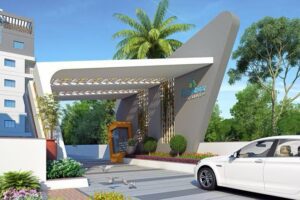
Nature’s Paradise by Rupbasuda Developers — “Ready to Move” Plots

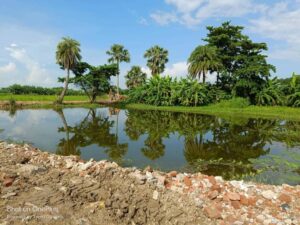
natures-paradise-gate natures-paradise-lake After covering what to check, here is detailed, well‑organized information about Nature’s Paradise, a township project by Rupbasuda Developers, to help you evaluate whether it meets those criteria and whether it might be a good option for you or others.
Project Overview
Feature Details Project Name Nature’s Paradise Developer Rupbasuda Developers Location Khariberia, Bhasa, Joka, Kolkata Highway / Road Along Diamond Harbour Road, National Highway 117 Distance from Joka Metro Approx 2.6 km Time from Swaminarayan Temple About 7 minutes Nearby Landmark Beside Palm Village Resort Plot Size, Type & Pricing
Parameter Details Spread of Project ~ 350 bighas of land area Minimum Plot Size 2 katha minimum purchase Other Sizes Available 3 katha, 5 katha, and more; no fixed maximum limit specified Types of Plots Premium & non‑premium; Residential & Commercial Price Range ₹1,30,000 (1 lakh 30 thousand rupees) up to ₹4,00,000 (4 lakh rupees) depending on plot size, location, type etc. Amenities & Infrastructure
Amenity / Infrastructure Present or Planned Plot Status Ready to move plots – so basic land preparation is done Roads Internal by‑roads of 25 ft & 20 ft; the approach roads being/will be four‑lane Water supply 24×7 water supply planned / provided Electricity Electricity connection available / planned Drainage / Sewage Proper drainage system in place or planned Community & Recreational Facilities Gymnasium, Clubhouse, Lake, Kindergarten School, Saraswati Temple Transport 24×7 transportation; metro station planned by end of 2028; nearby railway station etc. Nearby Essential Facilities Hospitals, Vegetable Market, Shopping Malls, Schools, Colleges just minutes away Location Advantages & Growth Potential
- Close proximity (2.6 km) to Joka Metro adds value and future ease of commute.
- Diamond Harbour Road (NH‑117) is a major route; improved highways/roads often lead to value appreciation.
- Many well‑known apartment projects in the vicinity (Emami Astha, Godrej Seven Elevate, Gems Bouganvilla, DTC Sojan, Eden Amantran, Solaris, Rajat by Avante etc.), often priced in crores, which suggests the area is already drawing premium development.
Payment & Booking Terms
Parameter Details Booking Token Amount ₹11,000 required as token booking amount Payment Options 36 months 0% interest EMI available Developer / Agent Dedicated Real Estate, with office near Thakurpukur 3A Bus Stand, Kolkata Potential Pros & Things to Check
Pros:
- Affordable entry point for middle class — both residential and commercial plots in the stated price range.
- Ready to move status reduces waiting time; some infrastructure already in place.
- Strong potential for appreciation because of upcoming metro, highway road works, location.
- Amenities are planned; community features suggest a self‑contained township rather than isolated plots.
Things you should still verify (using the checklist above):
- Confirm zoning status and whether NA conversion (if needed) has been done.
- Check encumbrance certificate to ensure clear title.
- Ensure all NOCs, permissions, layout plan approvals are legal and in order.
- Physical ground check: slope, drainage, whether land is flood‑prone.
- Exact road access: condition of roads, whether approach to your plot is via public road.
- Surrounding environment: whether neighbouring plots are being developed, quality, types of constructions.
- Utility access and readiness: water, electricity, sewage.
- Confirm any government notifications/plans that may require surrendering land or affect use.
Why This Might Be The Best Time to Buy
- With metro station planned by end of 2028, road improvements, and area being developed, plots may gain significant capital appreciation.
- Since many high‑end projects in the area are already valued in crores, a plot bought now at a few lakh rupees can deliver large value growth in coming years.
- Entry‑level price and flexible payment (0% EMI over 36 months) reduces the financial burden and risk.
How to Proceed (if Interested)
- Arrange a site visit to Nature’s Paradise. Survey multiple plots; compare premium vs non‑premium.
- Bring along a legal expert to verify documents.
- Ask developer / Dedicated Real Estate for copies of title deed, NA conversion (if applicable), EC, layout plan, approved plan, NOCs etc.
- Check the condition of internal roads, availability of utilities.
- Discuss payment schedule, any additional charges.
Contact Details
- Phone: +91 6291422636
- Email: info@dedicatedrealestate.in
- Website: www.dedicatedrealestate.in
Office Location: Near Thakurpukur 3A Bus Stand, Kolkata
Dedicated Real Estate
- Close proximity (2.6 km) to Joka Metro adds value and future ease of commute.