

When you book an OYO room, you might assume it’s just another hotel chain. But behind the scenes, there’s an intricate system of partnerships, technology, operations, revenue models, and challenges that make OYO tick. In this post, we’ll walk through what actually happens at OYO — from how properties join the network to what your stay looks like, how OYO earns money, and where it might head next.
The Origin & Evolution of OYO
From Aggregator to Franchise Model
OYO began in 2012 (or 2013, depending on sources) under founder Ritesh Agarwal as a platform to list budget hotels, solve the problem of inconsistent quality in unbranded properties, and simplify hotel discovery.
At first, OYO acted as more of an aggregator: it brought small hotels online, standardized (via a checklist) some basic amenities (like clean beds, Wi-Fi, AC), and listed them to customers via its app/website.
However, over time, OYO realized the limitations of aggregation — less control over service, brand dilution, variation in quality. So it began shifting toward a franchise / managed operations model.
Under this newer model:
OYO partners with hotel owners (referred to as “Patrons,” “partners,” or “owners”).
It lays down a standard set of requirements (interiors, amenities, service standards).
The partner renovates or upgrades to meet those standards.
OYO provides branding, technology, marketing, distribution, and operational support.
In route, OYO demands revenue sharing, commissions, or guaranteed minimums.
This transition helps OYO attain better consistency, brand control, and operational leverage.
Growing Globally & Brand Extensions
Beyond basic budget hotels, OYO expanded into a portfolio of brands and verticals to target different customer segments:
OYO Townhouse: aimed at mid‑segment clientele with nicer interiors and aesthetics.
OYO Home / OYO Vacation Homes: akin to short-term rentals or home stays.
OYO Life: for long-term rental / co-living.
SilverKey, CapitalO, Collection O: variants for business travelers, premium stays, etc.
Co‑working / workspace verticals (in some markets)
Globally, OYO has extended to many countries. As of certain recent counts, it had tens of thousands of properties across 35+ countries.
The expansion brings opportunity, but also risk around maintaining consistency across diverse geographies.
OYO’s Core Business Mechanics
To understand what actually happens at OYO, it’s essential to peel back how the engine works — how partners are onboarded, how technology supports operations, and how OYO keeps a grip on standardization.
Partner (Hotel Owner) Onboarding
Property Selection & Renovation
When OYO scouts potential hotels or property owners, it looks for:
Location viability (demand, footfall, connectivity)
Structural condition, layout, room count
Willingness and capacity of the owner to invest in upgrades
Once selected, the property undergoes a renovation or refurbishment to match OYO’s standards: better interiors, uniform furniture, clean bathrooms, AC, Wi-Fi, uniform signage, safety measures, etc.
This can be a significant upfront cost, often borne partly by the owner or with support from OYO depending on the arrangement.
Agreement Types & Revenue Sharing
OYO’s deals with partners tend to fall into several types:
Franchise / Partnership Agreement: The hotel remains owned and run by the partner, while OYO provides branding, tech, marketing, and operational support. The partner pays a commission (percentage of booking revenue) or pays a fixed “minimum guarantee.”
Lease / Operated Model: In markets or cities where OYO takes more control, it may lease the property or operate it directly under OYO’s management.
Managed / Hybrid Models: Some hybrid forms where operations are shared.
Under the commission or revenue-sharing route, OYO typically charges a commission in the range of 15%–30% of the booking value — though the exact split depends on the services provided, location, brand level, and agreement specifics.
In some models, partners also have to guarantee a minimum income to OYO, or absorb shortfall if revenues fall below threshold.
Technology Infrastructure & Tools
One of the most critical differentiators for OYO is its technology backbone. This is what keeps scaling, dynamic pricing, and operational control possible.
OYO OS, Dynamic Pricing & Inventory Tools
OYO invests heavily in internal systems and software — often referred to as OYO OS (Operating System).
Key features include:
Real-time inventory management: know which rooms are free, occupied, being cleaned, etc.
Dynamic pricing / revenue management: using algorithms, machine learning, or rule-based engines to adjust room prices depending on demand, season, occupancy, competitor rates, events, etc.
Cancellation prediction / overbooking management: attempting to forecast no-shows or cancellations to optimize revenue.
Analytics dashboards for partners: what’s performing, where improvements are needed.
This tech stack gives OYO leverage over manual operations and allows scaling across many properties without losing control.
Customer & Partner Apps & Interfaces
OYO has distinct interfaces for guests (customers) and partners (hotel owners).
Guest-facing app / web interface: search, filter, book, cancel, manage booking, rate stay, loyalty / offers, etc.
Partner dashboard / app: to see occupancy, revenue metrics, alerts, manage availability, pricing guidance, performance insights, service issue reporting, etc.
On-ground support / operations app: for OYO “captains” or field staff to monitor standards, inspect quality, troubleshoot issues, etc.
These tools bridge the gap between a digital-first brand and physical properties.
Also, OYO often taps third-party Online Travel Agencies (OTAs) — such as Booking.com, Expedia, Airbnb — to distribute inventory broadly.
Journey of a Guest at OYO
While much happens behind the scenes, what you experience as a guest is key. Let’s trace what a stay at OYO feels like from booking to check-out.
Booking & Price Dynamics
Search & Discovery: The guest opens the OYO app or website, enters location, dates, filters, etc. The system shows available rooms across partner properties.
Dynamic Pricing: The displayed price is often adjusted by OYO’s pricing engine based on demand, competition, occupancy, etc.
Deals & Loyalty Offers: Sometimes, guests see special offers, coupons, or loyalty discounts (for OYO Wizard members).
Booking Confirmation & Payment: The guest pays via online payment (credit card, UPI, wallets). In some cases, pay at property (if allowed).
Booking Sent to Partner: The reservation is communicated to the partner property.
Notification, Reminders: The app may send reminders, location, instructions, check-in codes, etc.
Even before arrival, OYO may handle some coordination, send property address, contact, policies, etc.
Check-in, Stay, & Check-out
Check-in: When guest arrives, they present booking reference or ID. The hotel (partner) confirms in their system. OYO’s systems may be integrated, so the booking shows up in their dashboard.
Room Allocation: Based on availability, cleanliness status, and operational updates.
Stay Experience: OYO expects uniform minimum standards: clean beds, linens, working AC, Wi-Fi, bathroom amenities, staffing, service responsiveness. The partner must maintain those.
Support / Issue Resolution: If issues arise (maintenance, plumbing, cleanliness, amenities), the guest may contact OYO support or escalate to local teams. OYO field staff may coordinate with partner to resolve.
Check-out: Guest returns keys (if applicable), any additional billing (e.g. extra usage) is settled, feedback requested, invoice / receipt given.
Throughout this, OYO aims to supervise via audits, quality checks, partner training, and operational oversight.
Feedback & Loyalty
After stay, guests are prompted to rate, review, give feedback via the app.
Negative ratings may trigger partner alerts or intervention.
Positive experiences feed into loyalty programs (e.g. OYO Wizard).
Guests may get targeted offers for future stays.
This completes the guest cycle, and OYO aggregates data from all stays to further refine operations, pricing, partner performance, and expansion decisions.
Revenue Streams & Monetization
How does OYO make money? It’s not just room bookings — multiple monetization levers are at play.
Commission & Service Fees
The primary income is commission: a cut from every booking made via OYO (on partner properties). As noted earlier, this is often between 15% to 30% depending on location, brand, services.
In certain agreements, OYO may also levy service / management fees for handling operations, guest services, marketing, support, etc.
Subscription & Loyalty Programs
OYO Wizard (or equivalent loyalty / subscription scheme) can bring in recurring revenue through membership fees or premium benefits.
Subscribers might get discounts, priority bookings, perks, which encourages retention.
Value‑Added Services for Partners
OYO can generate revenue by offering extra services to partner hotels:
Consulting, training, quality audits
Technology / software subscriptions / modules
Marketing & advertising support
Ancillary services (housekeeping, F&B tie-ups, outsourcing)
Upgrades / Renovation financing or tie-ins
These add-on services can give OYO higher margin revenue compared to pure commission.
Miscellaneous & Ancillary
Advertising / cross-promotions: showing third-party ads/offers inside the app or property.
Promotional tie-ups / OTA integration revenue share
Corporate / group bookings / event tie-ins
Brand licensing / partnerships
Over time, as OYO grows, these multiple streams help diversify dependency on just room commissions.
Challenges, Criticisms & Risks
While OYO’s model is compelling, it’s not without its share of challenges. Understanding them gives a realistic picture of “what actually happens.”
Overbooking, Partner Disputes, Service Gaps
Overbooking: Because many partners are small and have limited rooms, sometimes bookings exceed actual capacity or miscommunication leads to unavailability.
Disputes with partners: Many hotel owners complain about receiving lower-than-expected payouts, rigid demands from OYO to upgrade interiors, or lack of transparency.
Service gaps / broken promises: Some guests report arriving to find rooms unavailable despite confirmed booking, or lower amenities.
E.g. One user recounted paying for a booking, arriving, and the hotel saying they had no record.
Another described multiple bookings beyond capacity, unstable support and being moved at last minute.
These issues highlight the weak links in the chain: the partner’s execution, local ground staff, quality control, and fallback mechanisms.
Quality Consistency Across Properties
Because properties are owned by different partners in varied geographies, maintaining consistent quality is extremely difficult. Expectations vs. reality sometimes diverge. Some properties may excel; others may lag behind.
Monitoring, audits, incentive systems, penalties all help, but cannot eliminate variation.
Financial Sustainability & Profitability
OYO’s pursuit of rapid growth required huge capital investments, incentives, subsidies, and operating losses in many years.
Margin pressures from commissions, partner demands, discounting, operational overheads.
As OYO scales internationally, currency risk, regulatory environments, local market competition, and cultural / operational variation add complexity.
Some analysts and hotel owners accuse OYO of aggressive expansion with questionable unit economics.
Some critics label parts of OYO’s practices as opaque or unbalanced in favor of the platform.
Profitability is a challenge, but OYO has reportedly moved toward profitability recently in some markets (though financials must be scrutinized).
The Future of OYO: Trends & Strategy
What’s next for OYO? Based on market trends and public statements, here are likely directions.
Premium & Branded Vertical Push
While OYO started with budget hotels, its long-term strategy includes moving up the value chain. Brands like Townhouse, Palette, Sunday, etc. aim to attract mid-tier or premium customers.
By doing so, OYO can capture higher margins, better guest perception, and brand loyalty.
Technology & AI Enhancements
OYO will likely invest further in AI, predictive analytics, computer vision, automation, and IoT to:
Improve pricing algorithms
Predict cancellations / no-shows
Automate check-in (keyless entry, facial recognition)
Improve preventive maintenance (predict which services may fail)
Streamline partner operations
A more automated, self-monitoring system will reduce friction and reliance on manual oversight.
Global Expansion Strategies
OYO will continue pushing into new markets, often by acquisitions or local partnerships. However, it must localize operations, adapt to different regulatory and hospitality cultures, and maintain brand standards.
The acquisition of Motel 6 in the U.S. is an example of OYO’s bold global ambitions.
Also, in India, parent company PRISM is launching new verticals (like “CheckIn”) to unify premium brands under one umbrella.
Expansion also brings risk — misjudgment in local partnerships, brand dilution, and operational overreach.
Lessons from OYO & Key Takeaways
Platform + Physical Asset Hybrid: OYO’s core strength lies in combining a scalable tech platform with real-world properties — bridging digital and physical domains.
Control through Standards & Processes: To manage far-flung partners, rigid standards, audits, and performance metrics are essential.
Balancing Growth vs. Profit: Rapid expansion must be matched by unit economics; otherwise, growth becomes a liability.
Partner Ecosystem Health: OYO’s success depends heavily on partner satisfaction, trust, and execution.
Guest Experience is the ultimate arbiter: No amount of tech or branding can survive if guests consistently have bad experiences.
Continuous innovation needed: The hospitality sector is fast-evolving — AI, automation, contactless services, experiential stays will define future winners.
Nature’s Paradise by Rupbasuda Developers — “Ready to Move” Plots
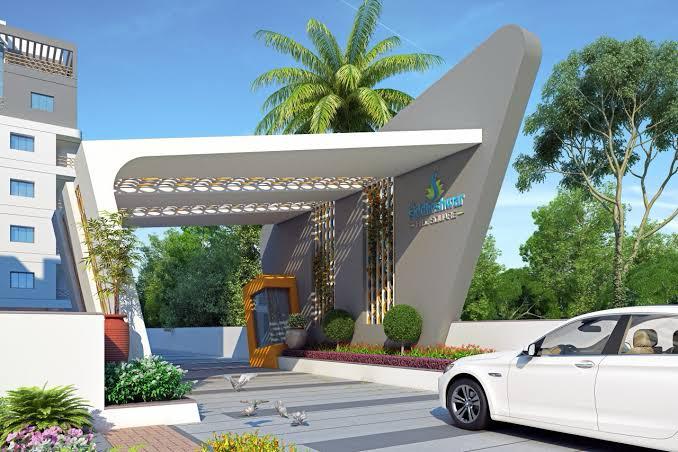
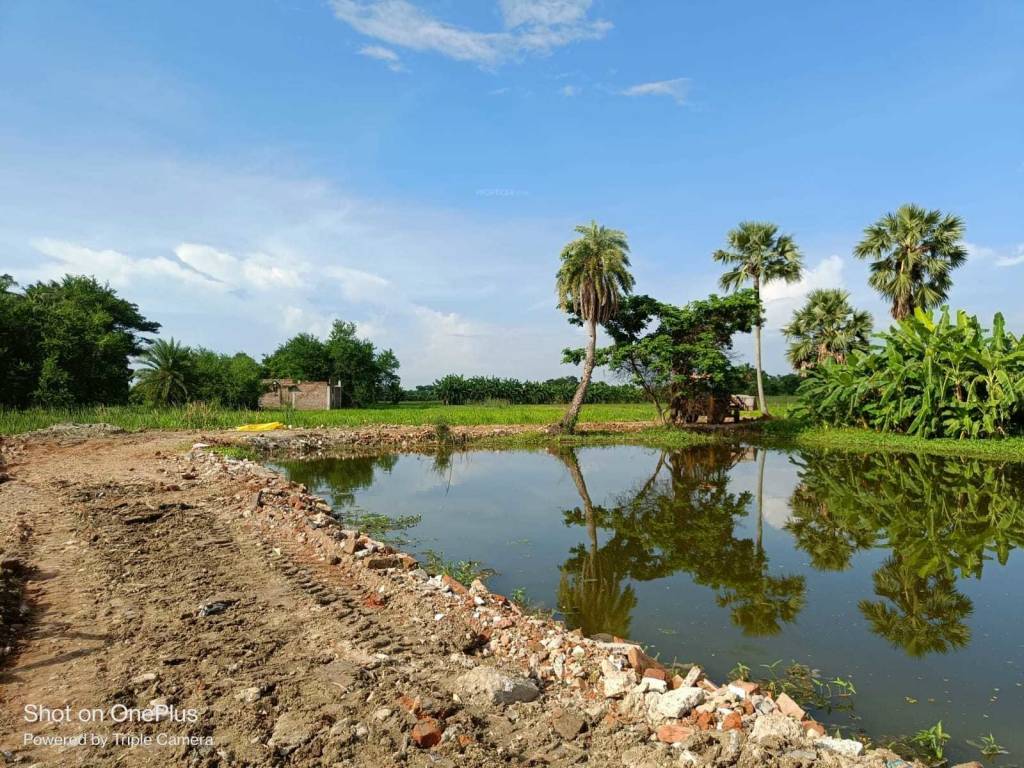

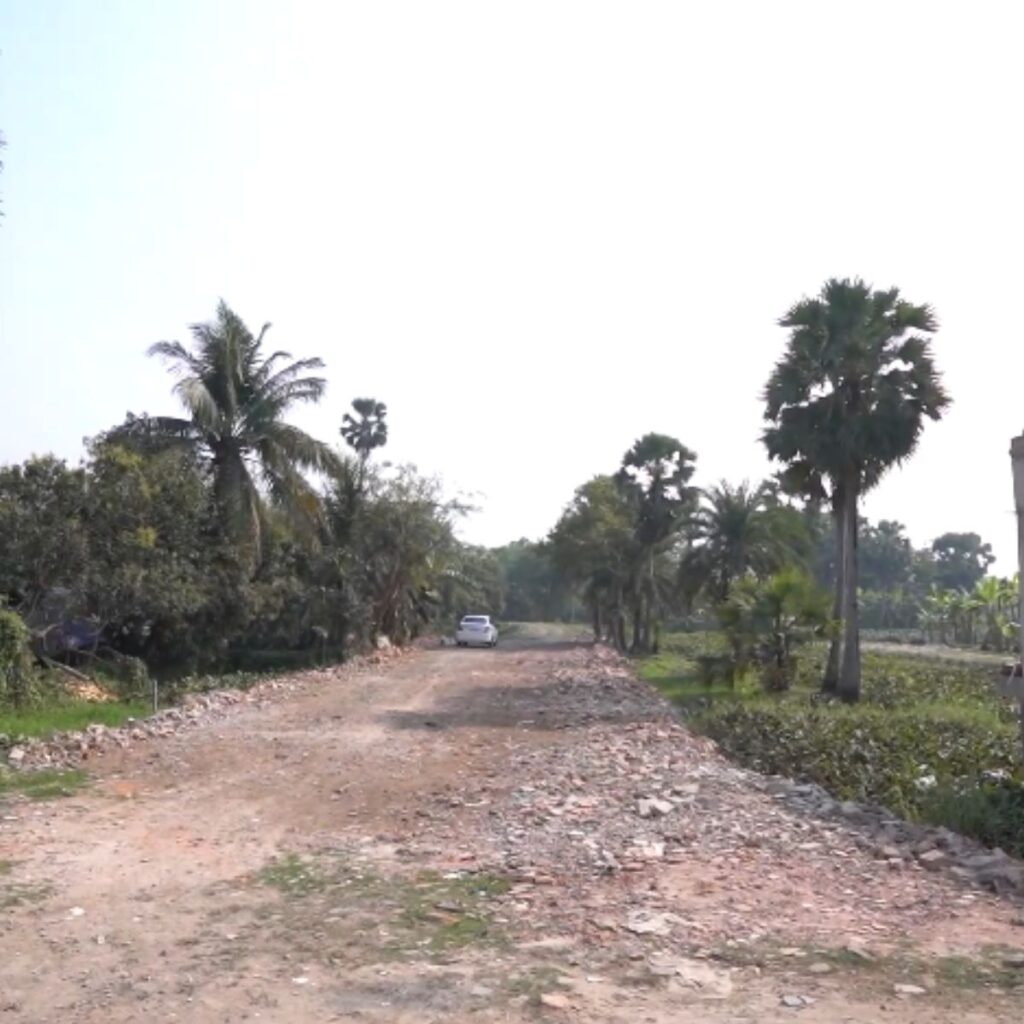
After covering what to check, here is detailed, well‑organized information about Nature’s Paradise, a township project by Rupbasuda Developers, to help you evaluate whether it meets those criteria and whether it might be a good option for you or others.
Project Overview
| Feature | Details |
| Project Name | Nature’s Paradise |
| Developer | Rupbasuda Developers |
| Location | Khariberia, Bhasa, Joka, Kolkata |
| Highway / Road | Along Diamond Harbour Road, National Highway 117 |
| Distance from Joka Metro | Approx 2.6 km |
| Time from Swaminarayan Temple | About 7 minutes |
| Nearby Landmark | Beside Palm Village Resort |
Plot Size, Type & Pricing
| Parameter | Details |
| Spread of Project | ~ 350 bighas of land area |
| Minimum Plot Size | 2 katha minimum purchase |
| Other Sizes Available | 3 katha, 5 katha, and more; no fixed maximum limit specified |
| Types of Plots | Premium & non‑premium; Residential & Commercial |
| Price Range | ₹1,30,000 (1 lakh 30 thousand rupees) up to ₹4,00,000 (4 lakh rupees) depending on plot size, location, type etc. |
Amenities & Infrastructure
| Amenity / Infrastructure | Present or Planned |
| Plot Status | Ready to move plots – so basic land preparation is done |
| Roads | Internal by‑roads of 25 ft & 20 ft; the approach roads being/will be four‑lane |
| Water supply | 24×7 water supply planned / provided |
| Electricity | Electricity connection available / planned |
| Drainage / Sewage | Proper drainage system in place or planned |
| Community & Recreational Facilities | Gymnasium, Clubhouse, Lake, Kindergarten School, Saraswati Temple |
| Transport | 24×7 transportation; metro station planned by end of 2028; nearby railway station etc. |
| Nearby Essential Facilities | Hospitals, Vegetable Market, Shopping Malls, Schools, Colleges just minutes away |
Location Advantages & Growth Potential
- Close proximity (2.6 km) to Joka Metro adds value and future ease of commute.
- Diamond Harbour Road (NH‑117) is a major route; improved highways/roads often lead to value appreciation.
- Many well‑known apartment projects in the vicinity (Emami Astha, Godrej Seven Elevate, Gems Bouganvilla, DTC Sojan, Eden Amantran, Solaris, Rajat by Avante etc.), often priced in crores, which suggests the area is already drawing premium development.
Payment & Booking Terms
| Parameter | Details |
| Booking Token Amount | ₹11,000 required as token booking amount |
| Payment Options | 36 months 0% interest EMI available |
| Developer / Agent | Dedicated Real Estate, with office near Thakurpukur 3A Bus Stand, Kolkata |
Potential Pros & Things to Check
Pros:
- Affordable entry point for middle class — both residential and commercial plots in the stated price range.
- Ready to move status reduces waiting time; some infrastructure already in place.
- Strong potential for appreciation because of upcoming metro, highway road works, location.
- Amenities are planned; community features suggest a self‑contained township rather than isolated plots.
Things you should still verify (using the checklist above):
- Confirm zoning status and whether NA conversion (if needed) has been done.
- Check encumbrance certificate to ensure clear title.
- Ensure all NOCs, permissions, layout plan approvals are legal and in order.
- Physical ground check: slope, drainage, whether land is flood‑prone.
- Exact road access: condition of roads, whether approach to your plot is via public road.
- Surrounding environment: whether neighbouring plots are being developed, quality, types of constructions.
- Utility access and readiness: water, electricity, sewage.
- Confirm any government notifications/plans that may require surrendering land or affect use.
Why This Might Be The Best Time to Buy
- With metro station planned by end of 2028, road improvements, and area being developed, plots may gain significant capital appreciation.
- Since many high‑end projects in the area are already valued in crores, a plot bought now at a few lakh rupees can deliver large value growth in coming years.
- Entry‑level price and flexible payment (0% EMI over 36 months) reduces the financial burden and risk.
How to Proceed (if Interested)
- Arrange a site visit to Nature’s Paradise. Survey multiple plots; compare premium vs non‑premium.
- Bring along a legal expert to verify documents.
- Ask developer / Dedicated Real Estate for copies of title deed, NA conversion (if applicable), EC, layout plan, approved plan, NOCs etc.
- Check the condition of internal roads, availability of utilities.
- Discuss payment schedule, any additional charges.
Contact Details
Dedicated Real Estate
- Phone: +91 6291422636
- Email: info@dedicatedrealestate.in
- Website: www.dedicatedrealestate.in
Office Location: Near Thakurpukur 3A Bus Stand, Kolkata