
Building a safe, durable and healthy structure is not just about pleasing aesthetics and structural design — the safety and quality of the materials themselves are fundamental. In this guide, we’ll explore how to detect and avoid dangerous substances like asbestos and lead, how to ensure concrete and other materials meet required strength and durability standards, and best practices for mitigation and remediation. Whether you’re a builder, homeowner, architect, or safety professional, this resource aims to arm you with knowledge and actionable steps.
Why Material Safety Matters in Construction
Health Risks from Hazardous Materials (asbestos, lead, silica)
One of the primary reasons for rigorous safety checks in construction materials is the risk to human health. When hazardous substances are disturbed, dust and micro‑particles can be released into the air, inhaled or ingested, and cause long‑term damage.
Asbestos: When asbestos fibers become airborne and are inhaled, they can lodge deep in lung tissues, causing diseases such as asbestosis, lung cancer, and mesothelioma.
Lead: Lead is a potent neurotoxin. In children, even low exposure can impair cognitive development, IQ, and learning. In adults, lead exposure can damage kidneys, nervous system, and cause cardiovascular issues.
Silica (Crystalline Silica): Found in concrete, masonry, and stone, silica dust can lead to silicosis, lung cancer, and chronic obstructive pulmonary disease (COPD) when inhaled over time.
Volatile Organic Compounds (VOCs) and other chemical additives in paints, adhesives, and finishes can cause respiratory irritation, headaches, or long-term health risks.
Even if materials seem inert and safe under normal conditions, damage, renovation, or simply age may cause them to degrade and release harmful particles.
Legal, Regulatory & Financial Implications
Beyond health, the failure to detect and mitigate hazardous materials can trigger serious legal, regulatory, and financial costs:
Regulatory penalties: Many countries require mandatory inspection, abatement, and disposal protocols for asbestos, lead, and other hazardous materials. Noncompliance may lead to fines, work stoppages or litigation.
Delays and cost overruns: Discovering hazardous materials mid‑project can force redesigns, remediation, and downtime, pushing up project costs significantly.
Liability risks: If occupants, workers or neighbors suffer health damage later, the parties responsible (contractors, landlords, etc.) may face legal suits.
Resale / insurance issues: Properties with known hazardous materials may face lower valuation, difficulty in selling, or higher insurance premiums.
Hence, material safety must be baked into project planning, procurement, and quality control from the start.
Key Hazardous Materials to Watch For
Below are the main categories of materials that often pose risks in construction and renovation. For each, we’ll cover how to recognize them, test for them, and what to do if found.
Asbestos — Sources, Risks, Detection
Common Asbestos‑Containing Building Products
Historically, asbestos was prized for insulation, fire resistance, durability, and tensile strength, so it has been incorporated in a wide variety of building materials. Some common asbestos‐containing materials include:
Insulation on pipes, boilers, furnaces
Ceiling tiles, acoustic panels
Flooring tiles (vinyl asbestos tiles)
Roofing shingles, siding
Cement asbestos sheets, corrugated panels, cladding
Fire doors, fireproofing sprays
Adhesives, mastics, caulking compounds
Joint compounds, plaster, stucco
Many of these materials, especially those made before the 1980s, are still present in older structures.
Methods of Sampling and Laboratory Analysis
Because asbestos fibers are microscopic and not visually identifiable in most materials, scientific testing is needed:
Initial survey & presumed material mapping: Use building history, blueprints, and visual inspection to identify likely suspect materials.
Sampling protocol: A trained, licensed asbestos inspector takes bulk samples or air samples using strict protocols to avoid fiber release.
Laboratory analysis: The samples are tested (commonly via polarized light microscopy (PLM) or transmission electron microscopy (TEM)) to identify asbestos presence and fiber concentration.
Air monitoring: During remediation or disturbance, real‑time or periodic air sampling ensures airborne fiber levels are within safe limits.
Re‑clearance testing: After abatement, a final air clearance test confirms safety before reoccupancy.
It’s critical that only certified professionals handle asbestos sampling and remediation to avoid accidental exposure or cross‑contamination.
Lead Paint & Lead‑Containing Materials
Where Lead Is Found in Buildings
Lead has been used in various building components for decades. Some common sources include:
Structural or decorative paint layers (particularly in buildings constructed before about the 1970s)
Window glazing, window putty
Plumbing: lead pipes, solder, fittings
Roof flashing, gutters
Metal hardware, hinges, soldered joints
Leaded glass, leaded joints in ceramics or tiles
If a building is old, chances are there’s some presence of legacy lead somewhere.
Safe Work Practices & Abatement Methods
When lead paint or components are to be disturbed (e.g. sanding, cutting, drilling), special safety practices must be followed:
Use lead-safe work practices, such as wet methods, HEPA vacuuming, containment, and minimizing dust generation.
Workers should be trained or certified in handling lead work per local regulation.
Encapsulation or enclosure: covering lead surfaces with durable coatings to seal in the lead rather than removing it entirely (if in stable condition).
Removal / replacement: in some cases, the old leaded surface is stripped off under controlled conditions or replaced entirely.
Clearance testing: after work, dust and surfaces are tested for residual lead levels.
Proper disposal: lead-containing debris is treated as hazardous waste and disposed of accordingly.
In many jurisdictions, operations disturbing lead paint in older buildings require notifications, documentation, or compliance with regulations such as the U.S. EPA’s Lead RRP (Renovation, Repair, and Painting) Rule.
Quality of Concrete & Cement — Structural Safety Issues
While asbestos and lead are about human health, concrete quality critically affects structural integrity and durability. Poor concrete can lead to cracks, spalling, early failure, and safety hazards.
Tests for Concrete Strength, Mix Proportions & Durability
Some standard tests and checks include:
Compressive strength test: using cube or cylindrical specimens tested in lab (e.g. 28‑day strength test)
Slump test: to check workability and consistency of fresh mix
Water/cement ratio: ensuring proper ratios for strength and durability
Aggregate grading and quality: checking that aggregates are clean, well‑graded, free of deleterious materials
Curing quality: ensuring the concrete is cured properly (moisture, temperature) to gain full strength
Non‑destructive testing (NDT): such as rebound hammer test, ultrasonic pulse velocity test, cover meter, or ground-penetrating radar to detect voids, cracks, or reinforcement integrity
Durability tests: freeze–thaw resistance, chemical resistance, permeability, sulfate attack resistance
Consistently meeting design specifications and relevant codes (like ACI, IS, BS etc.) is vital.
Common Faults and Signs of Poor Concrete
Some red flags include:
Excessive cracking (plastic shrinkage, thermal cracks, settlement cracks)
Honeycombing (voids in concrete surface)
Spalling or delamination
Segregation or bleeding
Insufficient cover over reinforcement, leading to corrosion
Efflorescence, alkali-silica reaction (ASR), sulfate attack
If these signs appear early, structural integrity and longevity are at risk.
Other Hazards: Silica, VOCs, Heavy Metals
Crystalline Silica: As noted earlier, dust from cutting or grinding concrete, stone, or tiles can release silica. Use wet cutting, local exhaust ventilation, and respirators.
Volatile Organic Compounds (VOCs): Many paints, adhesives, sealants emit VOCs which degrade indoor air quality. Prefer low‑VOC or VOC-free formulations.
Other heavy metals & additives: Some pigments, stabilizers, or additives in specialty materials may contain cadmium, chromium, arsenic, etc. Always check safety data sheets (SDS) and regulatory compliance.
How to Inspect, Test, and Certify Material Safety
Ensuring material safety is a multi‑stage process, from planning through monitoring. Below are key steps.
Pre‑Construction Audit and Material Survey
Historical records & documentation: Review building age, renovation history, materials procurement logs.
Visual inspections: Identify suspect areas (insulation, old pipes, coatings, cladding, flooring).
Material inventory and mapping: Document potential hazardous zones and components.
Risk prioritization: Decide which areas need testing, abatement, or special handling first.
This upstream work helps to budget for testing and avoid surprises during construction.
On‑Site Testing & Non‑Destructive Methods
Portable XRF analyzers: For lead, heavy metals — can quickly scan surfaces for elemental content (though confirmatory lab tests are still recommended).
Rebound Hammer / Ultrasonic testing: For assessing concrete strength and detecting internal defects without destructive sampling.
Air and dust sampling: Particularly in zones being disturbed, to measure particle concentrations.
Moisture meters, carbonation depth tools: To check concrete health, especially before applying coatings or repair works.
Use of these non‑destructive techniques helps to minimize damage and cost while improving safety monitoring.
Third‑Party Labs, Certifications & Standards
Accredited labs: Always send samples to ISO/IEC 17025–accredited labs or equivalent local labs.
Certifications and material safety data sheets (MSDS / SDS): For every supplied material, ask manufacturers for SDS, compliance certificates, test reports.
Code / standard compliance: Use recognized national or international standards (e.g. ASTM, IS, EN, BS, ACI) for materials, safety, testing and remediation.
Periodic audits and re‑testing: Even after initial clearance, periodic checks are wise, especially in older buildings or after renovations.
Mitigation, Remediation & Safe Alternatives
Once hazardous materials or subpar concrete are detected, proper mitigation is key to restoring safety and integrity.
Asbestos Removal, Encapsulation & Encasement
Removal / abatement: Complete removal of asbestos-containing materials under controlled conditions by certified contractors. This is often expensive and risky.
Encapsulation: Applying a sealant or coating to the surface of asbestos material to lock fibers in place.
Encasement: A more robust form of encapsulation, involving thicker coats and protective overlays so that asbestos remains in place but sealed safely.
Enclosure / barriers: Building physical barriers around asbestos zones to isolate them.
Regular maintenance & inspections: Checking for wear, damage, or degradation of encapsulated surfaces.
Often, encasement can offer a cost‑effective compromise for materials in good condition, avoiding full removal and disturbance.
Lead Remediation and Safe Coatings
Encapsulation / coating: Use durable, high-adhesion, lead‑resistant coatings to seal surface lead layers.
Replacement / removal: Carefully strip and remove leaded paint layers or components, with containment and dust control.
Stabilization: In some cases, applying chemical converters or stabilizers to render lead less mobile.
Use of lead‑free alternatives: When renovating or installing new components, choose lead‑free paints, plumbing, solder etc.
Use of Low‑Toxic or Green Materials
Low‑VOC / zero‑VOC paints, adhesives, sealants
Lead‑free plumbing and hardware
Use of safer aggregates, fly ash, slag in concrete (but with due testing)
Natural / bio‑based insulations (e.g. mineral wool, cellulose, etc., where safe and tested)
Prefabricated modular systems certified for material safety
By proactively choosing safer materials, one lowers the burden of remediation later.
Best Practices & Safety Protocols for Contractors and Homeowners
Prevention and procedure are just as important as testing and remediation. Here are recommended practices.
PPE, Work Practices & Dust Control
Always equip workers with proper PPE: respirators (with HEPA filters), disposable suits, gloves, eye protection.
Use wet methods, misting, negative-pressure enclosures and HEPA vacuuming to reduce dust dispersion.
Limit occupancy and isolate work zones with barriers and negative-pressure ventilation.
Use shrouded tools, local exhaust ventilation, dust suppression systems especially when cutting, grinding, drilling.
Train all workers in hazard awareness, safe handling, emergency protocols, and disposal procedures.
Waste Disposal, Regulatory Compliance & Documentation
Hazardous waste (asbestos, lead debris) must be packaged, labelled, transported, and disposed in compliance with local environmental and health regulations.
Maintain documentation and manifests for disposal, chain-of-custody, clearance test results, certificates.
Notify authorities or regulators as required (many jurisdictions require advance notice for asbestos removal).
Keep safety plans, risk assessments, training records, inspection logs throughout the project.
Periodic Inspections, Maintenance & Monitoring
Even after initial remediation, schedule periodic inspections to check for material degradation, cracks, coatings breakdown, or reappearance of hazards.
Re‑sample air, dust, or surfaces in critical zones (e.g. mechanical rooms, old corridors, ceilings).
Monitor indoor air quality, VOCs, particulate counts if possible.
Implement preventive maintenance protocols: e.g. re-coating, minor repairs, cleaning specialized filters.
Case Studies, Real‑World Examples & Lessons Learned
To ground theory in practice, here are illustrative examples and lessons:
Renovation of mid-20th century school: During planned classroom upgrades, unknown asbestos in old ceiling tiles was discovered mid-project, forcing a 4-week shutdown, hiring of abatement contractors, and a 40 % budget overrun. Lesson: always perform a preliminary asbestos survey before any renovation.
Historic home repainting: A homeowner attempted DIY sanding of old paint, unknowingly releasing lead dust. Children in the home later showed elevated blood lead levels. Lesson: better safe than sorry; lead-safe practices are mandatory.
Poor concrete in new commercial building: In a new construction, the contractor used an incorrectly designed mix and inadequate curing; after just 5 years, signs of spalling and cracks appeared, requiring expensive remedial injections and partial replacement. Lesson: never cut corners on concrete mix, lab testing, or curing protocols.
Encapsulation instead of removal: In a mid-rise building, asbestos wrap on ducting was in fair condition. The owner chose encasement over full removal, saving cost and downtime. Periodic monitoring ensured safety over time. Lesson: good condition ACM may be safely managed in place rather than removed.
These cases underscore the need to integrate material safety early in planning, with strict oversight and contingency budgeting.
Conclusion & Takeaways
Key Takeaways:
The safety of construction materials is as vital as structural design — unsafe materials pose health, legal and financial risks.
Asbestos, lead, silica, VOCs, and substandard concrete are among the principal hazards.
Detection requires expert surveys, sampling, lab tests, and non‑destructive evaluation.
Remediation must follow best practices, using removal, encapsulation, or safer alternatives.
Contractors and homeowners must follow PPE protocols, dust control, proper waste disposal, and ongoing monitoring.
Early planning, documentation, and third‑party oversight significantly reduce surprises, liability, and cost overruns.
By taking material safety seriously — from selection, testing, remediation, to maintenance — you not only protect people’s health and lives but also safeguard your project’s integrity, reputation, schedule, and finances.
Nature’s Paradise by Rupbasuda Developers — “Ready to Move” Plots



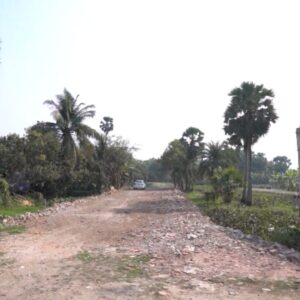
After covering what to check, here is detailed, well‑organized information about Nature’s Paradise, a township project by Rupbasuda Developers, to help you evaluate whether it meets those criteria and whether it might be a good option for you or others.
Project Overview
| Feature | Details |
| Project Name | Nature’s Paradise |
| Developer | Rupbasuda Developers |
| Location | Khariberia, Bhasa, Joka, Kolkata |
| Highway / Road | Along Diamond Harbour Road, National Highway 117 |
| Distance from Joka Metro | Approx 2.6 km |
| Time from Swaminarayan Temple | About 7 minutes |
| Nearby Landmark | Beside Palm Village Resort |
Plot Size, Type & Pricing
| Parameter | Details |
| Spread of Project | ~ 350 bighas of land area |
| Minimum Plot Size | 2 katha minimum purchase |
| Other Sizes Available | 3 katha, 5 katha, and more; no fixed maximum limit specified |
| Types of Plots | Premium & non‑premium; Residential & Commercial |
| Price Range | ₹1,30,000 (1 lakh 30 thousand rupees) up to ₹4,00,000 (4 lakh rupees) depending on plot size, location, type etc. |
Amenities & Infrastructure
| Amenity / Infrastructure | Present or Planned |
| Plot Status | Ready to move plots – so basic land preparation is done |
| Roads | Internal by‑roads of 25 ft & 20 ft; the approach roads being/will be four‑lane |
| Water supply | 24×7 water supply planned / provided |
| Electricity | Electricity connection available / planned |
| Drainage / Sewage | Proper drainage system in place or planned |
| Community & Recreational Facilities | Gymnasium, Clubhouse, Lake, Kindergarten School, Saraswati Temple |
| Transport | 24×7 transportation; metro station planned by end of 2028; nearby railway station etc. |
| Nearby Essential Facilities | Hospitals, Vegetable Market, Shopping Malls, Schools, Colleges just minutes away |
Location Advantages & Growth Potential
- Close proximity (2.6 km) to Joka Metro adds value and future ease of commute.
- Diamond Harbour Road (NH‑117) is a major route; improved highways/roads often lead to value appreciation.
- Many well‑known apartment projects in the vicinity (Emami Astha, Godrej Seven Elevate, Gems Bouganvilla, DTC Sojan, Eden Amantran, Solaris, Rajat by Avante etc.), often priced in crores, which suggests the area is already drawing premium development.
Payment & Booking Terms
| Parameter | Details |
| Booking Token Amount | ₹11,000 required as token booking amount |
| Payment Options | 36 months 0% interest EMI available |
| Developer / Agent | Dedicated Real Estate, with office near Thakurpukur 3A Bus Stand, Kolkata |
Potential Pros & Things to Check
Pros:
- Affordable entry point for middle class — both residential and commercial plots in the stated price range.
- Ready to move status reduces waiting time; some infrastructure already in place.
- Strong potential for appreciation because of upcoming metro, highway road works, location.
- Amenities are planned; community features suggest a self‑contained township rather than isolated plots.
Things you should still verify (using the checklist above):
- Confirm zoning status and whether NA conversion (if needed) has been done.
- Check encumbrance certificate to ensure clear title.
- Ensure all NOCs, permissions, layout plan approvals are legal and in order.
- Physical ground check: slope, drainage, whether land is flood‑prone.
- Exact road access: condition of roads, whether approach to your plot is via public road.
- Surrounding environment: whether neighbouring plots are being developed, quality, types of constructions.
- Utility access and readiness: water, electricity, sewage.
- Confirm any government notifications/plans that may require surrendering land or affect use.
Why This Might Be The Best Time to Buy
- With metro station planned by end of 2028, road improvements, and area being developed, plots may gain significant capital appreciation.
- Since many high‑end projects in the area are already valued in crores, a plot bought now at a few lakh rupees can deliver large value growth in coming years.
- Entry‑level price and flexible payment (0% EMI over 36 months) reduces the financial burden and risk.
How to Proceed (if Interested)
- Arrange a site visit to Nature’s Paradise. Survey multiple plots; compare premium vs non‑premium.
- Bring along a legal expert to verify documents.
- Ask developer / Dedicated Real Estate for copies of title deed, NA conversion (if applicable), EC, layout plan, approved plan, NOCs etc.
- Check the condition of internal roads, availability of utilities.
- Discuss payment schedule, any additional charges.
Contact Details
Dedicated Real Estate
- Phone: +91 6291422636
- Email: info@dedicatedrealestate.in
- Website: www.dedicatedrealestate.in
Office Location: Near Thakurpukur 3A Bus Stand, Kolkata