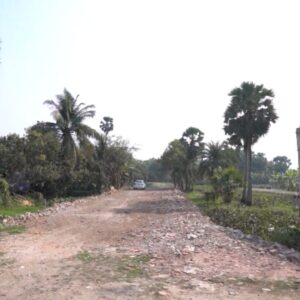
When you buy a plot of land in West Bengal, owning it is more than paying money and getting physical control. Legally, ownership transfer involves two key components:
Sale Deed / Deed of Transfer: This is the contract between seller and buyer that officially transfers ownership interest.
Mutation: This is the process of updating government / revenue records (Record‑of‑Rights, Khatian/Porcha etc.) to reflect the new owner. Without mutation, many rights (property tax, utility connections, future sale etc.) may be in the previous owner’s name.
Mutation is crucial because even though the sale deed proves you bought the plot, government records must recognize you as owner. Discrepancies in revenue records can lead to legal disputes, difficulties in getting loans, paying taxes, or selling the property later.
Key Legal Framework Governing Plot Transfer in West Bengal
Sale Deed / Deed of Transfer: Definition & Importance
A sale deed (also called deed of transfer) is a legal document where the seller agrees to transfer full ownership of the plot to the buyer for a consideration (price). It establishes legal title in the buyer’s favor. Among other clauses, it typically includes:
Parties’ details (seller & buyer)
Description of the plot (survey number, mouza, area, boundaries)
Consideration amount
Seller’s warranties (that it is free from encumbrances etc.)
Date of handing over possession
Without a properly executed and registered sale deed, ownership might not pass in the eyes of law even if possession is handed over.
Registration Act, Transfer of Property Act & West Bengal Land Reforms Act
Indian Registration Act, 1908: Requires certain documents (including sale deeds) to be registered with the Sub‑Registrar’s office to be legally valid against third parties.
Transfer of Property Act, 1882: Covers rights related to transfer of immovable property, rights and obligations of parties.
West Bengal Land Reforms Act, 1955: Governs land reforms in WB, defines concepts like raiyat, Record of Rights (ROR), mutation, etc. The Act gives authority and procedure for mutation under section 50 and rules such as Simplified Procedure of Mutation Order, 2009.
Step‑by‑Step Sale Deed Process
Negotiation & Agreement Phase
Title Search: Before anything, buyer should check whether seller actually owns the plot (via ROR / porcha / khatian / current mutation).
Check encumbrances: Mortgages, pending litigation, rights of way etc.
Agreement to Sale / Memorandum of Understanding (MoU): Optionally one may execute an agreement to sale (not final transfer). Contains terms, payment schedule etc. But full ownership changes only via sale deed.
Preparation of Sale Deed Document
Prepare proper deed draft including all necessary particulars: full names, addresses, plot details (mouza, J.L. Number, khatian / plot number, area etc.).
Also include seller’s warranty: free of encumbrances, no undisclosed liabilities, etc.
Ensure boundaries are clearly demarcated, possession terms are defined.
Stamp Duty, Valuation & Registration
Stamp Duty: Must pay stamp duty as per the Stamp Act. The rate depends on municipality / rural / urban area, plot value etc.
Valuation: The government’s ready reckoner or circle rate may be used to decide minimum value. If deed is undervalued, authorities may impose penalties.
Registration: After stamp duty, present deed at Sub‑Registrar’s office for registration under the Registration Act. The buyer and sometimes seller need to appear in person or via authorised representative with identity proofs. Signatures / thumb impressions, witnesses etc.
What to Check Before Signing
Ensure seller has good title, necessary title deeds, previous mutation (if applicable).
Make sure plot description is correct (dimensions, area, boundaries).
Survey number, mouza, khatian, J.L. No, village / urban area etc. match official records.
Ensure payment receipts and all obligations (tax / revenue) from seller are cleared or agreed upon.
Check if the plot has clear access / road, utility connections.
Mutation (Record of Rights) Process
What is Mutation & Why Essential
Mutation means the substitution of one person’s name by another in the Record‑of‑Rights (ROR) after a property is transferred via sale, inheritance, gift, etc. It is provided under section 50 of West Bengal Land Reforms Act. When mutation is done:
The new owner’s name is reflected for land revenue / tax.
Government can send notices, property tax etc. to correct person.
It becomes easier to sell the property later, raise loan etc.
Without mutation, even if you have the registered deed, official records may still show previous owner.
Documents Required for Mutation in WB
Based on the Simplified Procedure of Mutation (Order No. 644‑LR/1A‑01/2009) and other sources, typical required documents include:
Copy of registered sale deed / gift deed / exchange / hebanama or other transfer document.
In case of inheritance, legal heir certificate, death certificate etc.
Chain of successive registered deeds (if the land was transferred multiple times).
Proof of up‑to‑date revenue / rent / land tax / cess payment.
Declaration in prescribed form (with court fee stamp) that the information is true etc.
Envelopes with postage stamps (used for notices) etc. (as per procedural rules).
Applying for Mutation: Offices & Authorities
Block Land & Land Reforms Officer (BLRO): Main authority for applying for mutation in rural / non‑urban areas.
Revenue Officer attached to BLRO: designated as “Prescribed Authority” under the WB Land Reforms Act for mutation decisions.
For urban areas, municipal offices may play role; sometimes via Municipal Corporations or urban local bodies.
Applicant submits mutation application in prescribed proforma.
Timeline, Simplified Procedure & Legal Provisions
Under the Simplified Procedure of Mutation Order, 2009, once all documents are submitted (application complete), the mutation should be disposed of:
Within 60 days if no field inquiry needed.
Within 120 days if field inquiry is necessary.
If the application is rejected, the applicant must be informed with reasons.
Application must comply with Section 50 of WB Land Reforms Act.
Common Issues, Pitfalls & How to Avoid Them
Missing Documents & Chain Deeds
Not having chain of previous deeds can delay mutation, may require field inquiry.
Missing revenue receipts or proof of tax/ cess payments – seller’s lagging revenue dues can become buyer’s issues.
Disputes Over Revenue/Tax or Land Classification
Classification issues: agricultural vs non‑agricultural, status under municipal area etc., can affect stamp duty or allowed use.
Encumbrances: mortgage, rights of way, claims by third parties, litigation unresolved.
Delay in Mutation or Registry
Delay can occur due to administrative backlog, incomplete paperwork, pending objections from third parties.
Sometimes seller or buyer neglects to follow up.
Also, if the mouza is under revision of ROR (Record‑of‑Rights), or in stages like Khanapuri‑Bujharat or Attestation under Section 51 of Land Reforms Act, mutation certificates may be delayed.
Online Services & Using Banglarbhumi Portal
e‑Mutation & Status Tracking
West Bengal has an online land record portal Banglarbhumi where citizens can apply for mutation or check status.
Process: fill in application (online or offline), get application reference number, track via mutation case number or deed‑wise search.
Requesting ROR / Plot Maps / Certified Copies
Banglarbhumi also provides services to request certified copies of:
ROR (Record of Rights) / Porcha
Plot information and plot maps
Registered deed copies etc.
These help in verifying titles, boundaries etc. before sale or mutation.
Costs, Fees & Timeframes Involved
Stamp duty: depends on location (urban vs rural), market value vs ready reckoner, value declared in deed.
Registration fees: fixed by state sub‑registrar, depends on value.
Mutation charges: usually small administrative cost; in many cases minimal except when area large or complexity high.
Timeframes:
Sale deed registration: depending on schedule of sub‑registrar, preparation, gathering of documents etc., could take from a few days to several weeks.
Mutation: 60‑120 days under Simplified Procedure if documents are in order.
Case Examples / Frequently Asked Questions (FAQs)
Here are some typical questions & answers:
Q1. Is mutation mandatory at time of sale?
Technically yes: to ensure records are correct and no issues later. The government has in past proposed making mutation mandatory along with sale registration to avoid fraudulent multiple sales.Q2. Can ownership transfer happen without mutation?
Even if sale deed is registered, absence of mutation means government records don’t reflect you as owner. This can lead to trouble for property tax, loans, or further sale.Q3. How to check if mutation is already done?
Through Banglarbhumi portal: search by case number / deed number / plot / Khatian etc. Verify ROR / porcha.Q4. What if the mouza is under revision / ROR not published?
Then there may be delays. Under section 51 or during K.B. Bujharat (attestation) stage, or draft publication, mutation certificates might be issued later.Q5. Can buyer register sale deed first and do mutation later?
Yes, but it’s better to do mutation promptly. Some legal issues can arise if old owner still pays taxes, or someone else claims ownership based on records.
Conclusion & Best Practices
Always verify seller’s title first (ROR, previous mutations, tax receipts).
Use registered deeds, accurately drafted, ensure boundaries etc. are clear.
Keep copies of all chain deeds.
After registering the deed, immediately apply for mutation. Don’t delay.
Use the Banglarbhumi portal to track status, get certified copies.
Retain all receipts, stamped documents, declared values etc.
Nature’s Paradise by Rupbasuda Developers — “Ready to Move” Plots

natures-paradise-gate After covering what to check, here is detailed, well‑organized information about Nature’s Paradise, a township project by Rupbasuda Developers, to help you evaluate whether it meets those criteria and whether it might be a good option for you or others.
Project Overview
Feature Details Project Name Nature’s Paradise Developer Rupbasuda Developers Location Khariberia, Bhasa, Joka, Kolkata Highway / Road Along Diamond Harbour Road, National Highway 117 Distance from Joka Metro Approx 2.6 km Time from Swaminarayan Temple About 7 minutes Nearby Landmark Beside Palm Village Resort Plot Size, Type & Pricing
Parameter Details Spread of Project ~ 350 bighas of land area Minimum Plot Size 2 katha minimum purchase Other Sizes Available 3 katha, 5 katha, and more; no fixed maximum limit specified Types of Plots Premium & non‑premium; Residential & Commercial Price Range ₹1,30,000 (1 lakh 30 thousand rupees) up to ₹4,00,000 (4 lakh rupees) depending on plot size, location, type etc. Amenities & Infrastructure
Amenity / Infrastructure Present or Planned Plot Status Ready to move plots – so basic land preparation is done Roads Internal by‑roads of 25 ft & 20 ft; the approach roads being/will be four‑lane Water supply 24×7 water supply planned / provided Electricity Electricity connection available / planned Drainage / Sewage Proper drainage system in place or planned Community & Recreational Facilities Gymnasium, Clubhouse, Lake, Kindergarten School, Saraswati Temple Transport 24×7 transportation; metro station planned by end of 2028; nearby railway station etc. Nearby Essential Facilities Hospitals, Vegetable Market, Shopping Malls, Schools, Colleges just minutes away Location Advantages & Growth Potential
- Close proximity (2.6 km) to Joka Metro adds value and future ease of commute.
- Diamond Harbour Road (NH‑117) is a major route; improved highways/roads often lead to value appreciation.
- Many well‑known apartment projects in the vicinity (Emami Astha, Godrej Seven Elevate, Gems Bouganvilla, DTC Sojan, Eden Amantran, Solaris, Rajat by Avante etc.), often priced in crores, which suggests the area is already drawing premium development.
Payment & Booking Terms
Parameter Details Booking Token Amount ₹11,000 required as token booking amount Payment Options 36 months 0% interest EMI available Developer / Agent Dedicated Real Estate, with office near Thakurpukur 3A Bus Stand, Kolkata Potential Pros & Things to Check
Pros:
- Affordable entry point for middle class — both residential and commercial plots in the stated price range.
- Ready to move status reduces waiting time; some infrastructure already in place.
- Strong potential for appreciation because of upcoming metro, highway road works, location.
- Amenities are planned; community features suggest a self‑contained township rather than isolated plots.
Things you should still verify (using the checklist above):
- Confirm zoning status and whether NA conversion (if needed) has been done.
- Check encumbrance certificate to ensure clear title.
- Ensure all NOCs, permissions, layout plan approvals are legal and in order.
- Physical ground check: slope, drainage, whether land is flood‑prone.
- Exact road access: condition of roads, whether approach to your plot is via public road.
- Surrounding environment: whether neighbouring plots are being developed, quality, types of constructions.
- Utility access and readiness: water, electricity, sewage.
- Confirm any government notifications/plans that may require surrendering land or affect use.
Why This Might Be The Best Time to Buy
- With metro station planned by end of 2028, road improvements, and area being developed, plots may gain significant capital appreciation.
- Since many high‑end projects in the area are already valued in crores, a plot bought now at a few lakh rupees can deliver large value growth in coming years.
- Entry‑level price and flexible payment (0% EMI over 36 months) reduces the financial burden and risk.
How to Proceed (if Interested)
- Arrange a site visit to Nature’s Paradise. Survey multiple plots; compare premium vs non‑premium.
- Bring along a legal expert to verify documents.
- Ask developer / Dedicated Real Estate for copies of title deed, NA conversion (if applicable), EC, layout plan, approved plan, NOCs etc.
- Check the condition of internal roads, availability of utilities.
- Discuss payment schedule, any additional charges.
Contact Details
- Agent / Developer Contact: Dedicated Real Estate
- Phone: +91 6291422636
- Email: info@dedicatedrealestate.in
- Website: www.dedicatedrealestate.in
Office Location: Near Thakurpukur 3A Bus Stand, Kolkata
- Close proximity (2.6 km) to Joka Metro adds value and future ease of commute.