

Investing in property in India is a dream many NRIs hold dear—especially in your ancestral city or a rising metro like Kolkata. But being overseas introduces additional legal complexities and risks. Without due diligence, you might run into costly traps. This NRI’s checklist highlights 5 legal red flags you must watch out for when buying property in Kolkata from abroad—and shows how to safeguard your investment.
Why NRIs Face Unique Legal Risks in Indian Real Estate
Before diving into specific red flags, let’s understand why NRIs are more vulnerable.
Distance & Lack of presence: You may not be able to physically check documents, site visits, or monitor progress. That distance adds risk of fraud or misrepresentation.
Reliance on intermediaries / POA holders: Often transactions are executed through Power of Attorney (POA) by a trusted person in India. If the POA is defective or misused, you may lose control.
Complex regulatory / tax regimes: NRIs must comply with Indian tax, foreign exchange (FEMA), repatriation, and property laws. A slight oversight can lead to penalties or rejection of transactions.
Multiple jurisdictions & local peculiarities: Each state (and even municipality) has its own rules. Kolkata / West Bengal has specific land legislation, municipal systems, and records (e.g. Banglarbhumi).
Hidden liabilities or claims: Prior litigation, mortgages, neighbor disputes, pending dues might not be visible upfront unless you dig deeply.
Given these risks, here’s a red‑flag checklist you should absolutely run through.
Legal Red Flag #1: Unclear or Defective Title & Encumbrances
One of the gravest mistakes an NRI buyer can make is buying a property without a clean, marketable title.
The Importance of Marketable Title
A “marketable title” means the seller is the legal owner, free from disputes, and has right to sell. If the title is contested, or multiple claimants exist, future claims may unsettle your ownership.
Stories abound of properties bought, only to later be claimed by estranged relatives or litigants. The Economic Times notes how title verification is a major hurdle for NRIs—disputes or fraudulent documentation can derail deals.
Mortgages, Liens, Litigation & Hidden Dues
Even if a seller appears to own the property, there may be:
Mortgages or bank loans using that property as security.
Liens from unpaid loans, dues, or taxes.
Ongoing litigation or succession disputes.
Easement claims, rights of way, encroachments.
The buyer may end up inheriting those liabilities. Housing.com warns of encumbrances, outstanding dues, and ongoing litigation as common legal risks for NRI property buyers.
Similarly, KHA Advocates in a Kolkata context highlight the importance of verifying property tax clearance, utility bills, and mutation records (which prove past dues have been cleared).
How to Conduct Title Due Diligence
When you (or your lawyer) do due diligence:
Chain of title: Get the complete ownership history back at least 30 years, with documents such as sale deeds, succession deeds, gift deeds, partition, etc.
Encumbrance certificate: Obtain from the sub‑registrar’s office or municipal/local registry; it shows if there are liens or mortgages.
No litigation certificate: Obtain from local courts / revenue department that no case is pending.
Tax / municipal dues clearance: Ask for certificates or receipts showing all dues paid (property tax, water, electricity, society maintenance).
Mutation & land registry check: Ensure the property is mutated into the current name in local municipal, revenue records.
Physical site inspection / boundaries: Check boundary disputes or encroachments on ground.
Verification via land record portals: In West Bengal, the Banglarbhumi portal lets you check land records and ownership digitally.
Legal opinion: Engage a reputable Kolkata property lawyer to certify the title.
If any irregularity pops up (missing links, open disputes, unjust encumbrances), treat it as a red flag to be resolved before proceeding.
Legal Red Flag #2: Misuse or Defects in Power of Attorney (POA)
Because NRIs cannot be physically present during many local formalities, POAs are often used—but they bring their own legal risk.
Special POA vs General POA
General POA grants very broad powers (sale, mortgage, transfer) without restrictions—making it riskier to misuse.
Special (or limited) POA restricts the powers to a specific transaction (e.g. “to execute sale deed for property X only”)—much safer to use.
Many legal experts strongly caution NRIs to avoid general POAs and instead use specific, well‑defined ones.
Execution, Attestation & Registration Formalities
For a POA to be valid in India (especially issued from abroad), the following formalities are critical:
Execution in the NRI’s country, attested by the Indian Embassy/Consulate there.
Then, the POA when brought to India must be adjudicated (stamped) within three months under the Indian Stamp Act.
The POA should be registered at the Sub‑Registrar’s office in the same jurisdiction as the property. Simply notarizing it is not sufficient.
The POA must remain valid (within its validity period). If it’s expired or cancelled, its acts may be challengeable.
If any of these steps is bypassed or flawed, the POA might become void or get contested, which may put your sale or purchase at risk.
Safeguards to Include in the POA
Here are safeguards you can build into the POA:
Clearly define scope and powers (only sale of a particular property, no mortgaging, etc.).
Include price floor / conditions, so the agent cannot undersell.
Add indemnity clause: the agent indemnifies you for losses due to misuse.
Regular reporting / oversight rights: the agent must share all documents, updates.
Power to revoke POA and terminate it in writing.
Use a trusted, proven person (lawyer or relative) rather than a broker or unknown agent.
Many deals fail when a POA is misused—fraudulent sales or transferring property to third parties have happened.
Legal Red Flag #3: Violations of Regulatory Approvals / Zoning / Land Use
Even if the title and POA are clean, regulatory noncompliance can threaten your ownership or usage rights.
Land Conversion, Zoning, Permissible Usage
Some land parcels may have been agricultural or non‑residential initially. For building or residential use, proper land conversion / change of land use must have been done.
Also, check if the land is classified as “vested land,” “thika land,” or tenanted land, which have their own legal status in West Bengal. KHA Advocates warns that buying on thika land or tenanted land without proper regularization is risky.
Zoning restrictions or master plan classifications may prohibit certain constructions or usages—ensure compliance with municipal / urban development plans.
Municipal Approvals, Building Permits, Occupancy Certificate (OC / CC)
The building / property must have all required clearances and certificates:
Planning permission / building plan approval: from municipal or development authority.
Completion Certificate (CC) / occupancy certificate (OC): indicating the building is fit for habitation.
Fire safety, environmental clearances (if applicable), drainage / sewage NOCs.
No violation certificate: confirm that construction did not exceed approved plans.
A warning: there have been rulings where developers failed to secure CC/OC, leaving owners unable to complete mutation or even force buyback. For instance, in Kolkata a tribunal asked a developer to buy back a CC-less flat after decades.
If any of these approvals are missing or questionable, that is a red flag.
RERA Compliance & Project Legitimacy (for New / Under-Construction Properties)
Though RERA (Real Estate Regulatory Authority) is often associated with new projects, it also impacts resale under certain conditions. Some key points:
Ensure the project is registered with West Bengal RERA / state regulatory body (if required).
Verify the developer’s track record, fulfillment history, delay record. Kotak’s NRI guide emphasizes choosing reputable builders.
Check agreements, refund / exit clauses, escalation terms.
For resale of a flat in a new project still under construction, RERA’s protections may apply.
If a project is not RERA‑compliant or the developer dodges regulatory transparency, treat it as a red flag.
Legal Red Flag #4: Tax, TDS, Repatriation & FEMA Issues
Financial and regulatory compliance is another minefield for NRIs buying/selling property in India.
TDS Obligations When Buying from an NRI Seller
When you buy property from an NRI seller, the buyer is typically required to deduct tax at source (TDS) before remitting the balance to the seller.
Under Section 195 of the Income Tax Act, the buyer must deduct TDS and remit it.
Failure to deduct or remit TDS correctly can trigger penalties or demands.
The seller may request a lower TDS certificate from the Income Tax Department, but until that’s granted, you must deduct at the rate applicable.
The buyer should issue Form 16A (TDS certificate) to the seller and file necessary returns.
If the seller claims they are resident Indian (to avoid higher TDS), and IT assesses otherwise, the buyer may be held liable.
Always insist on seller’s PAN, proper TDS handling, and documentation.
Capital Gains, Income Tax & Filing Obligations
When the NRI sells the property in future, capital gains tax applies. Long-term capital gains (if held more than 2 years) are taxed after indexation.
NRIs must file Indian income tax returns even if they don’t reside in India, especially when they hold property or get rental income.
Utilities, maintenance, municipal taxes paid must be shown properly.
In 2025, new tax rules and TDS rates may apply (stay updated with tax laws).
Neglecting these obligations may result in notices, penalties, or issues during sale/repatriation.
FEMA, RBI Rules & Repatriation of Funds
NRIs must adhere to the Foreign Exchange Management Act (FEMA) and RBI rules when purchasing property and later repatriating funds.
NRIs can buy residential and commercial property without prior RBI approval, but cannot purchase agricultural land, plantation, or farmhouse (unless inherited or gifted).
Payments should be made via NRE / NRO / FCNR accounts using banking channels, not in cash or foreign currency directly.
When selling the property later, the sale proceeds (principal + capital gain) may be repatriated, but subject to certain limits and conditions under FEMA.
Repatriation of not more than two residential properties is allowed under certain conditions.
Violating FEMA norms may affect your ability to transfer money abroad, invite penalties, or even disqualify the transaction.
If the seller or transaction ignores FEMA compliance, it’s a red flag.
Legal Red Flag #5: Inheritance, Will Disputes & Co‑ownership Conflicts
Even the best-conducted deal can be invalidated by later legal claims if inheritance or co-ownership issues are unresolved.
Heirship Claims, Missing Wills, Probate Issues
If the property belongs to someone who passed away, or co-owners have died, there might be claims by heirs.
If a valid registered will is missing or contested, courts can entertain challenges from family members.
In metropolitan areas, a probate or court validation may be required to enforce a will.
Some family claimants may litigate after the sale deed is signed, seeking to undo the transfer.
It is essential to confirm that all co‑owners or heirs agree, and that necessary legal formalities (probate, succession certificate, etc.) are in place.
Benami Property Risk
Under the Benami Transactions (Prohibition) Act, 1988 (amended), properties held in someone else’s name (benamidar) without legitimate ownership documentation may be seized or voided.
If the seller bought the property as benami (e.g. in a relative’s name), the transaction could be declared invalid, and you may face legal action.
Joint Ownership Among NRIs & Residents
If co-owners include resident Indians and NRIs, share splits, contributions, and title clarity must be documented properly.
Disputes may arise if one co-owner claims more contribution or contests the deed later.
Ensure all co-owners sign the sale deed, or the share division is clear and documented.
Without resolving these conflicts, your ownership may later be challenged in courts.
Additional Practical Checks for NRIs Buying in Kolkata
Beyond the big red flags above, here are practical on-ground checks especially relevant to Kolkata / West Bengal:
Outstanding Municipal Dues, Utility Bills & Mutation Records
Demand Property Tax Clearance Certificate from the municipal body (KMC, KMDA or local municipality).
Check electricity, water, sewage bills for arrears—these are your liability after purchase.
Verify mutation records in the local municipality or Block Land & Revenue Office (BLRO). The property must be mutated to the seller’s name before sale.
Ensure all society maintenance / common area dues are cleared.
Check if there are pending notices, municipal notices, or demolition orders.
KHA Advocates flags that unpaid utility or municipality dues are common pitfalls.
Monitoring via Trusted Local Contacts / Site Visits
Engage a trusted local representative (lawyer, relative, property manager) who can periodically inspect the property, notices, or documents.
Use digital platforms like Banglarbhumi (for West Bengal) to monitor records and detect unauthorized changes.
Visit the site if possible (or send someone) to verify boundary lines, construction quality, occupancy status, etc.
Hidden Costs & Maintenance Pitfalls
Budget for stamp duty, registration fees, legal fees, registration charges—these often add 5–10% extra.
For under‑construction properties, account for delays, escalation, maintenance charges, parking, amenities fees.
Verify that parking rights, open area, amenities, access roads are legally allotted and document those rights.
Understand society by-laws, restrictions, consent to rent, resale rules—some societies restrict NRIs renting out, etc.
Step‑by‑Step Due Diligence Checklist for NRI Buyers
Here’s a consolidated checklist you can follow (or hand over to your legal team):
Shortlist property / developer / seller
Request all original documents and get certified true copies
Verify chain of title (30 years) and get an encumbrance certificate
Obtain “no litigation” certificate from courts
Check municipal / utility dues, tax clearance, mutation records
Verify regulatory approvals: building plan, OC/CC, fire NOC, no violation certificate
Confirm RERA registration (if applicable) and developer legitimacy
Review and vet POA (if used) — scope, validity, registration
Ensure payment only to seller’s NRE/NRO/FCNR account via banking channel
Deduct TDS correctly, get Form 16A, file returns
Hire a local lawyer to draft / vet the sale agreement & sale deed
Ensure all co‑owners or heirs join the transaction, get succession / probate if required
Register the sale deed in local Sub‑Registrar’s office, pay stamp duty, complete mutation
Monitor post-transfer issues (notice, encroachments, occupancy)
Plan for future sale / repatriation under FEMA rules
Stick to this diligence; any gap could lead to trouble.
What to Do If You Spot a Red Flag — Remedies & Risk Mitigation
If your due diligence turns up one or more red flags, here’s how to handle them:
Negotiate remediation: Ask the seller to clear encumbrances, obtain missing approvals, or settle disputes before closing.
Escrow / bank guarantee / holdback: Withhold a portion of sale consideration till issues are resolved.
Indemnity clauses & warranties: In the sale deed, include strong indemnities against future claims or losses.
Seek legal injunctions: If litigation is ongoing, ask for stay orders or ensure certification that claims are no longer open.
Abandon deal if risk is too high: Sometimes walking away is better than getting trapped in a legal nightmare.
Title insurance (if available): It can protect against post‑purchase title defects.
Court registration of POA revocations, notices: If a POA is dubious, legally revoke or challenge it before closing.
Always consult a qualified Kolkata / West Bengal property lawyer to assess and remediate.
Nature’s Paradise by Rupbasuda Developers — “Ready to Move” Plots

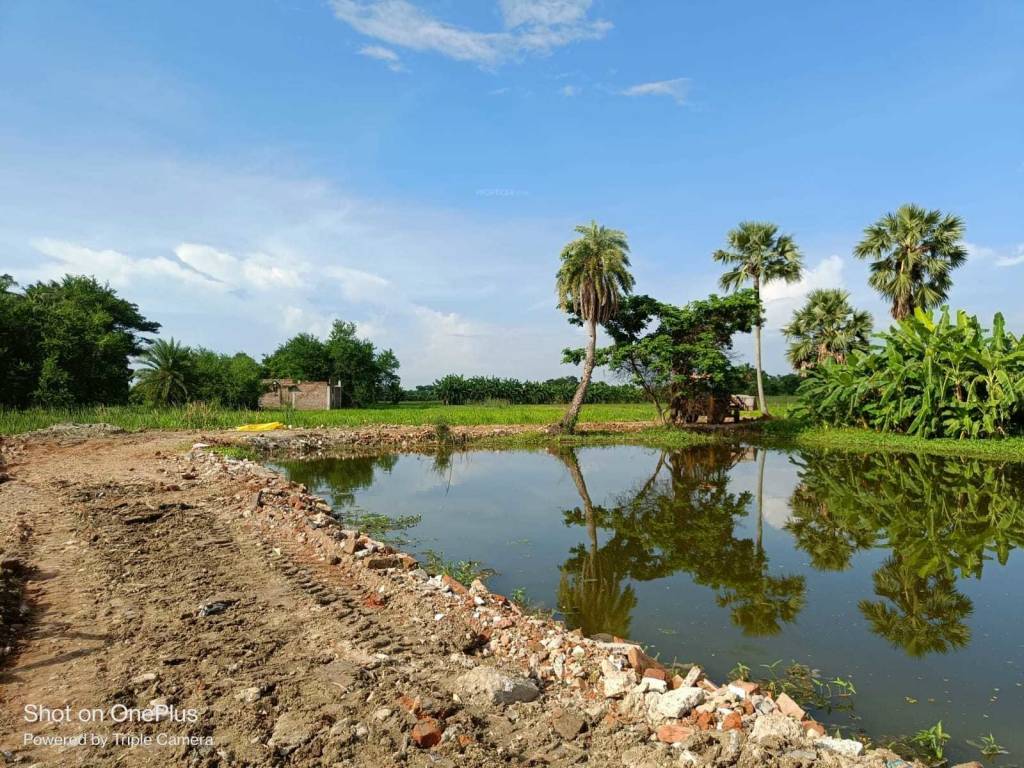

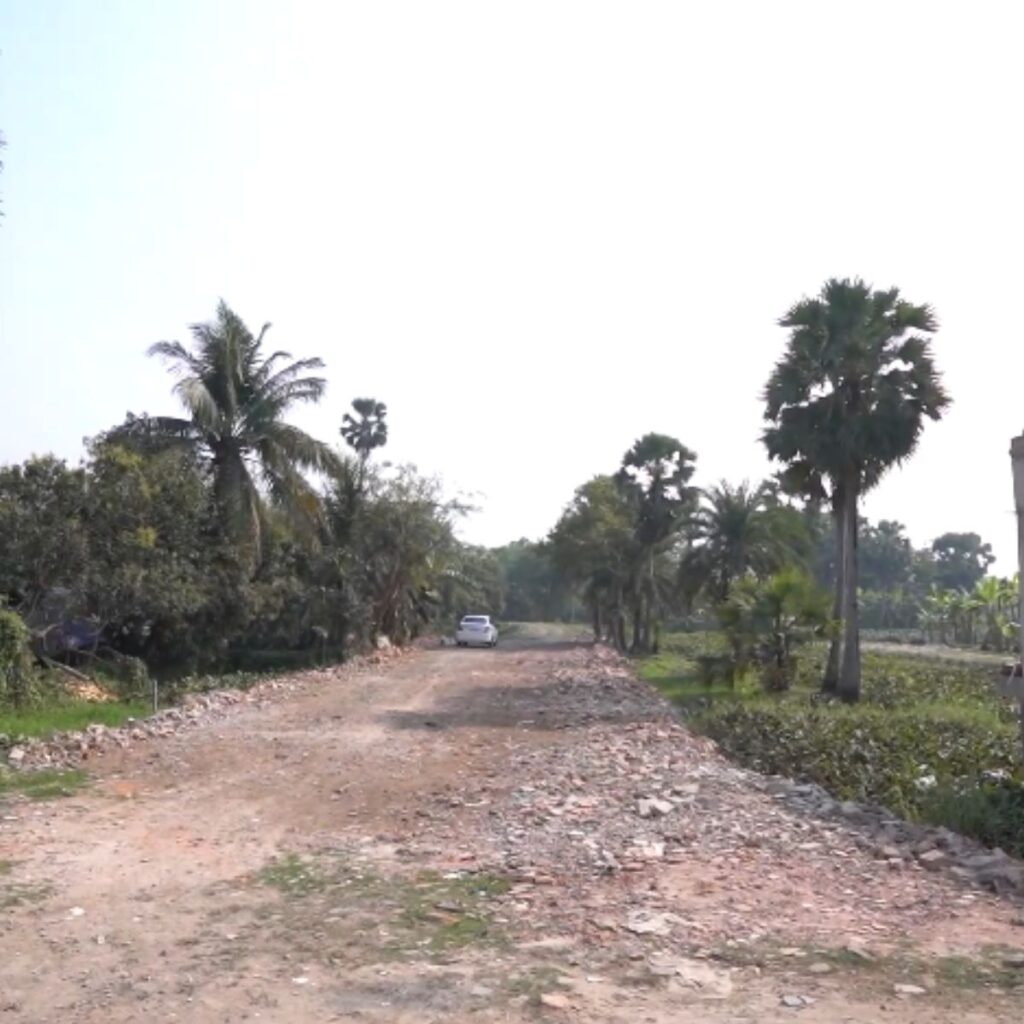
After covering what to check, here is detailed, well‑organized information about Nature’s Paradise, a township project by Rupbasuda Developers, to help you evaluate whether it meets those criteria and whether it might be a good option for you or others.
Project Overview
| Feature | Details |
| Project Name | Nature’s Paradise |
| Developer | Rupbasuda Developers |
| Location | Khariberia, Bhasa, Joka, Kolkata |
| Highway / Road | Along Diamond Harbour Road, National Highway 117 |
| Distance from Joka Metro | Approx 2.6 km |
| Time from Swaminarayan Temple | About 7 minutes |
| Nearby Landmark | Beside Palm Village Resort |
Plot Size, Type & Pricing
| Parameter | Details |
| Spread of Project | ~ 350 bighas of land area |
| Minimum Plot Size | 2 katha minimum purchase |
| Other Sizes Available | 3 katha, 5 katha, and more; no fixed maximum limit specified |
| Types of Plots | Premium & non‑premium; Residential & Commercial |
| Price Range | ₹1,30,000 (1 lakh 30 thousand rupees) up to ₹4,00,000 (4 lakh rupees) depending on plot size, location, type etc. |
Amenities & Infrastructure
| Amenity / Infrastructure | Present or Planned |
| Plot Status | Ready to move plots – so basic land preparation is done |
| Roads | Internal by‑roads of 25 ft & 20 ft; the approach roads being/will be four‑lane |
| Water supply | 24×7 water supply planned / provided |
| Electricity | Electricity connection available / planned |
| Drainage / Sewage | Proper drainage system in place or planned |
| Community & Recreational Facilities | Gymnasium, Clubhouse, Lake, Kindergarten School, Saraswati Temple |
| Transport | 24×7 transportation; metro station planned by end of 2028; nearby railway station etc. |
| Nearby Essential Facilities | Hospitals, Vegetable Market, Shopping Malls, Schools, Colleges just minutes away |
Location Advantages & Growth Potential
- Close proximity (2.6 km) to Joka Metro adds value and future ease of commute.
- Diamond Harbour Road (NH‑117) is a major route; improved highways/roads often lead to value appreciation.
- Many well‑known apartment projects in the vicinity (Emami Astha, Godrej Seven Elevate, Gems Bouganvilla, DTC Sojan, Eden Amantran, Solaris, Rajat by Avante etc.), often priced in crores, which suggests the area is already drawing premium development.
Payment & Booking Terms
| Parameter | Details |
| Booking Token Amount | ₹11,000 required as token booking amount |
| Payment Options | 36 months 0% interest EMI available |
| Developer / Agent | Dedicated Real Estate, with office near Thakurpukur 3A Bus Stand, Kolkata |
Potential Pros & Things to Check
Pros:
- Affordable entry point for middle class — both residential and commercial plots in the stated price range.
- Ready to move status reduces waiting time; some infrastructure already in place.
- Strong potential for appreciation because of upcoming metro, highway road works, location.
- Amenities are planned; community features suggest a self‑contained township rather than isolated plots.
Things you should still verify (using the checklist above):
- Confirm zoning status and whether NA conversion (if needed) has been done.
- Check encumbrance certificate to ensure clear title.
- Ensure all NOCs, permissions, layout plan approvals are legal and in order.
- Physical ground check: slope, drainage, whether land is flood‑prone.
- Exact road access: condition of roads, whether approach to your plot is via public road.
- Surrounding environment: whether neighbouring plots are being developed, quality, types of constructions.
- Utility access and readiness: water, electricity, sewage.
- Confirm any government notifications/plans that may require surrendering land or affect use.
Why This Might Be The Best Time to Buy
- With metro station planned by end of 2028, road improvements, and area being developed, plots may gain significant capital appreciation.
- Since many high‑end projects in the area are already valued in crores, a plot bought now at a few lakh rupees can deliver large value growth in coming years.
- Entry‑level price and flexible payment (0% EMI over 36 months) reduces the financial burden and risk.
How to Proceed (if Interested)
- Arrange a site visit to Nature’s Paradise. Survey multiple plots; compare premium vs non‑premium.
- Bring along a legal expert to verify documents.
- Ask developer / Dedicated Real Estate for copies of title deed, NA conversion (if applicable), EC, layout plan, approved plan, NOCs etc.
- Check the condition of internal roads, availability of utilities.
- Discuss payment schedule, any additional charges.
Contact Details
Dedicated Real Estate
- Phone: +91 6291422636
- Email: info@dedicatedrealestate.in
- Website: www.dedicatedrealestate.in
Office Location: Near Thakurpukur 3A Bus Stand, Kolkata