
In today’s urbanizing Kolkata, proximity to metro stations is often seen as a golden ticket for property investors. But is paying extra for a plot near a metro always justified? Let’s dive deep.
The Metro’s Pull in Kolkata Real Estate
Kolkata has been steadily expanding its metro network, promising faster connectivity, reduced traffic woes, and improved quality of life. As metro lines extend into suburban and semi‑urban zones, plots of land near upcoming or existing metro stations have seen growing demand. Homebuyers, investors, and developers alike are asking: does the premium charged for metro‑adjacent plots translate into real, lasting value? In this article, we examine cost implications, benefits, risks, and whether such an investment is worth making in 2025.
Understanding the Factor: What Drives the Extra Cost
Before deciding whether paying extra is justified, you need to understand why plots near metro stations cost more. Here are the primary drivers:
Enhanced Connectivity and Reduced Travel Time
Metro stations drastically cut commute time. For residents in Kolkata, being close to a metro implies simpler access to business districts, education hubs (like Salt Lake, Howrah, etc.), healthcare, and leisure zones.
When metro lines open in previously remote suburbs (e.g. New Garia, Kavi Subhash, Joka etc.), locations that were once hard to reach suddenly become accessible.
Infrastructure Development & Spillover Benefits
Areas around metro stations often get better infrastructure: improved roads, better drainage, street lighting, sanitation, and public services.
Commercial activity tends to increase—shops, offices, cafes, auto services—all want to be close to transit hubs.
Rising Demand & Scarcity of Convenient Plots
As more people want to reduce last‑mile travel, plots near metro stations become more coveted.
Supply is limited: there are only so many plots directly adjacent to metro lines. That scarcity escalates prices.
Real Estate Appreciation & Rental Yield Potential
Historically, properties near metro stations appreciate faster than those further away.
Also, they tend to attract higher rentals (if developed), because tenants value transit access.
Quantifying the Premium: How Much More Are We Talking?
To decide if the extra investment is justified, you need to know how large the premium typically is. Here’s a breakdown.
Price Differentials in Kolkata
A plot 500‑800 meters from a metro station vs a similar plot 2‑3 km away can cost 20‑50% more, depending on location, demand, and the metro line’s importance.
For example, in areas like Joka or New Garia, upland plots near the station cost significantly more per sq ft than those located further.
Land Rates Growth Over Time
Over 5‑10 years, rates near metro stations often grow at two to three times the growth rate of peripheral areas.
Developers and investors often expect faster appreciation—sometimes even speculative growth—depending on planned metro extensions.
Hidden Costs & Premiums
Besides the plot cost, other costs increase: premium for better road access, legal clearances may be costlier, infrastructure charges, possible requirement for landscaping or fencing to match up to station‑adjacent properties.
Also consider that taxes or municipal charges may be higher in transit‑oriented zones.
Benefits That Make the Extra Cost Worthwhile
Paying more is not inherently bad—if the benefits deliver value commensurate with the premium. Here are key benefits to factor in.
Lifestyle & Convenience
Proximity reduces daily stress: less time in traffic, more reliable commute.
Being near metro also often means closer proximity to shopping, schools, hospitals—overall better urban amenities.
Resale Value & Liquidity
When you want to sell, plots near metro stations are easier to command higher rates and tend to sell faster than remote plots.
Buyers are always looking for connectivity. Having “metro station nearby” as a selling point gives an edge.
Potential for Commercialization or Mixed‑Use Development
Plot near metro stations have enhanced chances for being converted into mixed‑use or commercial properties, with higher footfall.
Zoning norms in certain areas may allow small shops, showrooms, offices—additional income streams.
Future Urban Growth & Infrastructure Plan Alignment
Metro expansions come with master planning by authorities, new roads, civic services, possibly parks. You benefit not only from the station, but from the entire ecosystem.
Environmental & Social Advantages
Reduced need for private vehicles—less traffic, less pollution.
Better public transport access improves inclusivity for lower‑income residents, elderly, etc.
Risks & Downsides: What to Watch Out For
Not everything is perfect. Here are the potential drawbacks or risks when buying a plot near a metro station.
High Initial Investment & Opportunity Cost
You pay a premium upfront. That means less capital left over for construction or other investments.
If you overextend, cash flow or financing may suffer.
Noise, Pollution & Congestion
Metro stations attract traffic—auto rickshaws, buses, taxis, last‑mile services. Noise is a real factor.
Crowded foot traffic may reduce privacy or peace in residential plots.
Regulatory Risks & Zoning Issues
Forecasted metro stations may shift their planned route or station location. If you buy land assuming a station will come up at a certain point, plans could change.
Zoning laws may restrict what you can build. If you’re thinking residential, but commercial zoning creeps in, advantages/disadvantages may shift.
Infrastructure Lag
Sometimes metro is built, but supporting road connectivity, water supply, drainage, power etc., lag behind.
If area development is slow, promised benefits may take many years to realize.
Market Saturation & Overvaluation
In zones where everyone expects growth, prices may get ahead of actual demand. Overvaluation is a risk.
If many plots are sold speculatively, but fewer developed, supply could overshoot realistic need, leading to stagnation or depreciation.
Case Studies: Kolkata Examples
To ground theory in real data, here are a few case studies from Kolkata and its outskirts.
Joka Metro Extension
With the extension of Joka‑Taratala line, plots around Joka station have seen sharp rate increases.
Buyers who invested 5‑7 years back in Joka are now commanding double or more per sq ft compared to similarly sized plots farther away.
However, not all supporting infrastructure (roads, last‑mile connectivity) kept pace, which dampened realized benefits for some.
New Garia & Kavi Subhash Areas
New Garia metro station has long been established; areas within 1 km radius such as parts of Garia, Mukundapur, etc., show strong residential demand.
Resale values tend to be resilient even during market slowdowns.
Upcoming Metro Corridors
In areas where metro lines are planned but not yet built, plots close to proposed stations already attract speculation.
But buyers must verify government notifications, check whether land acquisition is cleared, and evaluate whether the station plan is final.
How to Evaluate If It’s Worth the Extra Cost For You
Every buyer’s priorities differ. Here are criteria and a decision‑framework to help you decide.
Define Your Time Horizon
If you are a long‑term investor (10‑20 years), you are more likely to benefit from the compounding appreciation.
If you plan to build and live there within 2‑5 years, the existing amenities and completion status matter more.
Assess the Metro Line & Station Prominence
Is the metro station operational or proposed? Operating stations tend to provide more real value.
What is the metro line’s traffic or ridership projection? If it connects to major hubs (airport, central business districts), value increases.
Check Supporting Infrastructure
Are roads leading up to the plot good? Is there water, power, sewage etc.?
Last‑mile connectivity: how far is the site from the station entrance, is the terrain walkable, safe?
Legal Clearances & Zoning
Ensure the plot has clean titles, no litigation.
Check land use zoning: residential vs commercial vs mixed. Understand building height restrictions etc.
Financial Calculations: Premium vs Expected Returns
Estimate how much you pay extra per sq ft for metro proximity.
Estimate how much extra income/resale you might get in future.
Calculate ROI over different timeframes; include carrying costs (taxes, maintenance, etc.).
Personal Priorities: Lifestyle vs Pure Investment
If your priority is comfort, small travel times, quality of life, you may accept extra cost more readily.
If your priority is investment returns alone, then yield and appreciation must outweigh costs.
Practical Tips for Buying Smart
If after analysis you lean toward buying, here are tips to maximize benefits and manage risks.
Research Government Plans & Metro Maps
Study official metro expansion maps, budget allocations, environmental clearances.
Attend town‑hall or municipal meetings; watch for notifications.
Visit the Site at Different Times
Check traffic, noise, congestion at peak hours.
Walk from the site to the metro station entrance to test accessibility.
Negotiate Based on Surrounding Plots & Comparative Rates
Compare plot rates in the same area at varying distances from the station.
Use the difference in supporting infrastructure (road width, utility availability) as leverage.
Factor in Future Costs
Budget for landscaping, compound wall, entrance gate, drainage, paving for last mile.
Keep margin for possible delays in infrastructure services.
Work with Reputable Developers / Realtors
Local real estate agents with experience around metro expansion areas are valuable.
Legal verification by lawyers for title deeds, land registration; check for encroachment etc.
Plan for Flexibility
Even if you plan residential use, consider whether mixed‑use might become possible.
Or whether plot can be sub‑divided or partially sold if your needs change.
Cost‑Benefit Comparison: Sample Scenarios
To bring clarity, here are hypothetical scenarios illustrating when buying near metro pays off vs when it may not.
Scenario A – Investor Buying for 10‑Year Hold
Plot A: Close (approx. 500m) to operational metro station; cost premium of 40% over peripheral plot; excellent infrastructure.
Prediction: Over 10 years, appreciation of 80‑100%, high resale demand, rental/lease potential. Net ROI after costs: maybe ~12‑15% annually adjusted.
Plot B: Same size, same general suburb, but 3‑4 km from metro; lower cost. Appreciation slower (maybe 40‑60%) over same period. ROI lower.
Verdict: For long‐term, Plot A likely worth extra cost.
Scenario B – Buyer Planning to Build & Move in 2‑3 Years
If infrastructure is not fully in place (roads, water, etc.), or if station is only proposed, then the short‑term lifestyle and comfort might suffer.
Even though you pay more, you may face delays, inconveniences; the premium may not yield full return in that short span.
Verdict: In such case, a balance between metro proximity and existing amenities might yield better satisfaction/value.
Common Myths & Misconceptions
Many buyers fall prey to myths about metro‑adjacency. Here’s what to watch for.
Myth: Only Plots Immediately Adjacent to Metro Stations Are Valuable
Reality: Even plots within ~1 km often enjoy many of the benefits (connectivity, infrastructure, demand). You may get a sweet spot balancing cost and benefits.
Myth: Proposed Metro Equals Guaranteed Upside
Reality: Proposed routes/stations may change, get delayed. The upside may be speculative until the metro is operational or construction visibly underway.
Myth: All Metro Lines Are Equal
Some metro lines have greater ridership, strategic connectivity, extension to key hubs. The more important the metro line, the greater the benefit. Not all metro stations yield the same premium.
Myth: Metro Means No Need for Other Transport
Reality: Last‑mile connectivity matters. If the route to the station is bad, or if local roads are narrow or flooded, then even a metro nearby may not be convenient daily.
Is It Worth It in 2025 Kolkata? Market Trends & Forecast
Let’s see what the current (2025) Kolkata real estate trends suggest.
Metro Network Expansion & Government Focus
Kolkata Metro and its extension lines are being aggressively developed. New extensions have been approved, budgeted, or under construction.
Government is increasingly focusing on transit‐oriented development (TOD), integrating metro with bus, road, walkways. This enhances value for surrounding plots.
Real Estate Price Trends
Reports show that areas around metro stations are among the fastest‑growing in price. Property forums, newspapers point out that per sqft rates near metro have outperformed suburban averages.
Demand for housing and plots near metro continues steady despite inflation or interest rate shifts.
Buyer Sentiment & Preferences
Urban buyers, especially working professionals, are increasingly unwilling to compromise on commute. “Time‑cost” is a big factor.
Lifestyle amenities (shops, cafés, schools) around metro zones make them more attractive, especially for younger homebuyers or families.
Risks in 2025
Inflation, rising material and labor costs for construction make margins thinner.
Regulatory delays, environmental approvals, land acquisition issues still plague some expansions.
Overhype in certain zones could lead to bubbles; due diligence is more crucial than ever.
Final Verdict: When It Makes Sense & When It Doesn’t
Summarizing all the above, here is a consolidated verdict.
It Makes Sense When…
The metro station is already operational or is under construction with strong government backing.
The plot is reasonably close (≤ ~1 km) and last‑mile access is good.
Supporting amenities (roads, water, electricity, drainage) are present or assured.
You are in for the long haul (5‑10 years or more), whether as owner‑occupant or investor.
The premium is not overpriced relative to the incremental benefits.
It May Not Make Sense When…
You need to move in quickly and infrastructure is not in place.
The station is only proposed, route or station‑number is uncertain.
The premium is extremely high compared to nearby but non‑premium plots with good amenities.
Lifestyle factors like quiet, open space, lower congestion are higher priorities than connectivity.
Conclusion
Buying a plot near a metro station in Kolkata often is worth the extra cost — provided you do your homework. The benefits of connectivity, infrastructure spillovers, resale value, and lifestyle improvements are real. But they do not guarantee success by themselves. The devil lies in details: whether the metro is operational, how good is your access, what supporting infrastructure exists, what your time horizon is, and how much premium you are paying.
For smart buyers, balancing cost versus benefit, choosing plots within a reasonable radius, verifying legal and zoning status, and aligning expectations with actual infrastructure are essential. If done right, the plot near a metro can not only give you a home with advantages, but also strong long‑term returns.
Nature’s Paradise by Rupbasuda Developers — “Ready to Move” Plots



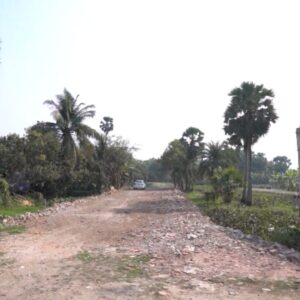
After covering what to check, here is detailed, well‑organized information about Nature’s Paradise, a township project by Rupbasuda Developers, to help you evaluate whether it meets those criteria and whether it might be a good option for you or others.
Project Overview
| Feature | Details |
| Project Name | Nature’s Paradise |
| Developer | Rupbasuda Developers |
| Location | Khariberia, Bhasa, Joka, Kolkata |
| Highway / Road | Along Diamond Harbour Road, National Highway 117 |
| Distance from Joka Metro | Approx 2.6 km |
| Time from Swaminarayan Temple | About 7 minutes |
| Nearby Landmark | Beside Palm Village Resort |
Plot Size, Type & Pricing
| Parameter | Details |
| Spread of Project | ~ 350 bighas of land area |
| Minimum Plot Size | 2 katha minimum purchase |
| Other Sizes Available | 3 katha, 5 katha, and more; no fixed maximum limit specified |
| Types of Plots | Premium & non‑premium; Residential & Commercial |
| Price Range | ₹1,30,000 (1 lakh 30 thousand rupees) up to ₹4,00,000 (4 lakh rupees) depending on plot size, location, type etc. |
Amenities & Infrastructure
| Amenity / Infrastructure | Present or Planned |
| Plot Status | Ready to move plots – so basic land preparation is done |
| Roads | Internal by‑roads of 25 ft & 20 ft; the approach roads being/will be four‑lane |
| Water supply | 24×7 water supply planned / provided |
| Electricity | Electricity connection available / planned |
| Drainage / Sewage | Proper drainage system in place or planned |
| Community & Recreational Facilities | Gymnasium, Clubhouse, Lake, Kindergarten School, Saraswati Temple |
| Transport | 24×7 transportation; metro station planned by end of 2028; nearby railway station etc. |
| Nearby Essential Facilities | Hospitals, Vegetable Market, Shopping Malls, Schools, Colleges just minutes away |
Location Advantages & Growth Potential
- Close proximity (2.6 km) to Joka Metro adds value and future ease of commute.
- Diamond Harbour Road (NH‑117) is a major route; improved highways/roads often lead to value appreciation.
- Many well‑known apartment projects in the vicinity (Emami Astha, Godrej Seven Elevate, Gems Bouganvilla, DTC Sojan, Eden Amantran, Solaris, Rajat by Avante etc.), often priced in crores, which suggests the area is already drawing premium development.
Payment & Booking Terms
| Parameter | Details |
| Booking Token Amount | ₹11,000 required as token booking amount |
| Payment Options | 36 months 0% interest EMI available |
| Developer / Agent | Dedicated Real Estate, with office near Thakurpukur 3A Bus Stand, Kolkata |
Potential Pros & Things to Check
Pros:
- Affordable entry point for middle class — both residential and commercial plots in the stated price range.
- Ready to move status reduces waiting time; some infrastructure already in place.
- Strong potential for appreciation because of upcoming metro, highway road works, location.
- Amenities are planned; community features suggest a self‑contained township rather than isolated plots.
Things you should still verify (using the checklist above):
- Confirm zoning status and whether NA conversion (if needed) has been done.
- Check encumbrance certificate to ensure clear title.
- Ensure all NOCs, permissions, layout plan approvals are legal and in order.
- Physical ground check: slope, drainage, whether land is flood‑prone.
- Exact road access: condition of roads, whether approach to your plot is via public road.
- Surrounding environment: whether neighbouring plots are being developed, quality, types of constructions.
- Utility access and readiness: water, electricity, sewage.
- Confirm any government notifications/plans that may require surrendering land or affect use.
Why This Might Be The Best Time to Buy
- With metro station planned by end of 2028, road improvements, and area being developed, plots may gain significant capital appreciation.
- Since many high‑end projects in the area are already valued in crores, a plot bought now at a few lakh rupees can deliver large value growth in coming years.
- Entry‑level price and flexible payment (0% EMI over 36 months) reduces the financial burden and risk.
How to Proceed (if Interested)
- Arrange a site visit to Nature’s Paradise. Survey multiple plots; compare premium vs non‑premium.
- Bring along a legal expert to verify documents.
- Ask developer / Dedicated Real Estate for copies of title deed, NA conversion (if applicable), EC, layout plan, approved plan, NOCs etc.
- Check the condition of internal roads, availability of utilities.
- Discuss payment schedule, any additional charges.
Contact Details
Dedicated Real Estate
- Phone: +91 6291422636
- Email: info@dedicatedrealestate.in
- Website: www.dedicatedrealestate.in
Office Location: Near Thakurpukur 3A Bus Stand, Kolkata