
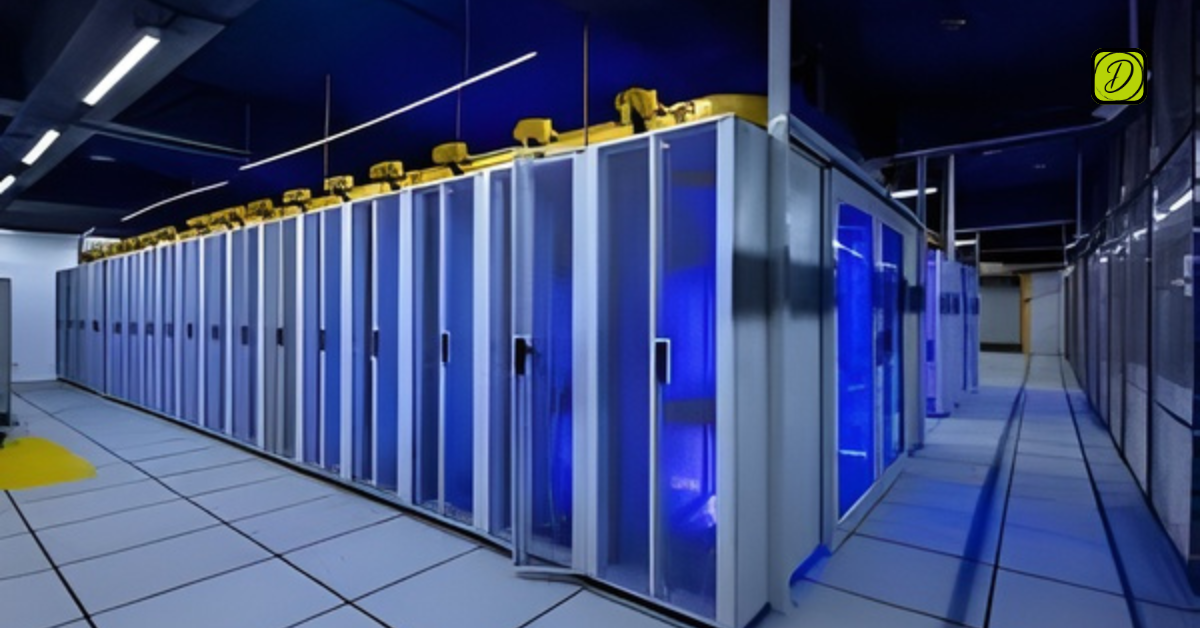
India’s next big real estate story is being quietly written — plug-and-play data centre cities. As the digital economy accelerates, these ready-to-go data centre hubs are emerging as a powerful new class of real estate. The concept of plug-and-play data centres refers to purpose-built, fully equipped facilities — from power and cooling to connectivity — that allow operators to move in quickly and scale efficiently. With surging demand for data, AI workloads, and cloud infrastructure, plug-and-play data centre cities are becoming one of India’s most strategic real estate frontiers.
In this blog post, we’ll explore why plug-and-play data centre cities are a major real estate opportunity, the key drivers behind their rise, where these cities are emerging, the challenges they face, and how investors, developers, and stakeholders can tap into this trend. We’ll also highlight how Dedicated Real Estate, Kolkata’s leading real estate company, is well positioned to participate in this booming segment.
India’s Plug-and-Play Data Centre Cities: Why It’s a Real Estate Revolution
What Are Plug-and-Play Data Centre Cities?
Plug-and-play data centre cities are carefully planned real estate clusters that host large-scale data centre campuses. Unlike traditional data centres that may grow piecemeal, these cities offer “plug-and-play” infrastructure — pre-built buildings, dedicated power, high-capacity cooling, fiber connectivity, and even green power sources — ready for immediate occupancy and expansion. By eliminating much of the lead time and capital risk, they accelerate deployment for hyperscalers, cloud providers, and enterprise users.
The Real Estate Angle: Why These Cities Matter
From a real estate perspective, plug-and-play data centre cities represent a new asset class:
Long-term leases: Data centre operators typically sign long-term leases or power purchase agreements, providing predictability.
Huge land parcels: These clusters require large tracts of land, opening opportunities for developers to monetize greenfield real estate.
High infrastructure intensity: The demand for power, water, cooling, and structured cabling makes these real estate projects capital-intensive but sticky.
Low vacancy risk: Once a plug-and-play campus is built, occupancy tends to ramp up, minimizing speculative risk.
Key Drivers Fueling the Data Centre City Boom
Several interlocking trends are fueling India’s rise of plug-and-play data centre cities:
1. Explosive Digital Demand
India’s digital economy is surging. Enterprises are migrating workloads to the cloud; AI, big data, and IoT adoption are on the rise. This means more demand for scalable, high-density data centre capacity.
2. Favorable Policy & Infrastructure Support
Government recognition of data centres as infrastructure (in some jurisdictions), plus policies encouraging data localization, are making it easier for players to invest in large-scale data centre real estate. Regulatory support, paired with incentives, helps reduce barriers to development.
3. Massive Capital Inflows
Reports suggest that USD 20–25 billion of investment could flow into India’s data centre sector by 2030. Investors are eager to fund plug-and-play campus development, driven by long-term demand visibility.
4. Land Availability & Cost Advantage
Compared to some global data centre hubs, India offers relatively lower land and construction costs, especially in emerging or peri-urban regions. Also, over 500 acres of land were reportedly acquired in 2022 just for data centre development.
5. Energy & Connectivity Infrastructure
Modern data centre cities require not just land, but robust access to power and fiber. India’s improving grid, increasing deployment of renewable energy, and undersea cable landing stations make certain cities especially attractive. Mumbai, for instance, remains a powerhouse.
Emerging Plug-and-Play Data Centre Cities in India
Which Indian cities are leading this real estate wave? A few are especially noteworthy.
Mumbai
Dominant capacity: As of September 2025, Mumbai accounted for 53% of India’s data centre capacity.
Strategic edge: Proximity to submarine cable landing stations and global internet exchange points.
Real estate demand: Given its dominance, Mumbai remains central to plug-and-play campus plans and long-term capacity expansion.
Chennai
A key data centre hub closely behind Mumbai in capacity share.
Growing as a destination for large-scale, AI-ready data centres that can leverage coastal fiber connectivity.
Delhi-NCR & Bengaluru
Delhi-NCR counts for a meaningful share of data centre capacity.
Bengaluru benefits from its deep technology ecosystem and land availability in the periphery, making it a strong candidate for plug-and-play campuses.
Hyderabad & Pune
These cities are emerging in data centre land acquisition and campus development.
They offer a favorable mix of infrastructure, cost, and talent.
Kolkata & Eastern India
According to Savills, Kolkata is projected to have one of the highest capacity growth rates (46% CAGR) among emerging markets by 2030.
The development of plug-and-play campuses in or near Kolkata could unlock a major real estate frontier for data centre real estate developers.
Tier-2 / Edge Cities
Beyond metros, Tier II and Tier III cities like Jaipur, Lucknow, Kochi, Raipur, and Visakhapatnam are gaining attention.
For edge data centre needs — especially for latency-sensitive services — these cities offer cost advantages and proximity to growing user bases.
Real Estate Impact: How Plug-and-Play Data Centre Cities Transform Markets
Transforming Land Markets
Large land parcels — formerly earmarked for industrial or mixed-use real estate — are being reimagined as data centre campuses. Developers can monetize these parcels not just through sale, but via long-term leases to data centre operators, creating a stable income stream.
Infrastructure Upgrades
To serve high-density data centres, supportive infrastructure (power, fiber, water) must be upgraded. This often leads to broader real estate uplift in surrounding areas, as local governments expand grid capacity and road access.
Job Creation & Economic Multipliers
While data centres themselves may not employ massive numbers, they attract related businesses: network providers, maintenance services, hardware vendors, and even edge computing firms. This can drive economic development in host cities.
ESG & Sustainability Potential
Modern data centre campuses emphasize green energy, efficient cooling, and sustainable construction. Real estate developers can embed solar, water recycling, and other eco-friendly features, creating high-value, future-ready assets.
Key Challenges & Risks to Consider
While the outlook is bright, building plug-and-play data centre cities is not without its challenges.
High CapEx Requirements
Building these campuses requires massive upfront capital — land, power infrastructure, cooling, fiber. Partnerships or joint ventures with data centre operators may be necessary to manage risk.
Regulatory & Policy Risks
Although data centre policies are improving, uncertainty remains. Zoning, environmental approvals, and water-use permissions can delay projects. Close alignment with local authorities and clear planning are crucial.
Power & Sustainability Constraints
Data centres consume vast amounts of power. Ensuring a reliable, green supply (renewables or grid) is a major challenge. Developers need to plan for both capacity and sustainability.
Latency & Connectivity Trade-offs
Some Tier-2/3 cities offer cheaper land but may lack high-speed fiber or undersea cable connectivity, making them less attractive for hyperscale players. Balancing cost vs. connectivity is critical.
Competition & Saturation Risk
As the data centre race intensifies, not all planned plug-and-play cities may succeed. Overbuilding in the wrong locations could lead to underutilized real estate.
How Investors & Developers Can Capture the Opportunity
If you’re a real estate investor or developer eyeing the plug-and-play data centre city trend, here are some high-leverage strategies:
Land Procurement Strategy
Target peri-urban or semi-rural land where acquiring large tracts is viable.
Prioritize regions with good power and fiber connectivity.
Partnership Models
Collaborate with data centre operators via joint ventures or lease-back deals.
Offer long-term land leases to ensure stable cash flow.
Green Infrastructure Integration
Invest in renewable energy (solar, wind) on-site to supply data centre campuses.
Incorporate efficient cooling systems (e.g., liquid cooling, free cooling) to reduce energy costs.
Local Engagement & Permitting
Work closely with local governments to secure zoning, environmental clearances, and water rights.
Promote the economic development benefits (jobs, tax revenue) to gain stakeholder buy-in.
Edge Data Centre Focus
Identify underserved Tier-2/3 cities for smaller edge-data centre campuses.
Position these as low-latency hubs for AI inferencing, IoT, and real-time workloads.
ESG Positioning
Use sustainability as a differentiator.
Market plug-and-play campuses as green, future-ready, and aligned with global ESG goals.
Real-World Case Studies & Potential Wins
Mumbai: With 53% of the country’s current data centre capacity, developers investing in plug-and-play campuses here can leverage existing demand.
Chennai: Tech giants and data centre operators are expanding capacity here, making it a strong candidate for large-scale campuses.
Kolkata: Given its projected growth (46% CAGR per Savills), Kolkata is a promising frontier.
Tier-II Cities: Jaipur, Lucknow, Kochi, Raipur — for edge computing and latency-sensitive workloads.
The Role of Dedicated Real Estate in This Boom
Dedicated Real Estate, Kolkata’s number one real estate company, is exceptionally well placed to lead in this emerging segment. With deep local knowledge, access to large tracts of land, and strong relationships with government bodies, Dedicated Real Estate can:
Identify and acquire potential plug-and-play campus sites around Kolkata and eastern India.
Partner with global and domestic data centre operators to design plug-and-play-ready campuses.
Leverage its construction and project management expertise to build sustainable, high-infrastructure data centre facilities.
Position itself as a pioneer in the Eastern India data centre real estate market, capturing value as both a land developer and infrastructure enabler.
Future Outlook: What’s Next for India’s Plug-and-Play Data Centre Cities
Explosive Capacity Growth
India’s data centre capacity is forecast to reach 4,500 MW by 2030, up from ~1,263 MW in April 2025.
That translates into a real estate footprint of ~55 million square feet.
Diversifying Geography
While Mumbai, Chennai, Delhi-NCR, and Bengaluru remain key, expect greater capacity spread to emerging and Tier-II cities.
Kolkata may become a major Eastern hub.
Sustainable Data Centre Cities
Increasing emphasis on renewable energy for data centre campuses.
Adoption of green certifications and advanced cooling systems to reduce environmental impact.
Edge Data Centre Proliferation
Growth of edge data centres in smaller cities to support AI inferencing, real-time analytics, IoT.
Plug-and-play micro-campuses could become common in emerging markets.
Institutional Capital Inflows
More LPs, pension funds, and real estate investment trusts (REITs) may start allocating to data centre city projects.
Joint ventures between real estate firms and tech/data centre operators are likely to deepen.
Conclusion
Plug-and-play data centre cities are not just a technological pivot — they are fast becoming the next big real estate story in India. Riding the wave of digitalization, AI adoption, and cloud migration, these ultra-modern campuses represent a capital-intensive but high-stability opportunity for developers and investors.
As capacity continues to scale — with projections of 4,500 MW by 2030 and a footprint of 55 million sq ft — real estate players who act now can earn a seat at the table of India’s digital future. Among them, Dedicated Real Estate, Kolkata’s number one real estate company, is well positioned to lead and shape this transformation. By aligning with data centre operators, government policies, and sustainability goals, Dedicated Real Estate can help build ready-to-use campuses that will power India’s data-driven economy.
If you’re an investor, developer, or stakeholder ready to explore this frontier, connect with Dedicated Real Estate — Kolkata’s top real estate company — and be part of India’s next big real estate success story.

Contact Details
Dedicated Real Estate
- Phone: +91 6291422636
- Email: info@dedicatedrealestate.in
- Website: www.dedicatedrealestate.in
Office Location: Near Thakurpukur 3A Bus Stand, Kolkata