
When you see plots priced in the market, location is almost always the headline. But if you want to avoid overpaying or make a sound investment, it’s essential to look beyond just location. Many hidden, less obvious factors influence the “true value” of land. This article will walk you through all of them—what to check, what to demand, how to adjust your estimates, plus worked examples so you can apply this to plots you’re eyeing.
Why Location Isn’t Enough
While “location, location, location” is a real estate adage for a reason, relying solely on location can mislead.
Limitations of Buying Based on Location Alone
Plots in prime localities may have legal, infrastructural, or environmental issues that reduce usability.
Two plots in the same neighborhood can have vastly different value if one has better shape, clear title, better soil, access to utilities, etc.
Future growth potential, restrictions, or upcoming infrastructure can shift value, sometimes dramatically.
How Other Factors Can Make or Break Value
These hidden dimensions may affect:
Build‐ability (i.e. what you can build)
Cost of development (e.g. leveling, drainage, obtaining utilities)
Risk (legal, environmental)
Future appreciation or depreciation
So, estimating true value involves combining location plus many other parameters.
Key Non‑Location Factors Affecting Plot Value
Here are the most important variables you should check (and ideally quantify) when estimating true plot value.
Plot Size, Shape & Dimensions
Size (Area)
Larger plots often cost more in total, but per unit area (sq ft, sq m etc.) their price per unit might be lower than smaller plots due to economies of scale.
But larger plots may have subdivision potential, or conversely might be harder to sell wholly.
Shape & Usable Area
A perfectly rectangular or square plot is easier to plan and develops more efficiently (fewer cuts, waste) → higher effective usable area.
Irregular shapes (narrow strips, L‐shapes) reduce usable area; portions may be unusable or require more fencing, road access etc.
Frontage & Road Access
Plot’s frontage on road(s) matters: wider frontage often means better road access, visibility, and sometimes better value.
If a plot is “landlocked” (no direct road access), cost to make access or get Right of Way (ROW) reduces its value.
Terrain, Topography & Soil
Slope and Elevation
Flat land is cheaper to develop; sloped/undulating terrain can add costs for leveling, retaining walls, drainage.
Higher elevation may protect from waterlogging/flooding; but too steep slope may reduce usable area or increase construction costs.
Soil Quality & Sub‐Soil Characteristics
Soil bearing capacity: important for foundation design. If soil is weak (sandy, loose, expansive clay), foundation costs go up.
Soil fertility may matter if plot is used for gardening, green landscaping, or partially for agriculture.
Presence of contaminants (industrial pollution, landfill leachate) drastically reduces value or requires remediation.
Drainage & Water Table
How water drains during heavy rain; whether there is pooling or waterlogging.
High water table might require special foundations, waterproofing etc.
Infrastructure & Utilities Availability
Road Connectivity & Transport Access
Proximity to main roads, highways, bus/metro/train stations adds value.
Condition of internal roads: whether paved, narrow, whether access is blocked in rainy season etc.
Utilities: Water, Electricity, Sewage, Internet
If plot has ready access or connection points for water supply, electricity, sewage/drainage, internet/telecom, that adds significant value. Getting these delivered can cost a lot and/or take long.
Availability of waste management, storm water drainage etc also matter.
Ancillary Amenities & Social Infrastructure
Nearby schools, hospitals, commercial centers, markets, parks, places of worship etc.
Local public services: garbage collection, street lighting, security etc.
Legal Status & Regulatory Constraints
Ownership & Title Clarity
Clear title deeds (no legal disputes, no encumbrances, no overlapping claims) → higher value. If chain of ownership is messy, risk rises, value falls.
Zoning, Land Use & Conversion
Is the plot designated residential, commercial, industrial or agricultural?
If agricultural land needs to be converted (Change in Land Use or CLU) to be usable for residential/commercial, that cost/time/risk reduces value.
Regulatory Approvals & Compliance
Whether plan approvals, NOCs, environment clearances are required; whether they are obtained.
Local building by-laws, Floor Area Ratio (FAR), setbacks, height restrictions. These determine how much you can build and how profitable land is.
Market Conditions & Demand
Comparable Sales (“Comps”)
Looking at recent sales of similar plots in the same or nearby area gives a benchmark. Adjust for differences (size, amenities, shape, utilities etc).
Supply vs Demand Dynamics
If supply of plots is limited but demand is high, prices will be driven up. Conversely, many plots available can push prices down.
Future Infrastructure & Development Plans
Upcoming roads, metro lines, commercial hubs, industrial zones. Even if not existing yet, announcements often influence values.
Government or regional master plans, zoning changes can shift value.
Environmental Risks & Features
Flooding & Waterlogging Risk
Terrain, proximity to rivers/creeks, drainage infrastructure, past history of flooding.
Climate & Natural Hazards
Earthquake risk, soil erosion, seasonal storms, heat exposure etc.
Views, Scenic Features & Green Cover
Plots with good views (hills, water bodies), natural shade, mature trees, green surroundings often command premium over “bare” plots.
Pollution, Noise, and Nuisance
Neighbourhood industrial zones, highways, airports, noisy traffic, or degraded air quality reduce value.
Methods to Quantify / Estimate True Value
Knowing what factors matter is one thing; applying them to produce a realistic valuation is another. Here are methods and tools to help.
Use of Comparable Approach
Collect data of sale prices for similar plots with similar features (size, shape, utilities, legal status).
Adjust for differences: e.g. if your plot lacks electricity from road whereas comparison has it, subtract estimated cost or risk premium.
Cost Approach
Estimate what it would cost to prepare the plot for building (leveling, road, utilities, drainage) + cost of acquiring/building improvements vs depreciation.
Income / Return Approach (for Investment Use)
If plot could be leased or used for commercial/industrial/leisure purposes, you can estimate what return it might generate and work backward to what the plot should cost.
Expert Appraisals & Survey Reports
Hiring local surveyor / property valuation expert helps in getting precise measurements, soil test reports, site condition assessments, local market insight.
Adjusting Value Based on Soft / Intangible Factors
Some factors are harder to quantify but still matter heavily in real world buying decisions.
Perception & Prestige
Neighbourhood reputation, status of nearby developments, how future buyers perceive the area. Often people are willing to pay more for plots in a “good” or “upcoming” area.
Political / Legal Stability & Policy Certainty
Consistent policies, transparent municipal rules, predictable process for approvals. If red tape is high or land laws ambiguous, risk premium applies.
Timing & Negotiation Skills
Market fluctuations, interest rates etc. Buying at right time (low interest rates, low demand) can save. Negotiation (seller’s urgency, payment terms) can alter price.
A Step‑by‑Step Guide: How to Estimate Value for a Specific Plot
Here’s a procedural guide you can follow, along with a hypothetical example, to compute a more realistic value.
Step 1: Gather Data on Plot
Measurements: area, shape, frontage, slope etc.
Utilities/connectivity status.
Legal documents: title, land use, approvals etc.
Environmental features/risks.
Step 2: Collect Comparable Plot Data
Recent sales in same neighbourhood or similar localities.
Note adjustments needed for size, shape, amenities, legal status etc.
Step 3: Estimate Adjustment Costs
How much will you pay to get utilities, convert land use, level land, build access road etc.
Factor in taxes, registration, legal fees.
Step 4: Add Risk Premiums & Additional Value Adders
Risk deductions (if title unclear, flood risk, environmental constraints).
Value adders: views, prestige, future infrastructure, amenities.
Step 5: Arrive at Value Per Unit Area & Total Plot Value
Compute a per square foot/metre rate, after making all adjustment.
Multiply by usable area.
Worked Example: Estimating Values for Two Hypothetical Plots
To make this concrete, let’s run through two sample plots, A and B, in the same city, same general area, but with different features, and see how their value differs beyond location.
Scenario Setup
Both plots are 1,000 sq meters in outskirts of a major city.
They are in same municipal zone, have same distance from central business district (CBD).
Plot A features:
Rectangular shape, front road of 10 meters, electricity, water, sewerage connection ready; slight slope; soil good; title clean; not part of any flood zone; no view; some neighbors have amenities.
Plot B features:
Irregular shape (L‑shape), narrower frontage; road approach is rough; utilities not set up (needs bringing water, electricity); soil is rocky; partly in flood prone area; has view overlooking river; greenery around; title has small legal encumbrance (one old mortgage not yet cleared).
Adjusting Values
You gather comparables around area selling for, say, ₹ 8,000 / sq meter for “good standard plot” similar to Plot A. Then you do the adjustments:
| Feature | Adjustment to Plot A | Adjustment to Plot B |
|---|---|---|
| Utilities ready vs not ready | + premium for A; for B subtract cost of connecting utilities (say ₹ 200,000) | |
| Shape/frontage: rectangular vs L‑shape + narrower front | A no deduction; B reduce per unit by some % (say 5‑10%) | |
| Soil & slope | A slight slope has small deduction; B rocky soil and leveling cost high so heavier deduction | |
| Flood risk | A none; B risk so discount for mitigation cost/risk | |
| View & green surroundings | A none; B premium for view | |
| Legal encumbrance | A clean title; B reduce value for legal risk or cost of clearing title |
After adjusting, maybe Plot A ends up valued at ₹ 8,500 / sq m, while Plot B ends up at ₹ 6,700 / sq m or even less depending on severity of negative features.
How to Use These Insights in Negotiation
Knowing these factors gives you leverage when buying. Here’s how to use them.
Prepare a Comparison Sheet
Show seller your comparables, with adjustments.
Highlight deficiencies of the plot (if any) and quantify what you’d need to spend to mitigate them.
Requesting Discounts or Concessions
For missing utilities, rough road access, irregular shape etc., ask seller to reduce price or share cost.
If title needs clearing, get seller to deal with legal fees or adjust price accordingly.
Timing Your Purchase
Monitor local announcements about infrastructure (roads, metro etc.). Just before such announcement, price may be lower; after, much higher.
Also, buying during slower market times or when interest rates are higher may give bargaining power.
Common Pitfalls & What to Watch Out For
Some mistakes that lead to overpaying / misvaluation.
Overestimating Based on Future Promises
Developers or sellers may promise upcoming infrastructure (metro, mall, road) but without clear timelines or approvals. If delayed, price doesn’t appreciate as expected.
Ignoring Hidden Costs
Taxes, registration, stamp duty, cost of bringing utilities, cost of road access, site leveling—all add up.
Underestimating Legal Risks
Encumbrances, disputed title, unclear ownership history.
Being Swayed by Aesthetics Without Function
View, trees etc are good, but if soil is bad, flooding risk high, shape terrible, these benefits may not compensate.
Conclusion
Estimating true plot value is both art and science. Beyond location, many tangible and intangible factors play roles: size, shape, soil, utility availability, legal title, environmental risks, future demand. The best buyers combine careful inspection, data from comparables, adjustment for risk/costs, and negotiation.
Nature’s Paradise by Rupbasuda Developers — “Ready to Move” Plots

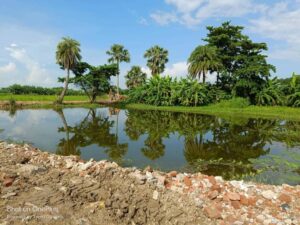

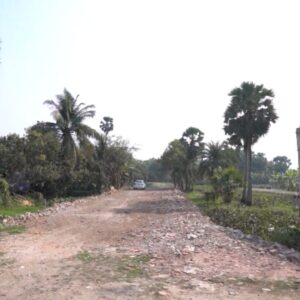
After covering what to check, here is detailed, well‑organized information about Nature’s Paradise, a township project by Rupbasuda Developers, to help you evaluate whether it meets those criteria and whether it might be a good option for you or others.
Project Overview
| Feature | Details |
| Project Name | Nature’s Paradise |
| Developer | Rupbasuda Developers |
| Location | Khariberia, Bhasa, Joka, Kolkata |
| Highway / Road | Along Diamond Harbour Road, National Highway 117 |
| Distance from Joka Metro | Approx 2.6 km |
| Time from Swaminarayan Temple | About 7 minutes |
| Nearby Landmark | Beside Palm Village Resort |
Plot Size, Type & Pricing
| Parameter | Details |
| Spread of Project | ~ 350 bighas of land area |
| Minimum Plot Size | 2 katha minimum purchase |
| Other Sizes Available | 3 katha, 5 katha, and more; no fixed maximum limit specified |
| Types of Plots | Premium & non‑premium; Residential & Commercial |
| Price Range | ₹1,30,000 (1 lakh 30 thousand rupees) up to ₹4,00,000 (4 lakh rupees) depending on plot size, location, type etc. |
Amenities & Infrastructure
| Amenity / Infrastructure | Present or Planned |
| Plot Status | Ready to move plots – so basic land preparation is done |
| Roads | Internal by‑roads of 25 ft & 20 ft; the approach roads being/will be four‑lane |
| Water supply | 24×7 water supply planned / provided |
| Electricity | Electricity connection available / planned |
| Drainage / Sewage | Proper drainage system in place or planned |
| Community & Recreational Facilities | Gymnasium, Clubhouse, Lake, Kindergarten School, Saraswati Temple |
| Transport | 24×7 transportation; metro station planned by end of 2028; nearby railway station etc. |
| Nearby Essential Facilities | Hospitals, Vegetable Market, Shopping Malls, Schools, Colleges just minutes away |
Location Advantages & Growth Potential
- Close proximity (2.6 km) to Joka Metro adds value and future ease of commute.
- Diamond Harbour Road (NH‑117) is a major route; improved highways/roads often lead to value appreciation.
- Many well‑known apartment projects in the vicinity (Emami Astha, Godrej Seven Elevate, Gems Bouganvilla, DTC Sojan, Eden Amantran, Solaris, Rajat by Avante etc.), often priced in crores, which suggests the area is already drawing premium development.
Payment & Booking Terms
| Parameter | Details |
| Booking Token Amount | ₹11,000 required as token booking amount |
| Payment Options | 36 months 0% interest EMI available |
| Developer / Agent | Dedicated Real Estate, with office near Thakurpukur 3A Bus Stand, Kolkata |
Potential Pros & Things to Check
Pros:
- Affordable entry point for middle class — both residential and commercial plots in the stated price range.
- Ready to move status reduces waiting time; some infrastructure already in place.
- Strong potential for appreciation because of upcoming metro, highway road works, location.
- Amenities are planned; community features suggest a self‑contained township rather than isolated plots.
Things you should still verify (using the checklist above):
- Confirm zoning status and whether NA conversion (if needed) has been done.
- Check encumbrance certificate to ensure clear title.
- Ensure all NOCs, permissions, layout plan approvals are legal and in order.
- Physical ground check: slope, drainage, whether land is flood‑prone.
- Exact road access: condition of roads, whether approach to your plot is via public road.
- Surrounding environment: whether neighbouring plots are being developed, quality, types of constructions.
- Utility access and readiness: water, electricity, sewage.
- Confirm any government notifications/plans that may require surrendering land or affect use.
Why This Might Be The Best Time to Buy
- With metro station planned by end of 2028, road improvements, and area being developed, plots may gain significant capital appreciation.
- Since many high‑end projects in the area are already valued in crores, a plot bought now at a few lakh rupees can deliver large value growth in coming years.
- Entry‑level price and flexible payment (0% EMI over 36 months) reduces the financial burden and risk.
How to Proceed (if Interested)
- Arrange a site visit to Nature’s Paradise. Survey multiple plots; compare premium vs non‑premium.
- Bring along a legal expert to verify documents.
- Ask developer / Dedicated Real Estate for copies of title deed, NA conversion (if applicable), EC, layout plan, approved plan, NOCs etc.
- Check the condition of internal roads, availability of utilities.
- Discuss payment schedule, any additional charges.
Contact Details
Dedicated Real Estate
- Phone: +91 6291422636
- Email: info@dedicatedrealestate.in
- Website: www.dedicatedrealestate.in
Office Location: Near Thakurpukur 3A Bus Stand, Kolkata