
Climate change is no longer an abstract concern for distant decades — it is starting to reshape fundamental choices of where and how people live. Among the myriad effects of a changing climate, two stressors in particular — intensifying heat and growing water scarcity — are beginning to play a decisive role in the decisions of homebuyers.
In this article, we explore why climate risk is now a core component of real estate decision-making, how heat and water scarcity influence property valuation, what tools and strategies are emerging, and what homebuyers can already do to protect their investment and well-being.
The Growing Recognition of Climate Risk in Real Estate
From Hidden Cost to Core Concern
Traditionally, real estate buyers considered factors such as location, commute, schools, infrastructure, architectural style, and cost. Over time, considerations like flood zones or earthquake risk crept into the picture. Now, climate risk — once seen as speculative — is becoming part of standard due diligence.
Surveys indicate a rising share of would-be homebuyers now factor climate threats into their decision. For example, a Zillow survey found 83% of buyers consider at least one climate risk when choosing location.
However, awareness does not always translate to action — only a smaller fraction actively change their purchase plans due to climate concerns.
Real estate professionals increasingly see climate risk as a fundamental factor in asset valuation, insurance, and long-term sustainability of housing markets.
Thus, what was once a “soft factor” is now a structural influence on demand, pricing, and financial risk.
Key Climate Stressors: Heat, Drought, Water Stress, and More
While flooding, storms, sea-level rise, and wildfires often receive prime attention, heat stress and water scarcity are silent but powerful forces. They can degrade livability, raise operating costs, stress infrastructure, and even push areas into marginal habitability over time.
Heat stress / extreme heat events: Heat waves are becoming more frequent, intense, and prolonged.
Drought and water scarcity: Regions already under water stress may see worsening supply, groundwater depletion, and increased competition for scarce resources.
Chronic vs acute risk: Some risks are episodic (e.g. storms), but heat and water scarcity often act as chronic pressures— slowly degrading the quality of life, increasing costs, and weakening resilience.
Homebuyers, especially in hotter or drier regions, increasingly want to know whether a property can withstand the long‑term stress of climate change — not just immediate disasters.
Heat Risk and Homebuyer Decision-Making
Thermal Comfort, Energy Costs, and Health Impacts
Heat risk affects people directly — in comfort, health, and pocketbook:
Thermal comfort: In a home without proper shading, insulation, or ventilation, interiors can become stifling in summer. This is more than a nuisance — extreme heat can exacerbate health issues (heat stress, respiratory conditions) especially for vulnerable groups (elderly, children).
Energy costs: Higher cooling loads (air conditioning, fans) raise electricity bills significantly. Over time, this adds a predictable operational cost to homeownership.
Maintenance stress: Repeated high heat, UV exposure, thermal cycling can stress roofing, facades, glazing and HVAC systems, accelerating deterioration and repair needs.
Resale / desirability: Prospective buyers may discount properties perceived as “hot” or uncomfortable without upgrades.
Thus, heat risk has a multifaceted impact — physiological, financial, and long‑term value.
Heat Resilience Features That Buyers Look For
To counter heat risk, savvy buyers (and developers) look for design and systems that help:
Good insulation, thermal mass, and reflective surfaces
Proper shading (trees, overhangs, awnings)
Cross‑ventilation and passive airflow
High-quality glazing / window films / low-E glass
Efficient HVAC systems / heat pumps
Green roofs / cool roofs
Smart sensors, automated ventilation, and climate controls
Renewable energy (solar) to offset higher electricity usage
Homes that integrate these features often command a premium — or at least, more buyer interest in hotter climates.
Water Scarcity, Drought, and Real Estate
Assessing Local Water Risk and Infrastructure
Water scarcity isn’t hypothetical in many regions — it is already a daily reality.
In water-stressed regions, a home’s access to reliable water supply, backup reserves, or water reuse systems can be a deciding factor.
Buyers may demand access to municipal supply capacity, storage, groundwater rights, or borewells.
Infrastructure constraints (pipe capacity, water pressure, treatment) matter just as much. Homes in remote or water-insecure zones may face supply cutoffs or rationing.
In some increasingly competitive markets, developers or neighborhoods impose strict water quotas or restrictions.
Hence, water risk is both about quantity and quality over time.
Water‑Saving Technologies and Design
To mitigate water risk, properties can adopt:
Rainwater harvesting / rooftop capture / cisterns
Greywater recycling / blackwater treatment
Low-flow fixtures, efficient plumbing
Drought‑tolerant landscaping (xeriscaping)
Smart irrigation systems / sensors
Leak detection and water monitoring
Reuse of treated wastewater in certain contexts
Homes incorporating water resilience features are becoming more marketable in areas with water stress, especially as utilities tighten access or pricing.
How Climate Risk Affects Property Valuation, Insurance, and Finance
Insurance Premium Increases & Insurability Constraints
One of the most visible ways climate risk enters the real estate equation is via insurance:
Insurers are raising premiums in high-risk zones or withdrawing coverage entirely in some areas.
Some properties become uninsurable or have limited insurance capacity.
The risk of forced flood or hazard insurance may be imposed by lenders.
The availability, cost, and terms of insurance can shift buyer behavior.
For example, many homes are facing steep premium jumps or difficulty in securing coverage due to climate threats.
Mortgage, Lending, and Capital Markets Considerations
Climate risk is also penetrating the financial side of homebuying:
Lenders may tighten underwriting for properties in high-risk zones, increase interest rates, or require higher down payments.
In regions with frequent disasters or stressed climate conditions, lenders might restrict mortgage eligibility or impose additional disclosures.
On a portfolio level, mortgage-backed securities and real estate funds are beginning to incorporate climate risk into valuation models.
If properties depreciate due to climate stress, there is greater risk of negative equity or foreclosures in vulnerable zones.
Thus, climate risk is becoming a risk underwriting lever in housing finance.
Resale Value, Buyer Sentiment, and Risk Discounting
From an investment viewpoint:
Properties in hotter or drier areas may suffer value discounting over time as buyer preferences shift.
Buyers may factor in future cost of adaptation, maintenance, and insurance when making offers.
If climate risk becomes broadly recognized, demand may shift toward climate-resilient areas, weakening demand in others.
In extreme scenarios, stranded assets could emerge — properties that become uninsurable, severely devalued, or undesirable.
In short, climate risk is increasingly capitalized into property valuation by the market.
Tools & Metrics Homebuyers Can Use to Gauge Climate Risk
Climate Risk Score Models, Mapping Tools, and Disclosure Standards
Fortunately, several tools and frameworks are emerging to help buyers assess climate risk:
First Street, Risk Factor, ClimateCheck, FEMA National Risk Index — mapping tools that score hazards like flood, heat, drought.
Real estate platforms like Zillow have begun embedding climate risk data in property listings (flood, heat, etc.).
ASTM E3429‑24, a new standard for Property Resilience Assessment, is being rolled out to integrate climate risk into real estate due diligence.
Some jurisdictions are exploring climate resilience certificates to standardize risk disclosure in real estate.
Disclosure laws (in some regions) require sellers to inform buyers of known flood or hazard risks.
Using these tools, buyers can identify a home’s exposure to heat stress, water scarcity, flood, drought, and more, both now and under future climate scenarios.
Certified Resilience or Climate‑Smart Home Certifications
Beyond raw data, certifications or labels can signal resilience:
Green building standards (LEED, BREEAM, EDGE, IGBC) often include criteria for passive cooling, energy efficiency, water efficiency.
Resilience certification schemes (proposed or emerging) may include criteria like heat‑resistance, water self-sufficiency, backup systems, building durability.
Developers may market “climate-smart homes” or “resilient homes” to appeal to climate-conscious buyers.
A certified or labeled home provides buyers additional confidence in the home’s preparedness for future climate stress.
Mitigation, Adaptation & Best Practices for Buyers and Developers
Passive Design, Green Infrastructure, and Resilient Systems
To reduce climate vulnerability, homes and communities should be designed with resilience in mind:
Passive architectural strategies (orientation, shading, ventilation)
Green infrastructure (rain gardens, permeable paving, stormwater retention)
Redundant systems (backup water, power, storage)
Durable materials and components designed for heat, UV, moisture stress
Landscape design with native / drought-tolerant species
Energy‑water integration (e.g. solar + water systems)
Smart controls for climate adaptive responses
Buyers who ensure such features in their homes can reduce operational cost and risk exposure.
Policy, Incentives, and Disclosure Frameworks
Resilience doesn’t just happen at the property level — an enabling policy environment is crucial:
Building codes and zoning regulations can mandate climate-resilient features
Tax credits, subsidies or incentives for resilient upgrades (insulation, water systems, solar)
Disclosure laws that force sellers to report climate risks
Municipal resilience planning (water infrastructure, urban heat mitigation, adaptation funding)
Insurance / finance incentives tied to resilience features
These governance levers help shift the market toward climate-ready real estate.
The Role of Governments, Local Regulation, and Building Codes
At a deeper level, governments and regulators can:
Enforce mandatory climate disclosure for property transactions
Integrate climate risk maps into land-use planning
Raise utility resilience (water supply, power grids)
Fund retrofitting in vulnerable neighborhoods
Encourage managed retreat in extremely risky zones
Support research and data transparency on climate impacts
These systemic actions amplify the impact of individual property strategies.
Case Studies & Examples from Around the World
Urban India (Heat, Water Stress)
In India, many cities already compete with extreme heat and water scarcity:
Increasing heat waves reduce thermal comfort, degrade productivity, and raise dependency on cooling systems.
Buyers increasingly favor homes with good insulation, cross-ventilation, green cover, and solar capacity (the “livability premium”).
Recurring urban flooding, drainage failures, and water supply constraints erode property value in risk-prone zones.
Developers in India are beginning to market climate-adaptive homes with rainwater harvesting, efficient plumbing, and drought-resistant landscaping.
In water-stressed Indian states, competition for groundwater and municipal supply can influence whether a property is viable long term.
Thus, India offers a live example where climate risk is advancing from theory to market reality.
U.S. Coastal and Inland Examples
In the U.S., the share of homes at risk of severe or extreme heat exposure in the next 30 years is estimated at 32.5%, affecting an estimated $13.6 trillion in real estate value.
Real estate platforms like Zillow now embed climate risk data (flood, heat, fire) in listings to inform buyers.
Developers have retrofitted design in coastal buildings (e.g. adding flood barriers, higher elevation, wind-resistant structures) to reduce projected losses.
ASTM’s new Property Resilience Assessment (PRA) standard aims to formalize climate risk due diligence in the real estate sector.
These U.S. examples illustrate how climate risk is being operationalized in advanced real estate markets.
Future Outlook: How Climate Risk Will Continue to Shape Homebuying
Scenario Projections and Long-Term Risk
Over the next decades, extreme heat, drought, and erratic rainfall patterns are projected to intensify, shifting climate zones and habitability thresholds.
Properties once considered safe may drift into marginal risk zones as climate baselines shift.
Some areas may become climate refuges — regions cooler, wetter, or with more resilient infrastructure — increasing competition and price pressure in formerly less desirable zones.
Stranded assets may emerge where homes become uninsurable, devalued, or abandoned.
Market Adaptation, Buyer Awareness, and Innovation
Buyer literacy in climate risk will deepen — climate risk scores, disclosure tools, and resilience metrics will become standard.
Developers will increasingly compete on resilience features and market “climate-smart homes.”
Technology and materials innovation (cool materials, adaptive systems, water self-sufficiency) will gain prominence.
Financial instruments (resilience-linked mortgages, insurance discounts for resilient homes) may emerge.
Markets will gradually internalize climate risk into valuation, shifting capital flows to resilient assets.
Thus, climate risk will not remain a niche concern — it will become a core dimension of real estate markets.
Summary & Actionable Checklist for Prospective Homebuyers
Key Takeaways
Climate risk — especially heat and water scarcity — is now a core consideration in homebuying, not a fringe idea.
Heat stress affects comfort, health, maintenance, and resale.
Water scarcity challenges supply, infrastructure, and long-term viability.
Risk is priced via insurance, lending, and buyer sentiment.
Tools, scores, and resilience certifications allow better-informed choices.
Mitigation and adaptation (design, technology, policy) can reduce exposure.
Markets are already evolving — the early movers may benefit.
Checklist for Homebuyers
| What to Check | Why It Matters | Action / Question to Ask |
|---|---|---|
| Local climate projections (heat/drought/flood) | Understand future stress | Use risk maps (First Street, FEMA, ClimateCheck) |
| Insurance availability & premiums | If uninsurable, home is risk | Ask insurers whether coverage is available and cost |
| Water supply reliability | If supply becomes limited, value drops | Check municipal supply, backup, borewell rights |
| Design & resilience features | These reduce operational stress | Look for shading, insulation, efficient systems |
| Disclosure and rating | Transparent risk is better than surprise | Request climate risk disclosure or score |
| Resale trends & buyer sentiment | Future market may penalize high-risk areas | Look for sales in neighboring zones |
| Mitigation scope & upgrade feasibility | Even high-risk homes can adapt | Evaluate retrofit potential (solar, water systems) |
By using this checklist, buyers can reduce the risk of unpleasant surprises and make choices aligned with long-term sustainability.
FAQs (Optional)
Q1. Is climate risk relevant for all geographies, or only extreme zones?
Even in moderate climates, rising heat and intermittent droughts can stress infrastructure, increase costs, and reduce comfort. Over time, risk migration may push new zones into vulnerability.
Q2. Will mitigation features fully eliminate climate risk?
No — mitigation reduces exposure and cost, but some risk always remains. The goal is resilience, not invincibility.
Q3. Are resilience-certified homes always expensive?
They may carry a premium, but operational cost savings, insurance benefits, and demand alignment can offset upfront investment.
Q4. What if I already own a home in a risky area?
You can retrofit with resilience features (shade, insulation, water systems), monitor risk, and stay informed about insurance and regulation changes.
Nature’s Paradise by Rupbasuda Developers — “Ready to Move” Plots

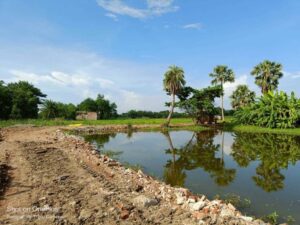

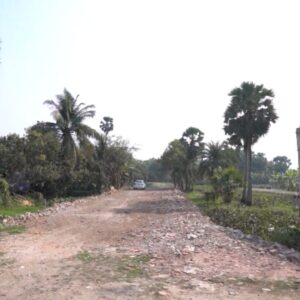
After covering what to check, here is detailed, well‑organized information about Nature’s Paradise, a township project by Rupbasuda Developers, to help you evaluate whether it meets those criteria and whether it might be a good option for you or others.
Project Overview
| Feature | Details |
| Project Name | Nature’s Paradise |
| Developer | Rupbasuda Developers |
| Location | Khariberia, Bhasa, Joka, Kolkata |
| Highway / Road | Along Diamond Harbour Road, National Highway 117 |
| Distance from Joka Metro | Approx 2.6 km |
| Time from Swaminarayan Temple | About 7 minutes |
| Nearby Landmark | Beside Palm Village Resort |
Plot Size, Type & Pricing
| Parameter | Details |
| Spread of Project | ~ 350 bighas of land area |
| Minimum Plot Size | 2 katha minimum purchase |
| Other Sizes Available | 3 katha, 5 katha, and more; no fixed maximum limit specified |
| Types of Plots | Premium & non‑premium; Residential & Commercial |
| Price Range | ₹1,30,000 (1 lakh 30 thousand rupees) up to ₹4,00,000 (4 lakh rupees) depending on plot size, location, type etc. |
Amenities & Infrastructure
| Amenity / Infrastructure | Present or Planned |
| Plot Status | Ready to move plots – so basic land preparation is done |
| Roads | Internal by‑roads of 25 ft & 20 ft; the approach roads being/will be four‑lane |
| Water supply | 24×7 water supply planned / provided |
| Electricity | Electricity connection available / planned |
| Drainage / Sewage | Proper drainage system in place or planned |
| Community & Recreational Facilities | Gymnasium, Clubhouse, Lake, Kindergarten School, Saraswati Temple |
| Transport | 24×7 transportation; metro station planned by end of 2028; nearby railway station etc. |
| Nearby Essential Facilities | Hospitals, Vegetable Market, Shopping Malls, Schools, Colleges just minutes away |
Location Advantages & Growth Potential
- Close proximity (2.6 km) to Joka Metro adds value and future ease of commute.
- Diamond Harbour Road (NH‑117) is a major route; improved highways/roads often lead to value appreciation.
- Many well‑known apartment projects in the vicinity (Emami Astha, Godrej Seven Elevate, Gems Bouganvilla, DTC Sojan, Eden Amantran, Solaris, Rajat by Avante etc.), often priced in crores, which suggests the area is already drawing premium development.
Payment & Booking Terms
| Parameter | Details |
| Booking Token Amount | ₹11,000 required as token booking amount |
| Payment Options | 36 months 0% interest EMI available |
| Developer / Agent | Dedicated Real Estate, with office near Thakurpukur 3A Bus Stand, Kolkata |
Potential Pros & Things to Check
Pros:
- Affordable entry point for middle class — both residential and commercial plots in the stated price range.
- Ready to move status reduces waiting time; some infrastructure already in place.
- Strong potential for appreciation because of upcoming metro, highway road works, location.
- Amenities are planned; community features suggest a self‑contained township rather than isolated plots.
Things you should still verify (using the checklist above):
- Confirm zoning status and whether NA conversion (if needed) has been done.
- Check encumbrance certificate to ensure clear title.
- Ensure all NOCs, permissions, layout plan approvals are legal and in order.
- Physical ground check: slope, drainage, whether land is flood‑prone.
- Exact road access: condition of roads, whether approach to your plot is via public road.
- Surrounding environment: whether neighbouring plots are being developed, quality, types of constructions.
- Utility access and readiness: water, electricity, sewage.
- Confirm any government notifications/plans that may require surrendering land or affect use.
Why This Might Be The Best Time to Buy
- With metro station planned by end of 2028, road improvements, and area being developed, plots may gain significant capital appreciation.
- Since many high‑end projects in the area are already valued in crores, a plot bought now at a few lakh rupees can deliver large value growth in coming years.
- Entry‑level price and flexible payment (0% EMI over 36 months) reduces the financial burden and risk.
How to Proceed (if Interested)
- Arrange a site visit to Nature’s Paradise. Survey multiple plots; compare premium vs non‑premium.
- Bring along a legal expert to verify documents.
- Ask developer / Dedicated Real Estate for copies of title deed, NA conversion (if applicable), EC, layout plan, approved plan, NOCs etc.
- Check the condition of internal roads, availability of utilities.
- Discuss payment schedule, any additional charges.
Contact Details
Dedicated Real Estate
- Phone: +91 6291422636
- Email: info@dedicatedrealestate.in
- Website: www.dedicatedrealestate.in
Office Location: Near Thakurpukur 3A Bus Stand, Kolkata