
Buying a repossessed property—sometimes called a foreclosed or bank‑auctioned property—can be an attractive opportunity. In India, banks and financial institutions often auction properties seized due to loan defaults. But while greater discounts and faster processing are appealing, there are also legal, physical, and logistical risks. This guide walks you through how auctions of repossessed properties work in India, what to check, typical pitfalls, and how to bid smartly.
Why Repossessed Property Auctions Matter
Repossessed or foreclosed properties offer a pathway for buyers and investors to acquire real estate below market value. As non‑performing assets (NPAs) increase, banks and lending institutions are under pressure to recover dues. The auction route is one such tool, governed by laws such as the SARFAESI Act, to enforce security interests.
From being purely investor‑led, there’s a growing interest among end‑buyers who want homes. However, success in such purchases depends heavily on knowing the process and pitfalls.
Legal & Regulatory Framework Governing Repossessed Auctions
Understanding the legal backdrop is essential to avoid surprises.
SARFAESI Act, 2002 – Powers of Secured Creditors
The Securitisation and Reconstruction of Financial Assets and Enforcement of Security Interest (SARFAESI) Act, 2002 allows banks/NBFCs to enforce their security interests in defaulted loans. That means repossession and auction of collateral property without court intervention in many cases.
After a borrower fails to repay EMIs (commonly after three months), banks issue notices under SARFAESI. The borrower gets a chance to respond or make good. If not, the bank proceeds to take possession and then auction.
Other Relevant Laws
Stamp Duty, Registration Laws: Even for auctioned properties, stamp duty and registration fees apply as per state rules. These costs are borne by the buyer.
Consumer Protection and Housing Society Rules: If the property lies within a society, you may need No Objection Certificates (NOCs) and ensure compliance with society bylaws. Utilities and maintenance arrears may be outstanding.
Court Auctions & Civil Procedure Enforcement
Some auctions happen under decrees passed by courts (e.g., under the Code of Civil Procedure) when property is ordered to be sold due to a judgment debt. These follow different rules (CPC Order XXI etc.).
Courts have to notify judgment debtors and other interested parties about the intended sale, permit objections etc.
The Typical Auction Process Step by Step
Here’s a breakdown of how things usually proceed.
Loan Default & Notice Stage
Once a borrower misses EMIs (commonly 3 months or more), the bank classifies the account as an NPA.
Under SARFAESI, the bank issues a default notice giving the borrower time (often 60 days) to pay overdue amounts or respond.
Possession – Symbolic vs Physical
Physical possession means the bank has taken actual, exclusive control of the property. That reduces risk for the buyer.
Symbolic possession indicates the bank has only declared possession or initiated process, but physical possession may still be with borrower or occupant. This may result in delays in actual handover.
Auction Notice & Listing
The bank publishes an auction notice in newspapers and/or on its website, and sometimes on e‑auction aggregator portals. The notice includes basic details: property description, reserve price, time & date of auction, location (or online platform).
The reserve (minimum) price is set, often based on market value, guidance/value by government, condition etc. Sometimes banks allow a discount from market value.
Registration of Bidders & Earnest Money Deposit (EMD)
Prospective bidders must register with the auctioning bank or via auction portal. KYC / identity verification is part of this process.
Then, they pay Earnest Money Deposit (EMD) (often 10‑15% of reserve price) to participate. If they lose, deposit is refunded. If they win but do not fulfil payment obligations, deposit may be forfeited.
The Bidding & Winning Bid Process
Bids are accepted in auction either physically or more commonly now via e‑auctions.
Highest eligible bid above reserve price wins. After the auction, banks usually send confirmation to H1 bidder.
Payment of Balance, Ownership Transfer & Possession
Once you win, you are required to pay the balance (after deducting EMD) within a short timeframe, often 15‑30 days. Failure can lead to forfeiture of deposit.
Properties are generally sold on an “as is where is” / “as is what is” basis, meaning you accept all the defects, dues, encumbrances etc.
After full payment, process of title transfer, registration, stamp duty etc follows. Getting actual physical possession may require legal/eviction proceedings if previous occupants or borrower refuse to vacate.
What Buyers Need to Check Before Participating
To avoid nasty surprises, perform thorough due diligence. Key checks include:
Title & Encumbrance Search (CERSAI, Encumbrance Certificate)
Use CERSAI (Central Registry of Securitisation Asset Reconstruction and Security Interest of India) to see whether the property is hypothecated to multiple lenders.
Get an Encumbrance Certificate (EC) to check for past mortgages, liens, outstanding mortgages, government/municipal dues.
Inspection of Property & Physical Condition
Check physical condition: structural quality, wear & tear, repair needs. Sometimes bank does not permit entry or only symbolic possession, so you may have limited inspection.
Check location, accessibility, surrounding amenities. Any damage, illegal constructions etc.
Legal & Litigation History
Check if there are ongoing court cases, legal challenges by borrow‑ers or third parties.
Prior owner rights / right of redemption: under SARFAESI, borrower sometimes has rights to settle dues or challenge process. Lawsuits may delay or complicate transfer.
Hidden Dues: Property Tax, Society Dues, Utility Bills
Many auction properties have pending dues—municipal tax, electricity, water, maintenance charges in housing societies. These often become buyer’s liability after purchase.
Check whether the property lies in a cooperative society and whether society NOCs have been granted or pending.
Advantages & Risks of Buying Repossessed Properties
Weigh pros and cons before you proceed.
Advantages
Discounted Price: Many repossessed properties are sold at 20‑30% lower than prevailing market value.
Availability of Properties: Banks auction many residential & commercial assets, giving buyers a variety of choices.
Potential for Faster Transaction than regular resale, depending on processes and possession.
Risks
“As is where is” Condition: Buyer takes all defects, structural issues, legal encumbrances without recourse.
Title & Possession Delays: If physical possession hasn’t been taken by the bank, you may need legal action to evict existing occupants. Title issues may also arise.
Hidden Costs: Though bid price may be low, add costs like stamp duty, registration, repair, unpaid dues can eat into savings.
How Much Discount Can One Expect & Pricing Dynamics
Understanding discounts and pricing is necessary to judge whether a lot is actually “good value.”
How Banks Fix Reserve Price & Valuation
Valuation is often conducted by empanelled valuers who consider location, construction quality, age, size, existing condition. Reserve price set accordingly.
Guidance value by state / government authorities, similar nearby transactions also matter.
Typical Discount Ranges vs Market Price
Reports point to discounts of 10‑15% in many e‑auctions when compared to market, sometimes 20‑30% depending on urgency of sale, condition etc.
More discount if property is in poorer condition, has title / possession issues, or in less desirable location.
Additional Costs That Reduce the Discount Benefit
Stamp duty, registration charges, transfer fees
Outstanding dues (tax, maintenance, society etc)
Cost of repairs, renovations
Cost/time of legal processes if possession issue arises
Key Best Practices & Tips for Successful Bidding
To make the most of an auction opportunity.
Arrange Funds in Advance & Understand Payment Timeline
Keep funds ready for EMD and balance payment. Some auctions require 10‑15% deposit immediately, rest within 15‑30 days. Delays can lead to losing deposit.
If taking loan, check whether lenders finance auctioned properties (after verifying title etc).
Use Professional Help: Lawyers, Valuers, Surveyors
Title lawyers can help review documentation, litigation, encumbrance etc.
Valuers or independent property experts can help assess whether quoted price is fair and what value additions or renovation costs may be needed.
Check the Auction Notice Terms & Auction Platform Credibility
Read auction notice carefully: payment schedule, what is included/excluded, any right of redemption, whether possession is physical or symbolic.
Use reputable portals / bank websites. Beware of fake listings / mis‑advertised auctions.
Be Cautious of Possession Delays, Symbolic Possession etc.
Clarify whether bank has physical possession already. If not, past occupants may legally resist handing over.
Recent Trends & Improvements in Auction Processes
Good to know what recent changes are making the process somewhat safer / more transparent.
More banks are using e‑auction platforms to list properties, increasing transparency.
Auction aggregators list multiple banks’ repossessed properties in one place. Easier for buyers to search.
Increased disclosures in auction notices: legal status, past dues, encumbrances are increasingly being required.
Conclusion: Is It Right for You?
Buying a repossessed property at auction can offer attractive discounts and opportunities, but it’s not for everyone. You need to have patience, do your homework, have finances ready, and be comfortable with legal risks and possible delays. If you follow due diligence steps, use expert help, and bid only within your assessed value (after factoring hidden costs), you can make a sound investment.
Nature’s Paradise by Rupbasuda Developers — “Ready to Move” Plots



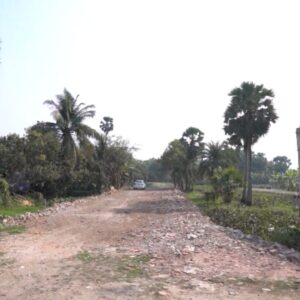
After covering what to check, here is detailed, well‑organized information about Nature’s Paradise, a township project by Rupbasuda Developers, to help you evaluate whether it meets those criteria and whether it might be a good option for you or others.
Project Overview
| Feature | Details |
| Project Name | Nature’s Paradise |
| Developer | Rupbasuda Developers |
| Location | Khariberia, Bhasa, Joka, Kolkata |
| Highway / Road | Along Diamond Harbour Road, National Highway 117 |
| Distance from Joka Metro | Approx 2.6 km |
| Time from Swaminarayan Temple | About 7 minutes |
| Nearby Landmark | Beside Palm Village Resort |
Plot Size, Type & Pricing
| Parameter | Details |
| Spread of Project | ~ 350 bighas of land area |
| Minimum Plot Size | 2 katha minimum purchase |
| Other Sizes Available | 3 katha, 5 katha, and more; no fixed maximum limit specified |
| Types of Plots | Premium & non‑premium; Residential & Commercial |
| Price Range | ₹1,30,000 (1 lakh 30 thousand rupees) up to ₹4,00,000 (4 lakh rupees) depending on plot size, location, type etc. |
Amenities & Infrastructure
| Amenity / Infrastructure | Present or Planned |
| Plot Status | Ready to move plots – so basic land preparation is done |
| Roads | Internal by‑roads of 25 ft & 20 ft; the approach roads being/will be four‑lane |
| Water supply | 24×7 water supply planned / provided |
| Electricity | Electricity connection available / planned |
| Drainage / Sewage | Proper drainage system in place or planned |
| Community & Recreational Facilities | Gymnasium, Clubhouse, Lake, Kindergarten School, Saraswati Temple |
| Transport | 24×7 transportation; metro station planned by end of 2028; nearby railway station etc. |
| Nearby Essential Facilities | Hospitals, Vegetable Market, Shopping Malls, Schools, Colleges just minutes away |
Location Advantages & Growth Potential
- Close proximity (2.6 km) to Joka Metro adds value and future ease of commute.
- Diamond Harbour Road (NH‑117) is a major route; improved highways/roads often lead to value appreciation.
- Many well‑known apartment projects in the vicinity (Emami Astha, Godrej Seven Elevate, Gems Bouganvilla, DTC Sojan, Eden Amantran, Solaris, Rajat by Avante etc.), often priced in crores, which suggests the area is already drawing premium development.
Payment & Booking Terms
| Parameter | Details |
| Booking Token Amount | ₹11,000 required as token booking amount |
| Payment Options | 36 months 0% interest EMI available |
| Developer / Agent | Dedicated Real Estate, with office near Thakurpukur 3A Bus Stand, Kolkata |
Potential Pros & Things to Check
Pros:
- Affordable entry point for middle class — both residential and commercial plots in the stated price range.
- Ready to move status reduces waiting time; some infrastructure already in place.
- Strong potential for appreciation because of upcoming metro, highway road works, location.
- Amenities are planned; community features suggest a self‑contained township rather than isolated plots.
Things you should still verify (using the checklist above):
- Confirm zoning status and whether NA conversion (if needed) has been done.
- Check encumbrance certificate to ensure clear title.
- Ensure all NOCs, permissions, layout plan approvals are legal and in order.
- Physical ground check: slope, drainage, whether land is flood‑prone.
- Exact road access: condition of roads, whether approach to your plot is via public road.
- Surrounding environment: whether neighbouring plots are being developed, quality, types of constructions.
- Utility access and readiness: water, electricity, sewage.
- Confirm any government notifications/plans that may require surrendering land or affect use.
Why This Might Be The Best Time to Buy
- With metro station planned by end of 2028, road improvements, and area being developed, plots may gain significant capital appreciation.
- Since many high‑end projects in the area are already valued in crores, a plot bought now at a few lakh rupees can deliver large value growth in coming years.
- Entry‑level price and flexible payment (0% EMI over 36 months) reduces the financial burden and risk.
How to Proceed (if Interested)
- Arrange a site visit to Nature’s Paradise. Survey multiple plots; compare premium vs non‑premium.
- Bring along a legal expert to verify documents.
- Ask developer / Dedicated Real Estate for copies of title deed, NA conversion (if applicable), EC, layout plan, approved plan, NOCs etc.
- Check the condition of internal roads, availability of utilities.
- Discuss payment schedule, any additional charges.
Contact Details
Dedicated Real Estate
- Phone: +91 6291422636
- Email: info@dedicatedrealestate.in
- Website: www.dedicatedrealestate.in
Office Location: Near Thakurpukur 3A Bus Stand, Kolkata