
In India, owning a home is often the single largest investment most families make. Yet, many homeowners or flat owners overlook or delay securing a proper home insurance policy. As climate change fuels more natural disasters, and risks of fire, theft, and structural damage grow, having the right insurance cover is no longer optional — it’s essential.
However, the kind of property you own—be it a flat in an apartment building or an independent house (standalone)—can influence which insurance covers are relevant, how premiums are computed, and what gaps may remain. In this comprehensive guide, we compare home insurance for flats vs standalone houses in India: what each type of policy typically covers, how insurers value risk differently, cost comparisons, tips to choose smart, and more.
Why Home Insurance Matters in India
Before digging into comparisons, let’s first understand why home insurance is important in India.
Many parts of India are prone to natural hazards: floods, cyclones, earthquakes, landslides, heavy monsoon rains. A severe event can cause structural damage and loss of household goods.
Even fire, electrical short circuits, burst pipes, storms, or vandalism can damage your property or contents.
The cost to rebuild or repair your home or replace contents can be enormous, and without insurance, that burden falls entirely on you.
Premiums for home insurance in India tend to be relatively affordable compared to the sum insured: a rule of thumb is something like ₹0.10 to ₹0.25 per ₹1,000 of sum insured (depending on location, risk, coverage)
Low penetration: home insurance is among the least purchased general insurance in India—its share in the general insurance industry is under 1 %
Sometimes, housing societies (RWAs) or regulatory norms may require a building structure insurance for the entire complex. For instance, recent amendments in cooperative housing society laws make it more common/mandatory for societies to insure common areas.
If you have a home loan, banks may require or strongly recommend you to insure the structure to safeguard their collateral.
Thus, getting the right home insurance is a key step in financial planning and risk protection.
Flats vs Independent Houses: Key Differences from an Insurance Perspective
Owning a flat in a multi-storey apartment building (or a housing society) vs owning an independent standalone house brings practical differences in how insurance plays out. Let’s explore.
Ownership Structure & Insurable Interest
In a flat, often you own only the interior (the “flat unit”) – walls, flooring, interiors, fittings. The external structure, walls, roof, common areas, lifts, staircase, etc., may be under the purview of the housing society or builder. So your insurable interest in structural parts is limited.
In a standalone house, you are the owner of both the structure and the land parcel (though land itself is typically not insurable under home insurance).
Tenants: If you are renting a flat or a house, you cannot typically insure the structure (unless stipulated), but you can insure the contents inside (furniture, appliances, furnishings).
If the housing society purchases a building-level insurance (for structure and common areas), flat owners should check whether that policy is adequate for structural risk; sometimes it is limited, and individual owners may consider adding coverage for their portions.
In many cases, the society’s insurance covers the common areas and external structure, not the interiors of individual flats or contents inside. So flat owners often need a “content / internal cover” policy.
Structural Coverage: What Is Insured
For standalone house: Policies aim to cover the building structure — walls, roof, floors, pillars, beams, doors/windows, plumbing, wiring, permanent fixtures.
For flats: Since structural parts are often covered by the society, your policy may focus on interior finishing, internal partitions, wiring, fixtures, and sometimes a proportionate share of structural damage (if the society’s policy is inadequate).
Insurers allow coverage based on the structural cost or reconstruction cost (termed “reinstatement value”) or sometimes “agreed value” in case of flats.
Land component: Insurance does not cover the land value. The insured sum is based on construction cost, not the market price of the property.
Common Areas, Society / RWA Covers
For flats, the housing society / RWA often procures an insurance policy that covers:
Structure of the building (roof, external shell)
Common areas: lifts, staircases, corridors, clubhouses, gardens, boundary walls, water tanks
Liability for the society (for accidents in common areas)
But that policy may have limitations — e.g. sums insured, deductibles, per-floor coverage, or may exclude certain perils.
Flat owners should verify whether society’s policy is robust. If it’s weak or excludes certain risks, individual flat owners might need separate coverage.
Content / Belongings Coverage
This is similar for both flats and independent houses: coverage for movable assets such as furniture, appliances, electronics, clothes, jewelry, personal effects, etc.
Important nuance: In flats, more risk of theft or burglary because of multiple residents and shared access; so theft cover is often more significant.
Some policies bundle structural + contents; others allow “contents-only” or “structure-only” options.
Add–ons for valuable jewelry, gadgets, portable items may be needed, as standard cover often limits jewelry / valuables coverage.
What Typical Home Insurance Policies in India Cover
Whether for a flat or a house, there are standard covers (mandatory or commonly included) and optional add-ons. Here’s a breakdown.
Fire & Allied Perils
This is the foundational cover in nearly all home insurance policies:
Fire, lightning, explosion, implosion
Impact damage (vehicle collision, falling objects)
Aircraft damage
Riot, strike, malicious damage
Storm, cyclone, tempest, hurricane, flood & inundation (in many policies as “special perils”)
Leakage from automatic sprinkler or pipe burst
Subsidence, landslide, rockslide
Bursting/overflow of water tanks, apparatus & pipes
Some policies include “fire & special perils (SFSP)” or require add-ons for flood/earthquake.
These are core; without them, a policy is of limited use.
Natural Calamities: Flood, Earthquake, Storm
Earthquake cover / tremors / landslide: Often included or available as add-on (sometimes non-guaranteed). Because India has many seismic zones, this is important.
Flood / inundation: In many policies this is optional or part of “special perils.” Particularly relevant in monsoon-prone cities.
Storm, cyclone, wind damage etc.: often part of standard or extended package.
Subsidence / landslide / rockslide: included under many policies as a standard or extra peril.
Theft, Burglary, Vandalism
Damage or loss due to burglary, attempted burglary, theft or housebreaking.
Many policies require “lock & key” or “bolting conditions” for theft claims to be valid.
Sometimes “all-risk” or “all-risk contents” add-on covers theft even outside the premises.
Jewelry, valuables often have sub-limits; sometimes a separate “all-risk jewelry” cover is needed.
Add-Ons / Optional Covers
Here are common optional extensions you may consider:
Personal liability / third-party liability: If your property causes damage or injury to a third party.
Alternate accommodation / rent for temporary stay: If house/flat is uninhabitable after a claim, insurer may pay rent/alternate lodging for a defined period.
Loss of rent cover: for landlords, if tenant cannot pay rent due to property damage.
Bonus protection / no-claim bonus protection
Breakdown of domestic appliances (electrical, mechanical)
Electronic equipment cover / gadgets
Jewelry / valuables (all-risk)
Key replacement, lock repair / replacement
Internal glass / plate glass breakage
Masonry, outdoor fixtures, boundary walls
Employee compensation cover (if you employ help or staff in home)
Policies vary in which add-ons are included vs optional. Always check the schedule.
Differences in Policy Features: Flats vs Independent Houses
While coverage categories may be similar, insurers treat flats and standalone houses differently in terms of valuation, premium computation, loading, and relevance of add-ons.
Valuation Method: Agreed Value vs Reinstatement Value
Reinstatement Value: The cost to rebuild or repair the property without deduction for depreciation. Commonly used for standalone houses.
Agreed Value: A pre-agreed sum between insurer and insured, usually used where valuation is tricky (e.g. flats). In case of total loss, insurer pays the agreed sum. For flats, agreed value is often preferred because the insurer and owner may fix a realistic replacement cost.
Indemnity / Market Value: Less common in home insurance; here depreciation is deducted and you are paid the depreciated value.
For independent houses, reinstatement / reconstruction basis is more standard; for flats, agreed value basis is often more practical.
Premium, Deductibles, Depreciation, Loading
Premium rates depend on location risk (flood zone, seismic zone), construction quality, materials, proximity to fire services, claims history, etc.
Flats can sometimes get better rates if the society’s structural insurance is robust.
Standalone houses in isolated or risk-prone areas may attract higher premium loading.
Deductibles (i.e. the portion you bear) may differ.
Depreciation applies to contents or non-structural components unless new-for-old clause is opted.
Insurers may impose loading (extra premium) for specific features or risk factors (e.g. older buildings, wooden structures, poor maintenance).
Add-On Relevance by Property Type
In flats, theft / burglary cover, contents cover, lock & key replacement, all-risk jewelry are more important.
In independent houses, external structure, boundary walls, outdoor fixtures, land slope, flood risk are more critical.
Alternate accommodation and loss of rent cover may matter more in independent houses where you’d incur large costs to live elsewhere during repairs.
Cost Comparison & Premium Estimation
Let’s compare with illustrative numbers and discuss how cost is determined.
A rough benchmark: premium may be ~ ₹0.10 to ₹0.25 per ₹1,000 of sum insured for basic coverage.
For example: If you insure a home for ₹50 lakh (structure + contents), the annual premium might fall between ₹5,000 to ₹12,500 (depending on location, risk, add-ons).
Independent house in a flood zone may attract significantly higher premium.
Many insurers offer multi-year policies at discounted rates (e.g. 2-year, 3-year).
In policylo (insurance aggregator), a home package (flat or individual dwelling) with ₹18 lakh sum insured might cost ≈ ₹1,500 per year for basic cover (with add-ons) in a safe area (this is illustrative)
For a flat, the premium may be lower if structural cover is partly borne by society.
On the flip side, if your location is high-risk (coastal, flood zone, earthquake zone), premium could surge.
When comparing quotes, ensure you’re comparing apples to apples (same perils, same deductibles, same sum insured, same add-ons).
How to Choose the Right Policy (Checklist)
Choosing a good home insurance requires careful evaluation. Here’s a checklist:
Assess Your Risks & Location
Is your area flood-prone, earthquake-prone, cyclone risk area?
Proximity to fire station, water sources, susceptibility to landslides, drainage issues.
Crime rate, burglary risk in your neighborhood.
Age of building, quality of construction, maintenance condition.
Sum Insured / Valuation Calculation
For structure: compute reconstruction cost (per sq ft cost × built-up area), not market value.
For contents: list valuables, electronics, furniture, gadgets, estimate their replacement cost.
For flats, estimate your interior portion and add proportionate structural share if needed.
Include inflation escalation if possible (many policies allow 5–20 % annual escalation).
Choose a buffer; underinsurance leads to claim shortfall.
Read Exclusions, Conditions & Clauses
Common exclusions: wear & tear, depreciation, willful neglect, war, nuclear risk, insect/termite damage, gradual deterioration.
Check conditions like “bolting condition” (for theft cover), “maintenance clause”, “sum insured clause”, “co‑insurance clause.”
Understand what perils are excluded or optional.
Check the policy wording for “average clause” (if under-insured, claim is proportionally reduced).
Multi-year vs Annual Policies
Multi-year policies often give discounts and protect you from premium hikes in interim years.
But ensure the insurer is stable; sometimes, short-term gives more flexibility.
Also check renewal terms, increase options, and bonus accumulation.
Compare Multiple Insurers & Read Reviews
Use online platforms / aggregators to compare cover features and premiums.
Check claim settlement ratio, reviews, financial strength, reputation.
Ask for item-wise quote (structure cover, contents, add-ons separately) and compare.
Additional Tips
Opt for “new-for-old” cover for contents, if affordable.
Ensure proper security features (locks, burglar alarms); insurers sometimes give discounts.
Maintain regular maintenance — neglected buildings / plumbing leaks may invite refusal of claims.
Document everything: receipts, photographs of property, inventory list.
Keep museum grade items, rare artifacts in separate cover if needed.
Claim Process, Pitfalls & Tips
Having insurance is good — getting your claim settled is where many run into problems. Here’s guidance.
Documentation & Proof
Immediately notify insurer when loss/damage happens (within stipulated time).
File FIR (if required for theft, burglary).
Submit broken item photos, proof of purchase, forensic reports, police report (if relevant).
Surveyor visits: allow and cooperate.
Keep receipts/invoices and inventory lists handy.
Common Reasons for Claim Rejection
Underinsurance: if sum insured is too low (average clause invoked).
Neglect / poor maintenance: i.e. damage due to internal leakage, seepage, rust, termite damage, etc., is often excluded.
Excluded peril: damage due to a peril not covered in policy.
Non-compliance of policy conditions: e.g. no bolting, lock requirements not met, failure to maintain alarm system.
Delay in intimation or documentation
Fraud / misrepresentation
Wear and tear / depreciation for which insurer claims to not cover.
Maintenance, Wear & Tear, Depreciation
Insurance does not cover damage from gradual deterioration, rust, mold, seepage, termite, wear & tear.
Depreciation is usually applied to contents unless “new for old” clause is activated.
If a structure is in bad repair, insurer may argue contributory negligence.
Tips to Avoid Claim Rejection
Keep records, photographs, maintenance logs.
Adhere strictly to lock/bolting/security requirements.
Carry out preventive measures (fire alarms, smoke detectors).
Disclose accurate information to insurer (age, construction type, flood history).
Don’t delay claims reporting.
Case Scenarios & Examples
Let’s run a few example scenarios to illustrate differences and decisions:
Scenario 1: Flat in a Society in a Flood-Prone City
Society has structural insurance, but the sum insured is modest.
Flat owner buys content + interior plus a small structural “top-up” cover.
Add-on of theft protection, alternate accommodation.
Use agreed-value basis for the flat.
Scenario 2: Independent House in a Hilly Area
You need full structural + contents cover.
Key add-ons: landslide, earthquake, flood, slope movement.
Use reinstatement value plus inflation escalation.
Higher premium loading due to terrain risk.
Scenario 3: Tenant Renting a Flat
You don’t own the structure, so you only insure contents / personal belongings.
Add third-party liability, theft cover, gadget cover, etc.
Scenario 4: Older Building / Heritage Style House
Certain materials (wood, old beams) may attract special loading or exclusions.
You may need to specify heritage/non-standard materials so insurer can assess.
These examples show how features and needs differ depending on property type.
Conclusion & Recommendation
Insuring your home is a key step in safeguarding your biggest asset. But blanket assumptions (flat = low cost, house = high cost) aren’t always correct. The type of property, location, construction quality, risk factors, and policy features make a huge difference.
Here’s a quick takeaway:
If you own a flat, check the society’s structural cover, and complement it with an interior + contents policy.
For independent houses, you’ll need fuller structural insurance plus all relevant add-ons (earthquake, flood etc.).
Always compute sum insured based on reconstruction cost, not market value.
Compare multiple insurers, scrutinize exclusions, ensure compliance with policy terms.
Regular maintenance, documentation, and timely claims filing are key to successful claim settlement.
Nature’s Paradise by Rupbasuda Developers — “Ready to Move” Plots



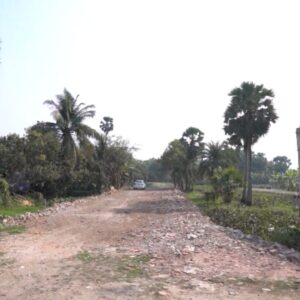
After covering what to check, here is detailed, well‑organized information about Nature’s Paradise, a township project by Rupbasuda Developers, to help you evaluate whether it meets those criteria and whether it might be a good option for you or others.
Project Overview
| Feature | Details |
| Project Name | Nature’s Paradise |
| Developer | Rupbasuda Developers |
| Location | Khariberia, Bhasa, Joka, Kolkata |
| Highway / Road | Along Diamond Harbour Road, National Highway 117 |
| Distance from Joka Metro | Approx 2.6 km |
| Time from Swaminarayan Temple | About 7 minutes |
| Nearby Landmark | Beside Palm Village Resort |
Plot Size, Type & Pricing
| Parameter | Details |
| Spread of Project | ~ 350 bighas of land area |
| Minimum Plot Size | 2 katha minimum purchase |
| Other Sizes Available | 3 katha, 5 katha, and more; no fixed maximum limit specified |
| Types of Plots | Premium & non‑premium; Residential & Commercial |
| Price Range | ₹1,30,000 (1 lakh 30 thousand rupees) up to ₹4,00,000 (4 lakh rupees) depending on plot size, location, type etc. |
Amenities & Infrastructure
| Amenity / Infrastructure | Present or Planned |
| Plot Status | Ready to move plots – so basic land preparation is done |
| Roads | Internal by‑roads of 25 ft & 20 ft; the approach roads being/will be four‑lane |
| Water supply | 24×7 water supply planned / provided |
| Electricity | Electricity connection available / planned |
| Drainage / Sewage | Proper drainage system in place or planned |
| Community & Recreational Facilities | Gymnasium, Clubhouse, Lake, Kindergarten School, Saraswati Temple |
| Transport | 24×7 transportation; metro station planned by end of 2028; nearby railway station etc. |
| Nearby Essential Facilities | Hospitals, Vegetable Market, Shopping Malls, Schools, Colleges just minutes away |
Location Advantages & Growth Potential
- Close proximity (2.6 km) to Joka Metro adds value and future ease of commute.
- Diamond Harbour Road (NH‑117) is a major route; improved highways/roads often lead to value appreciation.
- Many well‑known apartment projects in the vicinity (Emami Astha, Godrej Seven Elevate, Gems Bouganvilla, DTC Sojan, Eden Amantran, Solaris, Rajat by Avante etc.), often priced in crores, which suggests the area is already drawing premium development.
Payment & Booking Terms
| Parameter | Details |
| Booking Token Amount | ₹11,000 required as token booking amount |
| Payment Options | 36 months 0% interest EMI available |
| Developer / Agent | Dedicated Real Estate, with office near Thakurpukur 3A Bus Stand, Kolkata |
Potential Pros & Things to Check
Pros:
- Affordable entry point for middle class — both residential and commercial plots in the stated price range.
- Ready to move status reduces waiting time; some infrastructure already in place.
- Strong potential for appreciation because of upcoming metro, highway road works, location.
- Amenities are planned; community features suggest a self‑contained township rather than isolated plots.
Things you should still verify (using the checklist above):
- Confirm zoning status and whether NA conversion (if needed) has been done.
- Check encumbrance certificate to ensure clear title.
- Ensure all NOCs, permissions, layout plan approvals are legal and in order.
- Physical ground check: slope, drainage, whether land is flood‑prone.
- Exact road access: condition of roads, whether approach to your plot is via public road.
- Surrounding environment: whether neighbouring plots are being developed, quality, types of constructions.
- Utility access and readiness: water, electricity, sewage.
- Confirm any government notifications/plans that may require surrendering land or affect use.
Why This Might Be The Best Time to Buy
- With metro station planned by end of 2028, road improvements, and area being developed, plots may gain significant capital appreciation.
- Since many high‑end projects in the area are already valued in crores, a plot bought now at a few lakh rupees can deliver large value growth in coming years.
- Entry‑level price and flexible payment (0% EMI over 36 months) reduces the financial burden and risk.
How to Proceed (if Interested)
- Arrange a site visit to Nature’s Paradise. Survey multiple plots; compare premium vs non‑premium.
- Bring along a legal expert to verify documents.
- Ask developer / Dedicated Real Estate for copies of title deed, NA conversion (if applicable), EC, layout plan, approved plan, NOCs etc.
- Check the condition of internal roads, availability of utilities.
- Discuss payment schedule, any additional charges.
Contact Details
Dedicated Real Estate
- Phone: +91 6291422636
- Email: info@dedicatedrealestate.in
- Website: www.dedicatedrealestate.in
Office Location: Near Thakurpukur 3A Bus Stand, Kolkata