
Every Indian dreams of a safe, permanent, dignified home. But with rising real estate prices, urbanization pressures, and rural constraints, many find it unaffordable. That’s where government housing subsidy schemes play a critical role. But which schemes apply where? How do you benefit? This guide deciphers central and state-level housing subsidies in India in 2025, with state-wise nuances and tips to help you navigate the system.
Why Government Subsidies for Housing Matter
Housing Shortage & Affordability Challenge in India
India faces a severe housing shortage, especially in urban and low-income segments. Rapid migration, informal settlements, slums, and rising land costs make formal housing inaccessible to many. This gap is more glaring in Tier‑II/Tier‑III cities and in remote rural pockets.
Role of Subsidies in Bridging the Gap
Subsidies help reduce the financial burden by lowering interest costs or providing direct grants. They make home loans affordable for EWS (Economically Weaker Sections) and LIG (Low Income Group), encourage developers to build affordable housing, and allow rural households to move from kutcha to pucca homes. Without subsidies, the home ownership rate for vulnerable groups would remain out of reach.
Major Central Housing Subsidy Schemes in India
At the national level, several flagship housing schemes exist to encourage affordable housing across urban and rural India.
Pradhan Mantri Awas Yojana – Urban (PMAY‑U)
Launched in 2015 under the “Housing for All by 2022” mission, PMAY‑U is the central pillar of urban housing subsidy efforts.
Key Components (CLSS, ISSR, AHP, BLC)
PMAY‑U is organized under four verticals:
Credit Linked Subsidy Scheme (CLSS): interest subsidy on home loans for eligible beneficiaries to buy or build a house.
In Situ Slum Redevelopment (ISSR): redevelop slums using land as resource, with assistance.
Affordable Housing in Partnership (AHP): incentives to public/private developers if part of their project is earmarked for EWS.
Beneficiary‑Led Construction / Enhancement (BLC): subsidy to individual households to build or enhance homes on their own land.
Eligibility Criteria & Income Limits
Eligibility is pegged to income categories:
EWS: annual household income up to ₹ 3 lakh
LIG: income ₹ 3–6 lakh
MIG‑I: ₹ 6–12 lakh
MIG‑II: ₹ 12–18 lakh
Other conditions include not owning a pucca house anywhere in India for the beneficiary, having family (spouse, children) as per norms, property size limits etc.
How the Subsidy Works – Rate & Tenure
For EWS / LIG, interest subsidy is 6.5% on home loans (for specified quantum).
MIG‑I: 4% subsidy
MIG‑II: 3% subsidy
This subsidy is passed to the bank / lending institution upfront, reducing your EMI burden. The scheme typically works for up to 20 years or the loan tenure (whichever is lower).
States / Cities Covered & Variation
PMAY‑U is nationwide, but implementation varies by state and city municipal corporations. Some states offer additional top-up subsidies or have their own housing missions. Also, in PMAY‑U 2.0 launched in 2024, the central government aims to build 1 crore more affordable houses over five years.
Note: The deadline to complete houses under earlier PMAY‑U mandates was extended to December 31, 2025.
Pradhan Mantri Awas Yojana – Gramin (PMAY‑G)
The rural counterpart to PMAY‑U, PMAY‑G (also called PMAY‑R) targets rural housing. It was launched on April 1, 2016.
Benefits, Grant Amounts & Regions
Under PMAY‑G, beneficiaries in plain areas receive a grant of ₹ 1.20 lakh, while in hilly or difficult regions (NE states, J&K, Uttarakhand etc.) the assistance is ₹ 1.30 lakh.
The scheme is extended up to 2028–29, with a goal of constructing additional 2 crore homes.
Eligibility & Implementation
Beneficiaries are identified via the Socio-Economic and Caste Census (SECC) data, and lists are often validated by Gram Sabhas.
They should own no pucca house, and must have a house in a dilapidated or kutcha condition.
States / UTs share cost ratios (for example, 60:40 in plain areas, 90:10 in Himalayan / NE / special states) for funding.
Some states might add extra incentives or integrate with rural development / sanitation programs.
How to Avail in Rural Areas
Check if your name is in the SECC list or state/Gram Sabha list
Submit application via Panchayat / state rural development portal
Provide identity, land ownership, address, etc.
Verification and sanction
Funds disbursed in installments as construction proceeds
Interest Subsidy Scheme for Housing Urban Poor (ISHUP) & Other Central Programs
In addition to PMAY components, there is a scheme called Interest Subsidy Scheme for Housing the Urban Poor (ISHUP), offering interest subsidy to EWS/LIG in urban areas to buy or build homes.
Though ISHUP is less in public discussion now (many of its functions merged into CLSS / PMAY structures), it remains relevant in some cities.
Also, newer programs like Rental Housing for Industrial Workers (announced in 2024) provide viability gap funding to states, using PPP models to build affordable rental housing for industrial workers.
And with PMAY‑U 2.0, there is fresh impetus and funding for expanding affordable housing in urban India.
State‑Level / Local Housing Subsidy Schemes (State-wise Examples)
Central schemes cover all states, but many states supplement or run their own housing missions. These state-level schemes often fill gaps in central coverage.
Telangana Double Bedroom Housing Scheme
Telangana’s Double Bedroom Housing Scheme (2BHK free homes) is a flagship program aimed to provide two-bedroom flats to the urban poor free of cost.
It targets slum dwellers, those without homes, and aims to remove slums in cities like Hyderabad.
Andhra Pradesh INDIRAMMA
INDIRAMMA (Integrated Novel Development In Rural Areas and Model Municipal Areas) is a mass housing scheme in Andhra Pradesh.
It provides funds to BPL families in rural and urban areas for construction. The support amounts vary over time; earlier the support ranged from ₹ 45,000 to ₹ 80,000, and SC/ST families had special support.
State Housing Boards & Additional Subsidies
Many states run housing boards or slum rehabilitation missions. For example:
State Urban Development Authorities may offer subsidised lots or plots with concessional interest rates
Some states top up central subsidies with additional state grants
Some states have schemes to provide houses to SC/ST / OBC / economically backward categories beyond central schemes
Other State Special Schemes
Examples include:
Free housing for widows / women-headed households
Slum clearance & redevelopment with relocation
Subsidy schemes for disaster-affected housing
Special development zones or regional housing funds
You should research the housing department portal of your state to get up-to-date scheme names and parameters.
Applicability by Region / Urban vs Rural – Which Scheme Fits You
To know which scheme applies to you, understand your location and housing condition.
If You Live in an Urban Area / City Limits
You are likely eligible for PMAY‑U / CLSS subsidy (if within income limits and other conditions).
If you live in a slum, the ISSR component might apply.
If your state has its own urban housing program, you may take advantage of both.
Check whether your city municipality / smart city authority is included in PMAY coverage.
If You Live in Rural / Village / Hilly / Tribal Regions
PMAY‑G is directly applicable to you (if you qualify).
If your district is in a hilly / difficult terrain, higher grant (₹ 1.30 lakh) may apply.
Your Gram Sabha / Panchayat is often the first point of verification and application.
Special Cases – Slums, Informal Settlements, Resettlement Zones
For slum dwellers in cities, the ISSR vertical under PMAY‑U is meant to help with rehabilitation / redevelopment.
If you are being relocated for development projects, urban resettlement policies often use a mix of central + state support.
Some states have separate slum redevelopment agencies with additional incentives.
Step‑by‑Step: How to Apply for Housing Subsidy Schemes
Check Eligibility & Income Proof
Ensure your annual household income falls under the relevant slab (EWS / LIG / MIG).
Confirm you do not own a “pucca” house anywhere in India (as per scheme norms).
Check the SECC / Gram Sabha list (for rural) or municipal beneficiary list (for urban).
Gather identity proof, address, land documents (if applicable), income proof, bank account, Aadhaar, etc.
Select the Relevant Scheme (PMAY‑U / PMAY‑G / State Scheme)
If you are in a city, your first preference is PMAY‑U / CLSS.
If you’re rural, PMAY‑G is more relevant.
In states with their own housing missions, check whether stacking state scheme with central scheme is allowed.
Application Process (Online / Offline) & Documents Required
Many states / central schemes allow online application via websites (PMAY MIS portal, state housing portals).
Alternatively, offline application via municipal / housing authority / Panchayat is possible.
Submit necessary documents: identity, land ownership (if building), address proof, Aadhaar, income certificate, photographs, etc.
For CLSS, the bank / lending institution plays a role in processing subsidy claims.
Post‑Approval, Verification, Disbursement & Monitoring
Once approved, physical verification / site inspection may occur.
Funds are released in phases (e.g. foundation, walls, roof) depending on scheme rules.
For CLSS, subsidy is credited to the lender / loan account.
Beneficiaries should track progress, use geo‑tagging or photos (some states require).
Common Challenges, Pitfalls & How to Mitigate
Delays in Fund Release & Bureaucratic Hurdles
Frequent delays in subsidy release are common due to administrative bottlenecks, state delays, banking claims issues, or verification lag.
Mitigation: follow up regularly, work with local officials, keep documentation ready, use RTI if necessary.
Scheme Misuse, Ineligible Claims & Fraud
Some applications get approved even if criteria are not met. Conversely, deserving applicants may get rejected due to minor discrepancies.
Mitigation: maintain accurate records, provide correct information, verify your name in published lists, lodge grievances if unfairly rejected.
Differences Among States, Fund Sharing, Mismatches
Because states have different fiscal capacities and priorities, central scheme adoption and top-up vary.
Mitigation: check your state’s housing mission site, study local rules, see if state-level support exists beyond central schemes.
Tips & Best Practices for Maximizing Your Benefit
Apply sooner rather than later — many schemes have timelines, deadlines, or finite funds.
Stay updated on new launches — e.g., PMAY‑U 2.0, rental housing schemes etc.
Stack benefits carefully — if state + central stacking is allowed, take full advantage.
Ensure correct documentation — missing docs often cause rejection.
Follow up on progress & demand transparency — use online tracking / RTI as needed.
Use photo / geo-tagging / monitoring mechanisms — many states require it now.
Be cautious of middlemen — many people pay brokers unnecessarily; most schemes allow direct access.
Future Trends & Reforms in Housing Subsidies
PMAY‑U 2.0 will shift focus to new urban affordable houses and may expand subsidy frameworks.
More rental housing models (PPP / VGF) are expected to scale.
Use of technology: GIS / geo-mapping / mobile apps for beneficiary identification and monitoring.
Green / sustainable housing incentives for energy-efficient homes may be integrated.
Greater decentralization and state innovation may lead to customized subsidy models.
Conclusion & Key Takeaways
Subsidy schemes for housing in India are powerful tools to make home ownership or improvement accessible. The central schemes (PMAY‑U, PMAY‑G, CLSS) offer broad coverage, while state-level plans fill local gaps. Which scheme applies to you depends largely on where you live (urban / rural / special terrain), your income bracket, your housing status (slum / existing structure / new construction), and your state’s policies.
To benefit:
Check eligibility carefully
Pick the right scheme
Apply properly with all documents
Monitor the process and be persistent
With the right knowledge and approach, a government‑backed roof over your head is not just a dream — it can become a reality.
Nature’s Paradise by Rupbasuda Developers — “Ready to Move” Plots
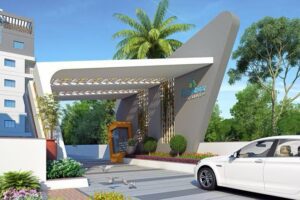
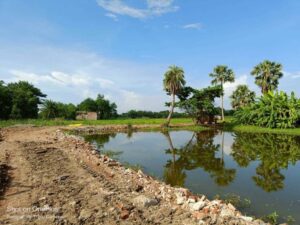

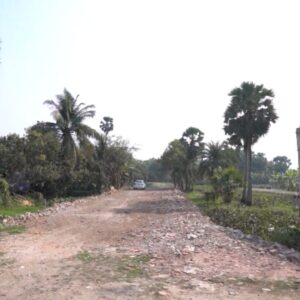
After covering what to check, here is detailed, well‑organized information about Nature’s Paradise, a township project by Rupbasuda Developers, to help you evaluate whether it meets those criteria and whether it might be a good option for you or others.
Project Overview
| Feature | Details |
| Project Name | Nature’s Paradise |
| Developer | Rupbasuda Developers |
| Location | Khariberia, Bhasa, Joka, Kolkata |
| Highway / Road | Along Diamond Harbour Road, National Highway 117 |
| Distance from Joka Metro | Approx 2.6 km |
| Time from Swaminarayan Temple | About 7 minutes |
| Nearby Landmark | Beside Palm Village Resort |
Plot Size, Type & Pricing
| Parameter | Details |
| Spread of Project | ~ 350 bighas of land area |
| Minimum Plot Size | 2 katha minimum purchase |
| Other Sizes Available | 3 katha, 5 katha, and more; no fixed maximum limit specified |
| Types of Plots | Premium & non‑premium; Residential & Commercial |
| Price Range | ₹1,30,000 (1 lakh 30 thousand rupees) up to ₹4,00,000 (4 lakh rupees) depending on plot size, location, type etc. |
Amenities & Infrastructure
| Amenity / Infrastructure | Present or Planned |
| Plot Status | Ready to move plots – so basic land preparation is done |
| Roads | Internal by‑roads of 25 ft & 20 ft; the approach roads being/will be four‑lane |
| Water supply | 24×7 water supply planned / provided |
| Electricity | Electricity connection available / planned |
| Drainage / Sewage | Proper drainage system in place or planned |
| Community & Recreational Facilities | Gymnasium, Clubhouse, Lake, Kindergarten School, Saraswati Temple |
| Transport | 24×7 transportation; metro station planned by end of 2028; nearby railway station etc. |
| Nearby Essential Facilities | Hospitals, Vegetable Market, Shopping Malls, Schools, Colleges just minutes away |
Location Advantages & Growth Potential
- Close proximity (2.6 km) to Joka Metro adds value and future ease of commute.
- Diamond Harbour Road (NH‑117) is a major route; improved highways/roads often lead to value appreciation.
- Many well‑known apartment projects in the vicinity (Emami Astha, Godrej Seven Elevate, Gems Bouganvilla, DTC Sojan, Eden Amantran, Solaris, Rajat by Avante etc.), often priced in crores, which suggests the area is already drawing premium development.
Payment & Booking Terms
| Parameter | Details |
| Booking Token Amount | ₹11,000 required as token booking amount |
| Payment Options | 36 months 0% interest EMI available |
| Developer / Agent | Dedicated Real Estate, with office near Thakurpukur 3A Bus Stand, Kolkata |
Potential Pros & Things to Check
Pros:
- Affordable entry point for middle class — both residential and commercial plots in the stated price range.
- Ready to move status reduces waiting time; some infrastructure already in place.
- Strong potential for appreciation because of upcoming metro, highway road works, location.
- Amenities are planned; community features suggest a self‑contained township rather than isolated plots.
Things you should still verify (using the checklist above):
- Confirm zoning status and whether NA conversion (if needed) has been done.
- Check encumbrance certificate to ensure clear title.
- Ensure all NOCs, permissions, layout plan approvals are legal and in order.
- Physical ground check: slope, drainage, whether land is flood‑prone.
- Exact road access: condition of roads, whether approach to your plot is via public road.
- Surrounding environment: whether neighbouring plots are being developed, quality, types of constructions.
- Utility access and readiness: water, electricity, sewage.
- Confirm any government notifications/plans that may require surrendering land or affect use.
Why This Might Be The Best Time to Buy
- With metro station planned by end of 2028, road improvements, and area being developed, plots may gain significant capital appreciation.
- Since many high‑end projects in the area are already valued in crores, a plot bought now at a few lakh rupees can deliver large value growth in coming years.
- Entry‑level price and flexible payment (0% EMI over 36 months) reduces the financial burden and risk.
How to Proceed (if Interested)
- Arrange a site visit to Nature’s Paradise. Survey multiple plots; compare premium vs non‑premium.
- Bring along a legal expert to verify documents.
- Ask developer / Dedicated Real Estate for copies of title deed, NA conversion (if applicable), EC, layout plan, approved plan, NOCs etc.
- Check the condition of internal roads, availability of utilities.
- Discuss payment schedule, any additional charges.
Contact Details
Dedicated Real Estate
- Phone: +91 6291422636
- Email: info@dedicatedrealestate.in
- Website: www.dedicatedrealestate.in
Office Location: Near Thakurpukur 3A Bus Stand, Kolkata