
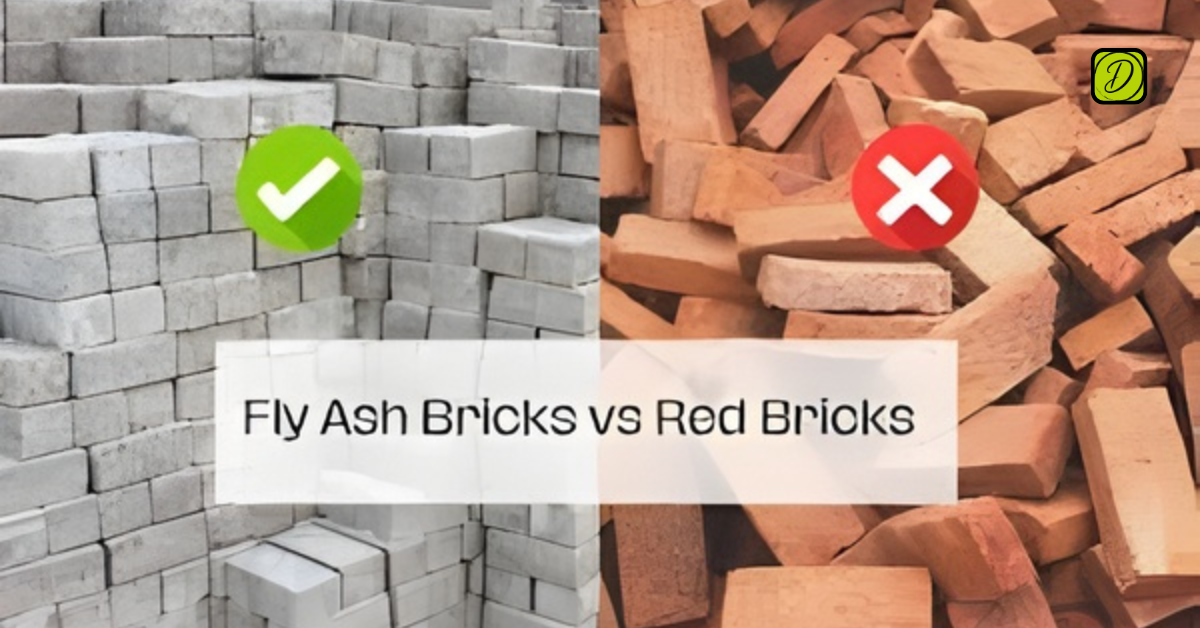
In modern construction, the debate surrounding Fly Ash Bricks Vs. Red Bricks has become increasingly important for builders, engineers, architects, and homebuyers. As India rapidly evolves in infrastructure and residential development, material selection significantly influences a building’s strength, sustainability, cost-efficiency, and longevity.
Dedicated Real Estate—Kolkata’s number one real estate company—often guides its clients to compare the advantages, limitations, and applications of both materials before starting a project. This blog offers a detailed, unbiased, and highly researched comparison to help you make a smart decision for your upcoming construction work.
Fly Ash Bricks Vs. Red Bricks: A Full SEO-Optimized Comparison
Below is a comprehensive, easy-to-understand, 3000-word comparison covering all necessary aspects: composition, benefits, disadvantages, strength, environmental impact, cost, suitability, and real-world applications.
What Are Fly Ash Bricks? Complete Overview
Fly ash bricks are industrial by-product bricks manufactured using fly ash (from thermal power plants), lime, gypsum, and sand. This mixture is compressed under high pressure and cured to produce uniform, high-strength bricks.
LSI Keywords Related to Fly Ash Bricks
eco-friendly bricks
sustainable building materials
fly ash block advantages
modern construction bricks
Features of Fly Ash Bricks
Fly ash bricks offer:
High compressive strength
Low water absorption
Excellent finish
Resistance to efflorescence
Uniform size and density
Their rising popularity is attributed to their environmental friendliness and cost-effective manufacturing process.
What Are Red Bricks? Traditional Construction Choice
Red bricks, also known as burnt clay bricks, are made by molding clay and baking it in kilns at high temperatures. They are one of the oldest and most widely used building materials in India.
Features of Red Bricks
Red bricks are known for:
High thermal insulation
Traditional appearance
Easy availability
Good load-bearing capacity
Despite their long history, concerns around soil erosion, non-uniform size, and environmental impact have encouraged builders to consider alternatives.
Fly Ash Bricks Vs. Red Bricks – Composition & Manufacturing
Understanding the raw materials and manufacturing processes helps you determine quality, sustainability, and durability.
Composition Comparison
| Property | Fly Ash Bricks | Red Bricks |
|---|---|---|
| Base Materials | Fly ash, lime, gypsum, sand | Natural clay and topsoil |
| Manufacturing | Molded + Hydraulic press | Fired in high-temperature kilns |
| Uniformity | High | Moderate |
| Sustainability | High | Low (uses fertile soil) |
Fly ash bricks are made from industrial waste materials, making them highly sustainable. Red bricks require extensive topsoil extraction, which leads to land degradation.
Strength & Durability in Fly Ash Bricks Vs. Red Bricks
Compressive Strength
Fly ash bricks have an average compressive strength of 7.5–12 MPa, offering better load-bearing capability.
Red bricks usually provide 3.5–7 MPa, making them comparatively weaker.
Durability Factors
Key durability aspects include:
Weather resistance
Moisture absorption
Resistance to cracks
Dimensional stability
Fly ash bricks outperform red bricks in uniformity and moisture resistance, reducing chances of cracks and salt deposition.
Cost Comparison of Fly Ash Bricks Vs. Red Bricks
Material and Transportation Cost
Fly ash bricks are lighter, which reduces transportation cost.
Red bricks are heavier and often require longer curing times or additional materials like mortar, adding to expenses.
Construction Cost Impact
Fly ash bricks have a smooth surface and uniform dimensions, reducing plaster and mortar consumption by nearly 30%. Red bricks often require more plaster due to their irregular shape.
Environmental Impact in Fly Ash Bricks Vs. Red Bricks
Sustainable Construction Priority
Fly ash bricks score significantly higher on sustainability. They utilize industrial waste and reduce carbon footprints. Red bricks rely heavily on clay, leading to soil depletion and deforestation due to the firing process.
Energy Consumption
Fly ash bricks use low energy in manufacturing.
Red bricks require high-temperature kilns that burn wood or coal, contributing to air pollution.
Water Absorption & Moisture Resistance
Water absorption affects structural stability, paint life, and dampness issues.
Water Absorption Rates
Fly ash bricks absorb less than 12% water.
Red bricks absorb 15–25%, making them more prone to dampness.
This gives fly ash bricks a clear advantage in water-prone regions.
Thermal Insulation Comparison
Red bricks offer better natural thermal insulation due to their porous structure. In contrast, fly ash bricks have moderate insulation but can be compensated with appropriate wall design or insulation layers.
Usage Suitability in Construction Projects
Best Use Cases for Fly Ash Bricks
High-rise buildings
Commercial complexes
Urban housing projects
Large-scale construction
Eco-friendly developments
Best Use Cases for Red Bricks
Independent houses
Rural constructions
Heritage-style aesthetics
High thermal comfort zones
Workability & Finishing in Fly Ash Bricks Vs. Red Bricks
Fly ash bricks provide smoother surfaces and straight edges, resulting in cleaner finishes. Red bricks require multiple layers of plastering due to uneven surfaces.
Which Brick Is More Sustainable? In-Depth Analysis
Fly ash bricks are widely promoted by environmental agencies due to their positive eco-footprint. Red brick kilns emit greenhouse gases, degrade soil, and contribute to air pollution.
Longevity of Fly Ash Bricks Vs. Red Bricks in Real-World Buildings
Fly ash bricks offer excellent long-term performance when manufactured correctly. Red bricks, being traditional, also last long but are more prone to weathering.
Expert Opinion – What Engineers Prefer
Most modern structural engineers prefer fly ash bricks for large projects because of their uniformity, durability, reduced weight, and cost-effectiveness. However, preferences vary depending on project type and location.
Fly Ash Bricks Vs. Red Bricks – Final Comparison Table
| Feature | Fly Ash Bricks | Red Bricks |
|---|---|---|
| Strength | High | Moderate |
| Durability | High | High |
| Environmental Impact | Very low | High |
| Cost Efficiency | High | Moderate |
| Thermal Insulation | Moderate | High |
| Water Absorption | Low | High |
| Finish | Excellent | Average |
Conclusion: Which Is Better in the Fly Ash Bricks Vs. Red Bricks Debate?
After evaluating every aspect—composition, strength, cost, sustainability, durability, and suitability—fly ash bricks emerge as the best choice for modern, large-scale, and eco-friendly construction projects. However, red bricks still maintain relevance where traditional aesthetics or natural thermal insulation is a priority.
If you’re planning a home or commercial building, consult an expert before finalizing your construction materials. And for the best guidance in choosing the right building material and property, connect with Dedicated Real Estate—Kolkata’s number one real estate company for unmatched expertise and professional support.

Contact Details
Dedicated Real Estate
- Phone: +91 6291422636
- Email: info@dedicatedrealestate.in
- Website: www.dedicatedrealestate.in
Office Location: Near Thakurpukur 3A Bus Stand, Kolkata