
Buying land is one of the most significant investment decisions many people will make. In rapidly growing cities and their fringe areas, real estate buyers often face a key trade‑off: Should you buy bare land in a fringe area (land with no utilities or infrastructure), or go for a developed plot with amenities? Each option has its own cost profile, risks, and advantages. This comprehensive guide breaks down all the cost components, value propositions, and real‑life scenarios to help you make an informed decision.
Understanding the Terms: Developed Plots vs Bare Land
What Is Bare Land?
Bare land refers to a parcel of land that is undeveloped: no roads, no electricity supply, no water pipelines, no sewerage or drainage, often not connected to gas or internet infrastructure. It might lie in fringe areas—suburbs or outskirts of cities—where urban development is still catching up. The price is usually lower per square foot, but there are many considerations beyond the purchase price.
What Are Developed Plots with Amenities?
A developed plot typically means a land parcel that already has certain essential amenities or infrastructure in place. These may include paved roads, boundary walls or fences, street lighting, water supply lines, sewer or septic setup, power lines, internet connectivity, possibly parks or common areas. Developers often lay out these plots in subdivisions and build in regulatory approvals, making them more “ready to build on.”
Key Cost Components to Consider
To fairly compare costs, you must look beyond just the sticker price. Here are the major cost components.
Land Acquisition Cost
Bare Land: Usually lower per square foot because there’s no infrastructure. Price depends heavily on location, zoning, future development plans, soil quality, distance to city center, etc.
Developed Plots: Higher land cost because the cost of infrastructure is embedded in the price. Developers recoup their investments in roads, utilities, etc.
Infrastructure and Utility Cost
Road Access: Bare land might require constructing or improving access roads, which can be expensive, especially in fringe areas with poor connectivity or difficult terrain.
Electricity & Poles: Extending power lines, paying deposits, transformer costs.
Water Supply & Drainage: Bringing pipeline, installing pumps or water tanks, ensuring drainage to prevent waterlogging.
Sewerage / Septic / Waste Management: If the area lacks centralized sewer, installation of septic tanks or package plants might be needed.
Telecom & Internet: Laying fiber or getting connection, often not available or expensive in remote fringe zones.
Regulatory and Legal Charges
Zoning Permissions / Land Use Clearances: Buying bare land may require conversion or change of use permissions, which can take time and cost heavy fees.
Building Permits: For developed plots, some approvals may already be in place; for bare land, more permit work may be required.
Land Registration, Stamp Duty, Legal Title Search Costs: These are applicable in both cases but sometimes more complex for undeveloped land with unclear boundaries or missing documents.
Maintenance and Upkeep Costs
Bare Land: Routine maintenance (clearing weeds, fencing to prevent encroachments, security), property tax even if undeveloped.
Developed Plots: Maintenance of internal roads, streetlights, common areas or amenities, possibly homeowners’ association (HOA) or society charges.
Opportunity Cost & Financing Costs
Opportunity Cost: Money tied up in bare land yields no benefits until you build or sell; whereas developed plots may bring returns sooner or allow rentals/building faster.
Financing Costs: If you borrow, interest accumulates—both on land purchase and any infrastructure building. Borrowing for bare land may have higher interest rates or more strict terms.
Comparative Analysis: Developed Plots vs Bare Land
Upfront Investment Comparison
To compare upfront costs, consider:
| Component | Bare Land | Developed Plot with Amenities |
|---|---|---|
| Purchase Price per sq ft/meter | Lower | Higher |
| Infrastructure costs paid separately | Yes | Mostly included |
| Legal/regulatory costs | Potentially higher due to conversion etc. | Usually clearer, fewer hidden costs |
| Time to usability | Longer — need to build access + utilities | Shorter — ready sooner |
Hidden & Variable Costs Over Time
Delays in approvals for bare land can lead to cost escalations.
Unexpected geological factors (soil stability, slope) may drive up site preparation costs.
Maintenance costs may be higher for bare land if the developer has not yet built roads, fences, etc.
Inflation in construction and utility connection charges.
Risk Factors and Uncertainties
Infrastructure delivery risks: Bare land might be promised future roads or utilities that get delayed or never happen.
Regulatory risks: Zoning changes, environmental clearance issues, adverse land-use restrictions.
Market risks: Demand in fringe areas may lag; resale might take longer.
Livability risks: No amenities like schools, hospitals, shops near by may reduce property appeal until those come up.
Value and Returns: Resale, Appreciation, and Use Case
Appreciation Potential in Fringe Areas
Fringe areas often appreciate faster once key infrastructure is built (road widening, metro or public transport reaching in).
Developed plots generally benefit sooner from infrastructure projects because they’re already plugged into the system.
Bare land might have greater percentage appreciation from low base, but absolute returns can be unpredictable or delayed.
Usability, Livability, and Quality of Life
A developed plot lets you build faster and begin living or renting; amenities like street lighting, cleanliness, water supply matter for daily life.
Bare land may lack basic amenities initially, so living there—or renting to others—requires additional investment/time.
Liquidity and Market Demand
Developed plots tend to be more marketable: buyers often prefer low hassle, ready infrastructure.
Bare land sales may be slower; fewer buyers willing to go through the hassle of arranging utilities, getting approvals, etc.
Resale premiums often favor developed plots, particularly in markets where infrastructure and convenience are high priorities.
Case Studies / Hypothetical Scenarios
Putting theory into numbers helps.
Scenario A: Buying Bare Land in a Growing Suburb
Location: Fringe of a major city, 15 km from central business district.
Size: 10,000 sq ft.
Bare land cost: say $20 per sq ft → total $200,000.
Infrastructure costs estimate: access road cost $15,000, electricity extension $5,000, water pipeline $4,000, sewer/septic $7,000, legal & approvals $3,000 ⇒ additional $34,000.
Timeline: 2–3 years before all amenities available.
Maintenance & carrying costs: property taxes, security, fencing etc for 3 years.
Scenario B: Buying Developed Plot with Amenities in Same Region
Same sized plot: 10,000 sq ft, in a development where roads, electricity, water, sewer are already laid.
Plot cost: perhaps $35 per sq ft → $350,000.
Additional costs: minimal utility hookup fee, small legal/registration costs.
Time to build: almost immediate, maybe 3‑6 months for permits.
Long‑Term Cost Comparison in Both Scenarios
| Item | Bare Land Scenario | Developed Plot Scenario |
|---|---|---|
| Initial purchase | $200,000 | $350,000 |
| Infrastructure & utility costs | $34,000 | $5,000 (hookups etc.) |
| Legal & approvals | $3,000 (for bare land) vs smaller for plot | $2,000‑3,000 |
| Time cost / delay | Lost opportunity for 2‑3 years | Begin building sooner, possible returns earlier |
| Maintenance / carrying cost | Higher over delay period | Lower if amenities maintained by developer |
Over, say, 5 years, bare land could cost you maybe 15‑20 % more in total when factoring in delay, carrying costs, and inflation, depending on location.
Pros and Cons Summary
Advantages of Bare Land
Lower entry cost per sq ft/meter initially.
Greater flexibility: you can customize layout, style, begin on your timeline.
Potentially higher percentage returns if area develops fast.
You may negotiate more aggressively because seller must still invest in infrastructure.
Disadvantages of Bare Land
Time‑lag: you wait for development of roads/utilities.
Hidden costs: unforeseen legal, regulatory, environmental issues.
Less convenience for living or renting out immediately.
Higher risk if the fringe area doesn’t develop as expected.
Advantages of Developed Plots with Amenities
Ready to build: minimal preparatory work needed.
Lower uncertainty: infrastructure, regulation, title likely cleared.
Better resale value; higher demand.
Better livability: utilities, roads, neighborhood formation often already in place.
Disadvantages of Developed Plots with Amenities
Higher upfront cost.
Premium paid for amenities whether or not you use them all.
Possible maintenance/society fees.
Less flexibility — layout restrictions, building designs, approvals controlled by developer.
Practical Tips for Buyers / Investors
Due Diligence Checklist
Verify land title, encumbrances, boundary delineation.
Check zoning and land‑use permissions; is development allowed?
Survey soil, water table, flood risk, slope.
Investigate planned infrastructure projects by city authorities (roads, transit etc.).
Check availability of basic utilities nearby.
Cost Forecasting and Budgeting
Build in a buffer: expect delays, cost overruns, inflation.
Get multiple quotes for infrastructure work.
Account for regulatory fee escalations.
Factor in carrying costs (tax, security, maintenance) over the period land is under‑utilized.
Negotiation Strategies
For bare land, negotiate on developer’s promise of infrastructure timeline and penalties if delayed.
For developed plots, negotiate add‑ons like free fencing, driveway paving, or lowering of society charges.
Use comparative market analysis: check nearby plots, recent sale prices.
Choosing the Right Developer or Seller
Reputation matters: reliable delivery of amenities matters greatly.
Clear track record of approvals and compliance.
Transparent disclosures: cost breakdown, timeline, maintenance responsibilities.
Review agreements for hidden fees.
Conclusion: What Makes More Sense?
Choosing between bare land in fringe areas and developed plots with amenities is not a one‑size‑fits‑all decision. The better option depends on your goals:
If you want low entry cost, can wait, and accept risks, bare land may offer higher percentage appreciation.
If you prefer readiness, lower risk, faster returns, especially for building, living, or renting out soon, a developed plot is more reliable.
In many cases, the total cost over time (factoring in all hidden expenses, delays, carrying costs) of the bare land may approach or even exceed that of a developed plot, plus you earn benefits earlier with the plot.
For long‑term investment portfolios, a mix may even make sense—for instance buying some bare land at lower cost in anticipation of area growth, and some developed plots for immediate use or resale.
When making the decision, carefully compute all the cost components, check risk levels, and be realistic about timelines. That way, you’ll make an investment that is economical, appropriate to your purpose, and sustainable.
Nature’s Paradise by Rupbasuda Developers — “Ready to Move” Plots
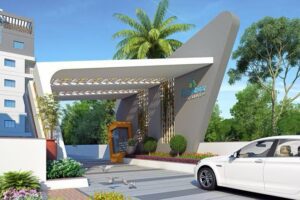
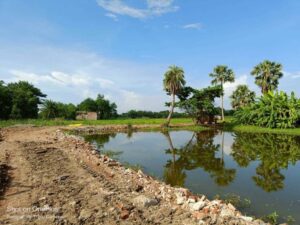

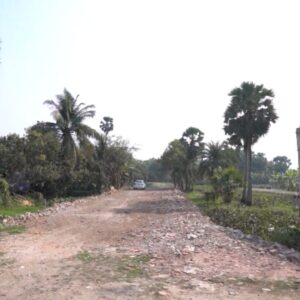
After covering what to check, here is detailed, well‑organized information about Nature’s Paradise, a township project by Rupbasuda Developers, to help you evaluate whether it meets those criteria and whether it might be a good option for you or others.
Project Overview
| Feature | Details |
| Project Name | Nature’s Paradise |
| Developer | Rupbasuda Developers |
| Location | Khariberia, Bhasa, Joka, Kolkata |
| Highway / Road | Along Diamond Harbour Road, National Highway 117 |
| Distance from Joka Metro | Approx 2.6 km |
| Time from Swaminarayan Temple | About 7 minutes |
| Nearby Landmark | Beside Palm Village Resort |
Plot Size, Type & Pricing
| Parameter | Details |
| Spread of Project | ~ 350 bighas of land area |
| Minimum Plot Size | 2 katha minimum purchase |
| Other Sizes Available | 3 katha, 5 katha, and more; no fixed maximum limit specified |
| Types of Plots | Premium & non‑premium; Residential & Commercial |
| Price Range | ₹1,30,000 (1 lakh 30 thousand rupees) up to ₹4,00,000 (4 lakh rupees) depending on plot size, location, type etc. |
Amenities & Infrastructure
| Amenity / Infrastructure | Present or Planned |
| Plot Status | Ready to move plots – so basic land preparation is done |
| Roads | Internal by‑roads of 25 ft & 20 ft; the approach roads being/will be four‑lane |
| Water supply | 24×7 water supply planned / provided |
| Electricity | Electricity connection available / planned |
| Drainage / Sewage | Proper drainage system in place or planned |
| Community & Recreational Facilities | Gymnasium, Clubhouse, Lake, Kindergarten School, Saraswati Temple |
| Transport | 24×7 transportation; metro station planned by end of 2028; nearby railway station etc. |
| Nearby Essential Facilities | Hospitals, Vegetable Market, Shopping Malls, Schools, Colleges just minutes away |
Location Advantages & Growth Potential
- Close proximity (2.6 km) to Joka Metro adds value and future ease of commute.
- Diamond Harbour Road (NH‑117) is a major route; improved highways/roads often lead to value appreciation.
- Many well‑known apartment projects in the vicinity (Emami Astha, Godrej Seven Elevate, Gems Bouganvilla, DTC Sojan, Eden Amantran, Solaris, Rajat by Avante etc.), often priced in crores, which suggests the area is already drawing premium development.
Payment & Booking Terms
| Parameter | Details |
| Booking Token Amount | ₹11,000 required as token booking amount |
| Payment Options | 36 months 0% interest EMI available |
| Developer / Agent | Dedicated Real Estate, with office near Thakurpukur 3A Bus Stand, Kolkata |
Potential Pros & Things to Check
Pros:
- Affordable entry point for middle class — both residential and commercial plots in the stated price range.
- Ready to move status reduces waiting time; some infrastructure already in place.
- Strong potential for appreciation because of upcoming metro, highway road works, location.
- Amenities are planned; community features suggest a self‑contained township rather than isolated plots.
Things you should still verify (using the checklist above):
- Confirm zoning status and whether NA conversion (if needed) has been done.
- Check encumbrance certificate to ensure clear title.
- Ensure all NOCs, permissions, layout plan approvals are legal and in order.
- Physical ground check: slope, drainage, whether land is flood‑prone.
- Exact road access: condition of roads, whether approach to your plot is via public road.
- Surrounding environment: whether neighbouring plots are being developed, quality, types of constructions.
- Utility access and readiness: water, electricity, sewage.
- Confirm any government notifications/plans that may require surrendering land or affect use.
Why This Might Be The Best Time to Buy
- With metro station planned by end of 2028, road improvements, and area being developed, plots may gain significant capital appreciation.
- Since many high‑end projects in the area are already valued in crores, a plot bought now at a few lakh rupees can deliver large value growth in coming years.
- Entry‑level price and flexible payment (0% EMI over 36 months) reduces the financial burden and risk.
How to Proceed (if Interested)
- Arrange a site visit to Nature’s Paradise. Survey multiple plots; compare premium vs non‑premium.
- Bring along a legal expert to verify documents.
- Ask developer / Dedicated Real Estate for copies of title deed, NA conversion (if applicable), EC, layout plan, approved plan, NOCs etc.
- Check the condition of internal roads, availability of utilities.
- Discuss payment schedule, any additional charges.
Contact Details
Dedicated Real Estate
- Phone: +91 6291422636
- Email: info@dedicatedrealestate.in
- Website: www.dedicatedrealestate.in
Office Location: Near Thakurpukur 3A Bus Stand, Kolkata.