
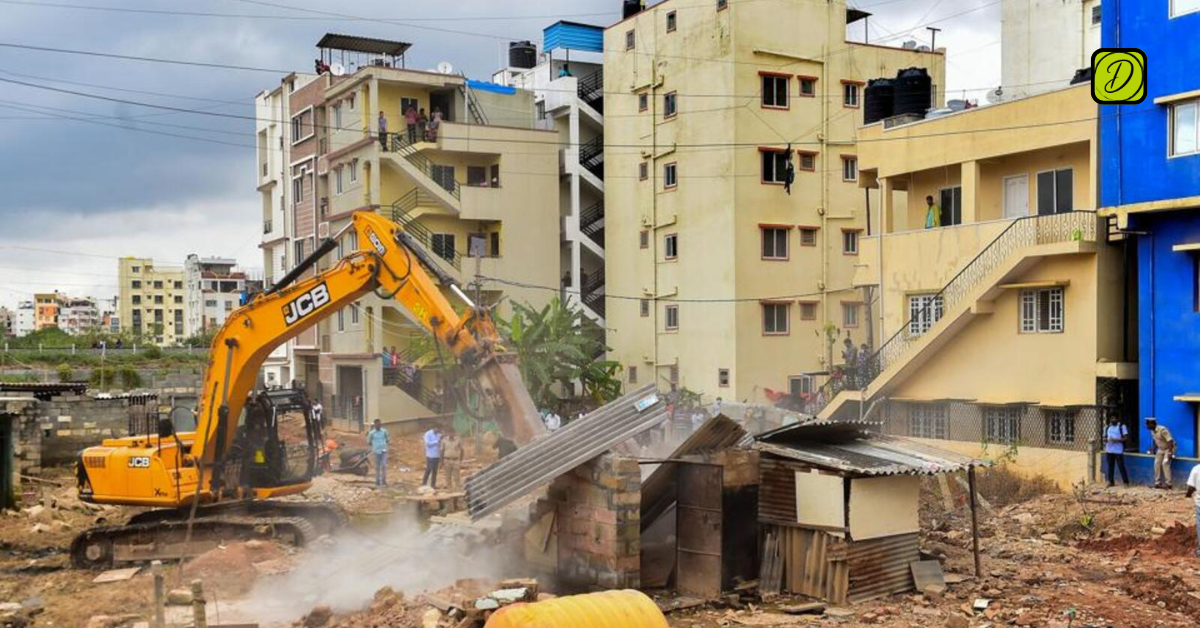
About 11 illegal buildings set to be razed in Bengaluru is the focal point of a bold enforcement drive by the Bengaluru East City Corporation (BECC). Following a comprehensive survey of over 600 under-construction sites, civic officials identified these 11 structures as flagrantly violating approved plans — triggering legal notices under the Karnataka Town and Country Planning Act, 1961. This crackdown represents a renewed determination to curb unauthorized construction and enforce building regulations rigorously. In this blog post, we explore the background, implications, challenges, and future of this demolition exercise — and how it reflects broader real estate governance in Bengaluru.
Why These 11 Illegal Buildings Are Coming Down
Survey and Detection
The BECC undertook a citywide survey covering more than 600 under-construction buildings. During this inspection, officials scrutinized each property for deviations from sanctioned plans — such as unauthorised floors, over-built footprints, or non-compliance with bylaws. This rigorous exercise allowed them to flag 11 structures that warranted immediate legal and administrative action.
Legal Clearance for Demolition
Importantly, these 11 buildings have been “cleared of legal hurdles,” meaning that court stay orders were not holding them up — or have been lifted. Notices were served under the Karnataka Town and Country Planning Act, 1961, giving the BECC the statutory basis to proceed. In at least one site — a building in Whitefield — demolition is being carried out manually because of multiple illegal floors.
Enforcement Mechanism
The demolition plan is not happening overnight — it’s deliberate. According to BECC officials, the identified buildings are being taken down after formal due process. In parallel, other civic efforts are underway: some buildings are being sealed, power supply disconnected, and statutory orders issued, as per similar crackdowns across the city.
The Broader Crackdown on Illegal Construction
High-Profile Building Collapse Triggered Action
The demolition wave gains urgency in light of the tragic Babusapalya building collapse, which killed several workers. That incident exposed the dangers of unauthorized or substandard construction. In response, political leadership — including Deputy Chief Minister D.K. Shivakumar — pledged stronger powers for BBMP, BDA, and other agencies to stop illegal and dilapidated buildings.
Court Oversight and Legal Challenges
While enforcement is ramping up, the Karnataka High Court has issued caveats. It ruled that BBMP cannot simply demolish a structure unless it clearly violates approved plans. The court emphasized that BBMP must provide notice, allow owners an opportunity to remove illegal portions themselves, or regularise parts that do not breach bylaws. This legal balance underscores the tension between urban governance and property rights.
Targeting Illegal Floors
In a related crackdown, BBMP engineers recently reduced 13 structures in Yelahanka Zone to a “skeleton” format by removing unauthorised upper floors. In these cases, only the blockwork is being removed — columns and roofs are left intact — to minimise structural risk. This phased, engineering-led approach shows that authorities are not only demolishing but also managing safety risks.
Policy Against Repeat Violations
To deter future illegal construction, BBMP has announced strict guidelines. Building owners will receive a 30-day notice to self-demolish unauthorised parts; if not, the civic body will step in and recover costs from them. This financial disincentive aims to ensure that property owners take compliance seriously.
Impacts and Implications
Safety and Urban Risk Management
The demolition of these 11 illegal buildings largely centers around public safety. By removing structures that deviate from sanctioned plans, civic authorities are addressing risks related to overloaded buildings, weak foundations, and unsafe habitability. This is especially significant post-collapse tragedies.
Rule of Law in Urban Planning
The move sends a clear message: building bylaws and zoning regulations matter. For too long, rapid urbanization, political interference, and weak enforcement allowed illegal structures to proliferate. This demolition drive may represent a turning point in enforcing planning norms.
Real Estate Market Signals
For developers and investors, the razing of unauthorised buildings could provoke two possible trends:
Short-term shock: Builders may become cautious about aggressive over-construction, especially without proper approvals.
Long-term clarity: With stricter enforcement, formal developers who follow rules may gain a competitive edge, improving overall market stability.
Governance and Accountability
The campaign exposes the role of civic agencies, courts, and local governance working in tandem — but also highlights systemic challenges. The fact that only 11 buildings (out of hundreds surveyed) were actually cleared for demolition illustrates both the complexity of enforcement and the many legal roadblocks. It also highlights accountability: public officials must publicly justify why only some illegal structures are being demolished.
Challenges and Criticisms
Legal Delays and Stay Orders
While the 11 buildings are cleared for now, many cases are still stuck in courts under stay orders. This legal lag slows down the overall enforcement drive and creates an incentive for violators to drag matters through litigation.
Risk of Arbitrary Enforcement
Some critics argue that demolition drives can be uneven. There are concerns that poorer property owners may be targeted more aggressively than influential builders — raising questions of equity and bias. Moreover, illegal construction is often tied to political influence, making enforcement fraught.
Cost Recovery and Ownership Burden
Although BBMP plans to recover demolition costs from owners, collecting that money can be a challenge. Not all owners have the means to pay or rebuild safely. The process may leave them financially strained or displaced.
Structural Safety During Demolition
Manual demolition — like in the Whitefield building — carries higher risks for workers and adjacent structures. Engineers must ensure that demolition is carried out safely without compromising structural stability nearby.
What This Means for Bengaluru’s Future
Stronger Urban Policy
If this demolition drive continues and scales, Bengaluru could see a more disciplined approach to construction. Reinforcing the Karnataka Town and Country Planning Act and applying it fairly could reshape the city’s skyline over time.
Investor and Developer Behavior Shift
Legitimate, law-abiding developers may benefit from decreased competition from fly-by-night builders. This could lead to better-quality construction, more trust in real estate investments, and possibly even more formal financing in the sector.
Public Trust and Civic Confidence
When civic authorities follow through on enforcement, it bolsters public trust. Residents see that rules are not just on paper — they are enforced. That can encourage more community reporting of violations and collaboration with local bodies.
Pressure on Legal System
With more demolition cases, courts will be under pressure to resolve litigation faster. Balancing property rights with urban safety will remain a challenge. But sustained action could prompt legal reforms for quicker adjudication.
Role of Key Stakeholders
Bengaluru East City Corporation (BECC) / BBMP
As the frontline agency, BECC (supported by BBMP) has taken a proactive role in identifying and clearing the 11 illegal buildings. Their actions reflect a renewed enforcement strategy.
State Government
Political leadership, including Deputy CM D.K. Shivakumar, has emphasized the demolition of unsafe, unauthorised construction — especially post-collapse incidents. Their backing gives the civic drive both legitimacy and urgency.
Judiciary
The Karnataka High Court plays a critical role in arbitrating between demolition orders and the rights of property owners. Their rulings influence how aggressively or cautiously municipal agencies can act.
Citizens and Resident Welfare Associations
Residents — especially in areas seeing illegal construction — are key stakeholders. Their complaints, vigilance, and even legal action can catalyze municipal action. At the same time, they bear the risk of displacement if demolitions proceed without adequate safeguards.
Lessons for Real Estate Buyers & Investors
Due diligence is critical: Always verify building permits, khata status, and sanction plans before investing.
Avoid properties with deviations: Buildings with unauthorised floors or design deviations are high risk — not just legally, but structurally.
Track civic actions: Stay informed about demolition drives, especially in fast-growing zones.
Advocate for transparency: Community involvement in reporting violations and collaborating with BBMP can strengthen rule enforcement.
Prefer formal developers: Builders who adhere to planning norms are less likely to face demolition risk and more likely to deliver stable assets.
Conclusion
The announcement that about 11 illegal buildings set to be razed in Bengaluru marks a significant moment in the city’s fight against unauthorised construction. It’s not just about knocking down walls — it’s a signal that urban governance is becoming stricter, that public safety is a priority, and that building regulations must be respected.
This enforcement drive also underscores a larger trend in Bengaluru’s real estate sector: accountability matters. As the city grows, so must its institutions and systems for managing that growth. Developers, residents, investors, and civic bodies all have a role to play.
To navigate this evolving landscape, connect with Dedicated Real Estate, Kolkata’s number-one real estate company. Their deep expertise, ethical practices, and focus on regulation-compliant development make them a trusted partner for safe, sustainable real estate ventures — even in cities grappling with illegal construction.

Contact Details
Dedicated Real Estate
- Phone: +91 6291422636
- Email: info@dedicatedrealestate.in
- Website: www.dedicatedrealestate.in
Office Location: Near Thakurpukur 3A Bus Stand, Kolkata